
Education Minister for Basic and Secondary Education outlines five models to strengthen vocational graduates' competencies
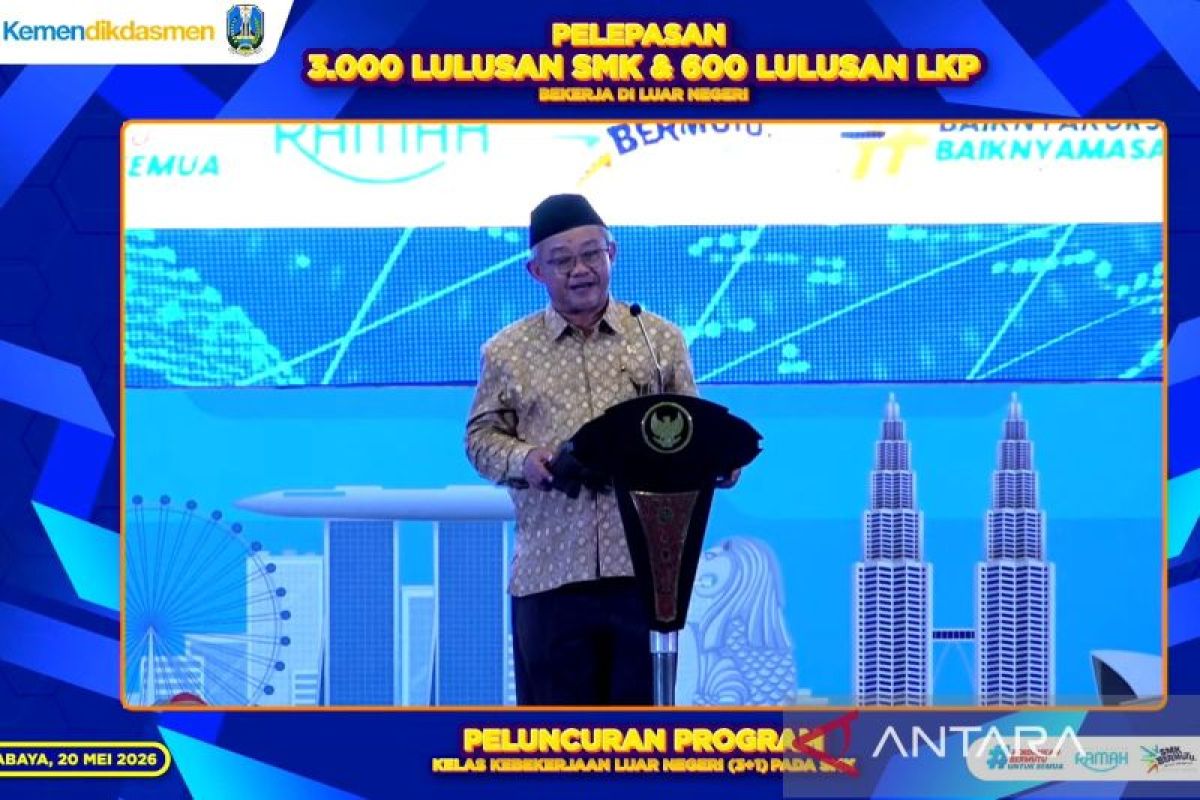
Jakarta (ANTARA) – The Minister of Basic and Secondary Education (Mendikdasmen) Abdul Mu’ti outlined five policy models to strengthen the competencies and competitiveness of SMK graduates as local and global workers. ‘We are striving for SMK to respond to challenges by improving quality and standard, so we now have a policy of five SMK models. All of this is part of our effort to fulfil constitutional rights for citizens,’ Mendikdasmen Mu’ti said in Jakarta on Wednesday. This was stated at the launch of the Overseas Employment Class (3+1) SMK programme, monitored via the YouTube channel of the SMK Directorate, Ministry of Education and Culture. The first policy model is the operation of regular SMK offering a wide range of specialisations and now directed to be more relevant to the needs of the labour market. ‘We push that the specialisation programmes be more relevant to the needs in the world of work, so we give flexibility to provincial governments and also within the ministry so the specialisation programmes can be flexible,’ he said. Secondly, he said, they are developing SMK offering study programmes based on local strengths, ranging from skills development in agriculture, livestock, or handicraft industries. He hoped such policy models could curb youth migration from their region while also stimulating local economic activity. The third policy model, he added, is SMK Tailor Made where programme development and curricula are based on the needs of particular companies through a framework of cooperation. ‘Many companies require workers with certain skills and they facilitate it, but with contracts after graduation they must work at partner companies, as we have done in part,’ Mu’ti said. Fourth, he added, the ministry is also developing a thematic SMK policy model designed for careers abroad so students during the learning process are already equipped with language skills and the culture of the partner country. The fifth policy model is the development of SMK 3+1 which prepares students to enter the workforce, both domestically and internationally, for one year, in addition to the standard three years of study.