
Education in the Age of Algorithms: When is the Right Time to Introduce AI in Education?
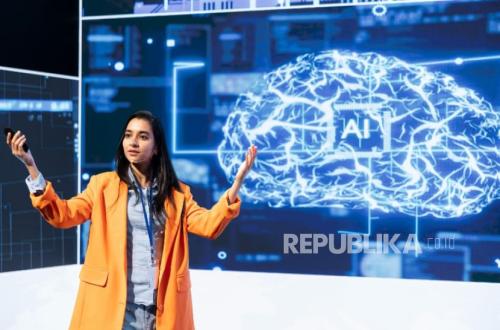
Artificial intelligence has already entered classrooms, study desks, and even the hands of primary school pupils. The question arises: should AI be introduced early, or should it be postponed until children’s foundational thinking abilities are firmly established?
Supporters of early AI integration emphasise its potential as a personal tutor, translator of difficult concepts, provider of adaptive practice, and source of instant feedback. In classrooms with high pupil-to-teacher ratios, AI can serve as a “second teacher”, whilst in schools with limited resources, it bridges quality gaps in education. Delaying AI introduction risks leaving unfamiliar children behind.
However, concerns exist: AI may replace thinking processes. When pupils ask AI to complete homework, draft essay outlines, or answer science questions, they receive complete answers without engaging in extended cognitive processes. The pupil’s role shifts from problem-solver to solution recipient. Critical thinking develops through confusion, mistakes, and efforts to improve understanding. If AI eliminates these difficulties from an early age, children risk cognitive atrophy.
AI at Each Educational Level
AI’s role should differ across educational stages. At primary school, AI should ideally guide understanding rather than serve as an answer machine. At secondary school, AI can function as a discussion partner enriching perspectives. At university, AI enhances research productivity and professional collaboration without replacing students’ intellectual responsibility.
Education must also prepare pupils for workforces demanding AI capability for analysis, report automation, design, and decision-making. Early AI literacy matters, yet a paradox emerges: the more proficient in using AI, the smaller the deep understanding of underlying processes. Professionals produce complex outputs but struggle to explain the logic behind them. Productivity increases whilst understanding deepens.
Furthermore, AI now produces knowledge—from research summaries to learning modules, policy analysis, and scientific hypotheses. Humans study this knowledge and use it to train next-generation AI, creating a recursive cycle that amplifies bias with minimal human intervention. Children may view AI as an authority on truth, yet AI operates on data probability, not absolute verification. Without critical literacy, pupils risk accepting AI information as truth without testing.
A wise solution is adjusting AI’s role to pupils’ cognitive development stages. AI must become an object of learning, not merely a tool. Important principles include: process transparency in answers, pedagogical friction encouraging thought before answers arrive, and critical literacy to audit AI output. With this approach, AI supports human learning. Without it, we risk producing a generation productive yet shallow in understanding, delegating intelligence to machines rather than expanding it.
Designing AI for Education
The debate should not be about “early AI” or “delay AI”, but rather: what role suits AI at each educational stage? If designed wisely, AI could become the strongest tool supporting learning whilst strengthening human intellectual sovereignty. Should it be introduced without proper pedagogical architecture, we risk creating a generation highly productive yet lacking understanding of the knowledge supporting that productivity. Progress then represents not an expansion of human intelligence but its silent delegation. Education must prevent this.
Here lies the relevance of Cyber University, known as Indonesia’s first fintech university. The institution emphasises integrating technology, including AI literacy, with wise pedagogical approaches, ensuring students become not merely productive but deeply understand processes and logic behind digital knowledge. With curricula balancing theory, industry practice, and cognitive development, Cyber University prepares young people to become intelligent, critical, and adaptive professionals in the digital era.