
Eddy Soeparno Invites Universities to Collaborate to Accelerate Energy Transition
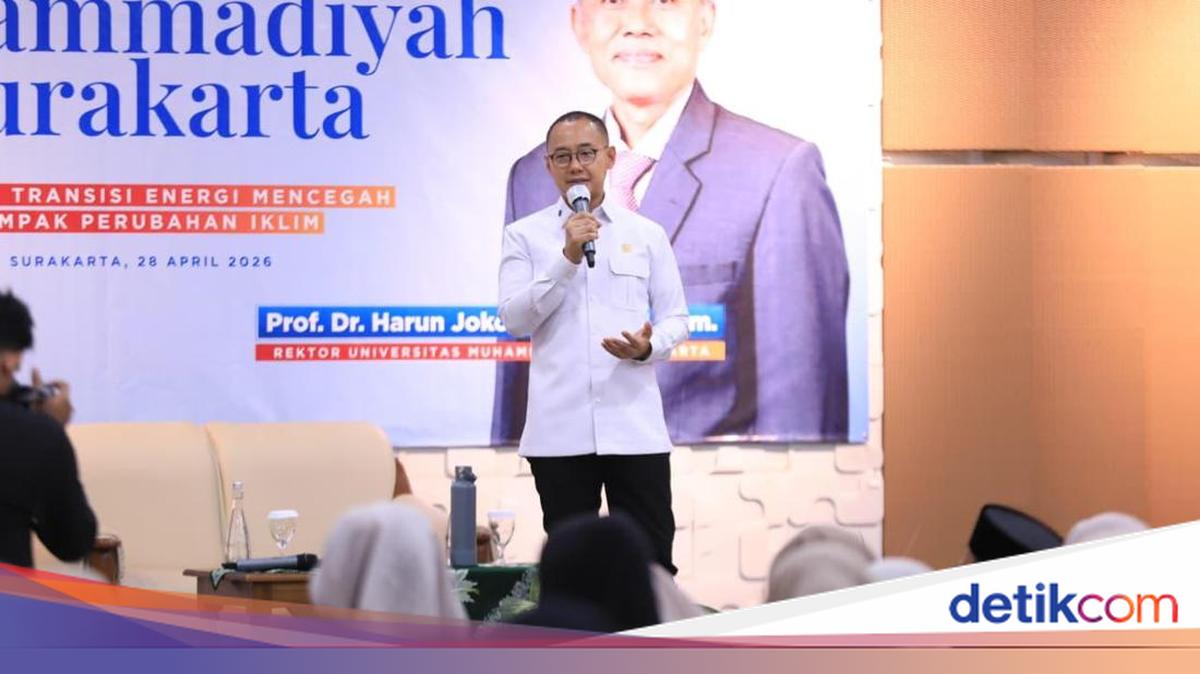
In front of the Rector and his team, as well as more than 800 students at Universitas Muhammadiyah Surakarta, Eddy Soeparno stated that the climate crisis is a global reality that must be addressed immediately. He rejected the notion that the climate crisis is an exaggerated issue. “The impact of the climate crisis is disruptive and equivalent to the disruption caused by the pandemic, the development of artificial intelligence, and global geopolitical dynamics,” said Eddy in his statement on Wednesday (29/4/2026). He explained that global temperatures have risen by more than 1.5 degrees Celsius compared to the pre-industrial era, directly affecting various regions including Indonesia. “Domestically, phenomena such as extreme temperatures, air pollution, deforestation, and natural disasters like floods and landslides are real indicators of ecological degradation,” he revealed. In addition, Eddy also highlighted other environmental issues, namely the serious problem of waste with production reaching 56 million tonnes per year, much of which is not yet managed optimally. “The waste emergency has already given rise to many disasters such as in Bantargebang, Bandung, to Denpasar. As a solution, the government and I are also involved in discussions on this, promoting the implementation of waste-to-energy policies through Presidential Regulation 109 of 2025 to reduce waste volume while generating energy,” he asserted. Regarding the energy transition, he explained that Indonesia has great potential in renewable energy. However, its utilisation is still far from optimal compared to the available capacity. Furthermore, he revealed the energy paradox in Indonesia, which is rich in energy resources yet still dependent on imports for certain needs. “I convey this energy paradox to universities with the hope and invitation that let’s collaborate to bring research and innovation to maximise Indonesia’s abundant renewable energy resource potential. From that research and innovation, we will then advocate for it to become policy to enlarge our renewable energy mix,” he said. “I believe that from universities, there will be scientific and innovative research products that can then be continued into measured policies that have a positive impact on society. Because for me, the MPR is the people’s house as well as a house of collaboration for all,” he concluded.