
Economy Gets Tougher, RI's Neighbour Asks Crazy Rich to Help Citizens
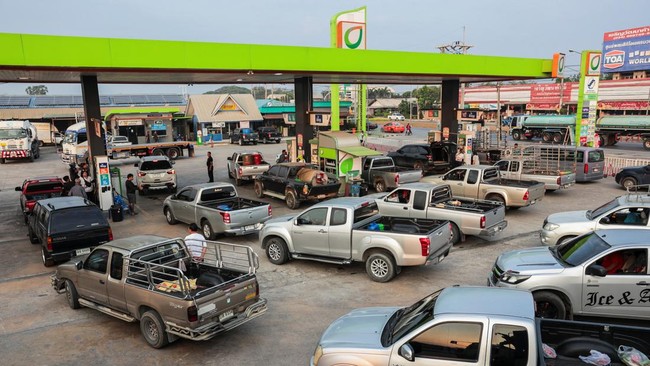
The Thai government has officially enlisted a lineup of conglomerates and giant business groups owned by billionaires to help curb the surge in living costs amid increasingly pressing inflationary pressures. This move further underscores the dominant role of big business in the Elephant Kingdom’s economic structure. Citing the Straits Times, major retailers, including those controlled by tycoon Charoen Sirivadhanabhakdi, as well as the Chearavanont and Chirathivat families, have agreed to launch own-brand food products, bathroom essentials, and other basic necessities with discounts ranging from 25% to 50%. This initiative is part of a government-backed campaign titled “Thais Helping Thais”. Several companies participating in the campaign to maintain price stability include CP All and CP Axtra, controlled by billionaire Dhanin Chearavanont, Central Retail Corp run by the Chirathivat family, and Berli Jucker owned by Sirivadhanabhakdi. Thai Prime Minister Anutin Charnvirakul, whose party won the February election largely on promises to ease living costs, has spent the past few weeks trying to protect households from price hikes while safeguarding already strained public finances. “This is an important step in public-private sector cooperation. What is certain is that consumers will be able to save money,” said Anutin Charnvirakul during a press briefing in Bangkok, quoted on Wednesday (1/4/2026). Although the government continues to impose price controls on dozens of essential goods, rising energy and production costs have driven up prices of staples like pork and eggs. Thai households are also grappling with higher fuel costs that are squeezing incomes as economic growth is expected to slow due to weakening tourism and exports amid declining global demand. Charnvirakul’s efforts to urge corporations to maintain price stability spotlight a key feature of Thailand’s political economy: the tight alignment between the state and a handful of powerful conglomerates that dominate major sectors. While such partnerships can provide rapid relief in times of crisis, they also reinforce an oligopolistic structure that limits competition and concentrates wealth. Economists say this dynamic lies at the heart of Thailand’s persistent inequality, contributing to one of the world’s highest levels of income concentration. According to World Bank data, the richest 10% in Thailand control around half of total income, the highest share among countries with available data. The government’s approach reflects a pattern seen before, such as during the Covid-19 pandemic when big conglomerates helped accelerate vaccine distribution by providing venues, logistics, and procurement support. This demonstrates their capacity to act as quasi-policy partners in times of crisis. In thousands of participating grocery stores, supermarkets, and convenience shops under the “Thais Helping Thais” programme, retailers have rolled out in-store promotions with colourful signage highlighting discounted items. The promotions include eye-catching “50% off” labels and displays of lower-cost alternatives. Although Thailand’s headline inflation has remained in negative territory for the past 11 months, rising energy costs are expected to push consumer prices back into the Bank of Thailand’s target range of 1% to 3% as early as 2026. Separately on Monday, Thailand’s largest business group raised its inflation outlook to 2% to 3% from a previous 0.2% to 0.7%. The group also cut its economic growth forecast to 1.2% to 1.6% for 2026 from an initial projection of 1.6% to 2%.