
Economists Warn Iran Conflict Tests Indonesia's Fiscal and Energy Resilience
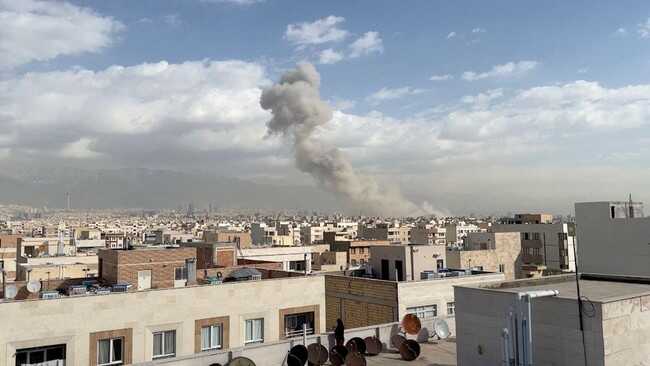
Jakarta, CNBC Indonesia – Conflict between Iran, the United States, and Israel risks inflicting severe damage on Indonesia’s economy, exerting pressure on fiscal stability, inflation, and the trade balance.
Fakhrul Fulvian, Chief Economist at Trimegah Sekuritas Indonesia, noted that the Strait of Hormuz is more than a shipping lane—it is a critical global energy chokepoint. When risks escalate in this region, markets calculate not merely the barrels of oil lost, but also the premium for uncertainty.
Approximately 20% of global oil supplies transit through this corridor. During geopolitical escalation, oil prices typically respond more swiftly than actual supply disruptions indicate. Fakhrul assessed that markets are currently building a risk premium rather than simply reflecting physical supply disruptions.
As a net energy importer, Indonesia cannot avoid the transmission of global oil price movements. “Every US$10 increase per barrel in crude oil prices has direct implications for Indonesia’s national energy import costs and will reduce the country’s trade surplus by approximately US$250 million. This translates to pressure on the oil and gas trade balance, pressure on fiscal accounts if subsidies expand, and pressure on cashflows of energy state-owned enterprises such as Pertamina,” Fakhrul stated on Monday, 2 March 2026.
However, he stressed this represents a risk management situation rather than an outright crisis. “What is being tested is not merely oil prices, but our hedging capacity, supply diversification, and the resilience of our strategic reserves,” he said.
Fakhrul explained that the initial impacts of rising oil prices typically manifest through energy and transportation channels. “Energy is an input to virtually every sector. When energy prices rise, logistics costs increase, food prices may be pushed higher, and inflationary pressure becomes broader.”
He added that the impact on Indonesia’s inflation depends critically on two factors: domestic energy pricing policy and fiscal and monetary responses to inflationary transmission. “If the shock is temporary and not followed by further escalation, its effects can be managed. But if the conflict widens and real supply disruptions occur, inflationary pressure could become more persistent,” he noted.
Fakhrul characterised the Iran conflict as a reminder that economic stability cannot be defined solely through exchange rate or inflation stability. “National resilience today is a combination of energy security, fiscal robustness, and policy flexibility.”
He identified three strategic priorities: managing energy reserves and diversifying supply sources; maintaining sufficient fiscal buffers to absorb oil price shocks; and ensuring responsive yet non-reactive monetary-fiscal coordination. “Indonesia must neither panic nor be complacent. The world is entering a more volatile geopolitical phase. Energy will remain a strategic variable in macroeconomic calculations,” he said.
Ahmad Mikail Zaini, Chief Economist at Sucor Sekuritas, warned that the conflict’s impact will be immediately felt in energy markets. Brent crude oil has surged approximately 10% to approach US$80 per barrel, but greater risks lie ahead. Sustained disruptions to oil flows through the Strait of Hormuz—a critical chokepoint carrying roughly 20% of global oil supplies—could push prices substantially higher.
“In extreme scenarios involving prolonged closures or major disruptions, crude oil prices could spike to the range of US$200 per barrel,” he said.
This risk far exceeds the shock following Russia’s invasion of Ukraine. In 2022, crude oil prices surged approximately 65% when Russian exports were curtailed, with Russia accounting for roughly 10% of global oil supplies. Conversely, disruptions in the Persian Gulf would affect the majority of global production, rendering this conflict potentially far more inflationary.
For Indonesia and other developing nations, the direct macroeconomic consequence is inflationary pressure. “Surging oil prices rapidly transmit through transportation costs, energy bills, industrial input prices, and ultimately consumer inflation,” he noted in a written report on Monday, 2 March 2026.
For major economies—particularly the United States—this shock arrives at an exceptionally sensitive moment. Inflation remains elevated, whilst policymakers have carefully prepared the groundwork for interest rate cuts later this year. An inflation shock triggered by oil prices fundamentally alters these prospects. If oil prices hold above US$100 per barrel, headline inflation will resume climbing, and the Federal Reserve’s ability to cut rates effectively will evaporate. Consequently, the world faces the prospect of elevated interest rates for an extended period.
“This creates a new policy dilemma: inflation risk versus financial stability,” Ahmad stated.