
Economists Support Customs Office's Seizure of Illegal Jewellery Shops as a Deterrent
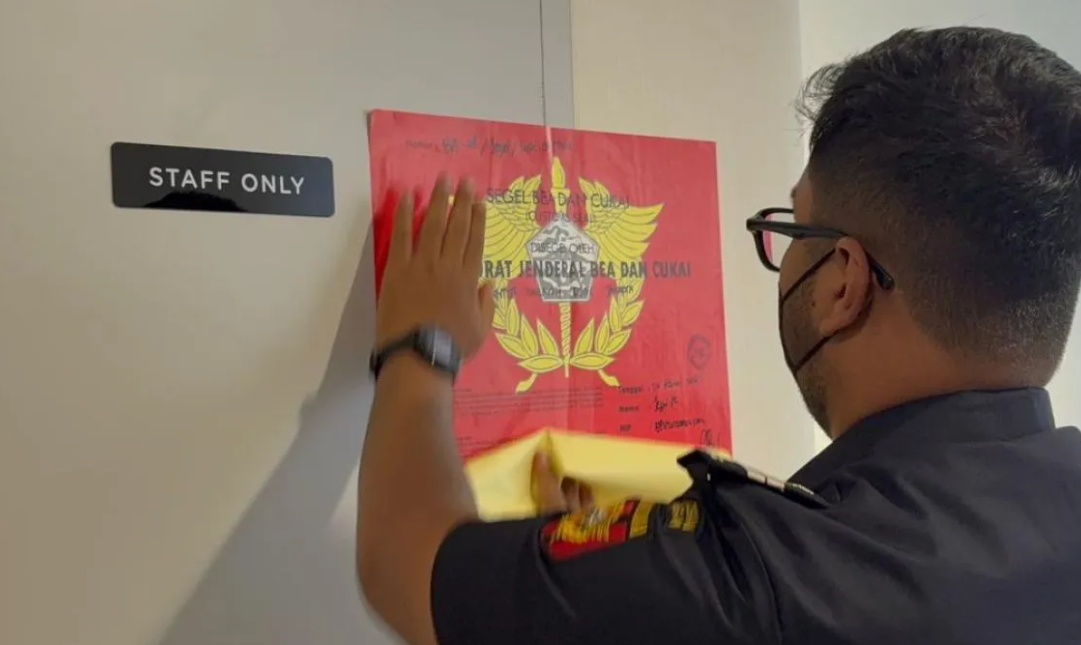
The sealing of several jewellery shops suspected of maladministration by the Customs Office has been praised by a number of economists. Professor at the Faculty of Economics and Business, University of Indonesia (FEB UI), Telisa Aulia Falianty, believes that this is to improve oversight of businesses.
“I support this, but it must be done consistently. There shouldn’t be any more loopholes. Because the practice of under-invoicing, and illegal imports that often occur, result in the state being harmed and losing a lot of revenue, up to trillions of rupiah. In the midst of the state budget needing high revenue, these kinds of leaks must be eradicated,” said Telisa in a statement received on Thursday (February 26).
Enforcement of regulations, Telisa continued, must continue to be carried out given the many leaks that occur in customs and import duties.
According to her, this effort should be a deterrent to business actors and provide a signal to business actors that the government is now serious.
“Regarding this imported gold, it is suspected that there is an administrative process that has been violated, so there are goods that have not been registered or are suspected of being illegal. When the goods enter, there are import duties that must be paid by the importer. Because when it is not paid, it is also considered maladministration. Whether it has not been paid or has not been reported,” she added.
Similarly, senior economist from INDEF, Tauhid Ahmad, believes that the Customs Office has strong evidence regarding the loopholes in import practices that are being exploited by business actors. According to him, there are three crucial issues being targeted, namely under-invoicing, smuggling, and tax evasion.
“The Customs Office is an instrument of law enforcement and has investigators. This is their authority. If the business actors feel that they have not done these three things, they can state it in court,” he said.
Meanwhile, Yusuf Rendi from the Center of Reform on Economics (CORE) said that what Finance Minister Purbaya Yudhi Sadewa said about the indication of “Spanish” goods, meaning half stolen, does describe a practice that is a classic problem in high-value commodities. Both under-invoicing and direct smuggling.
From the state’s perspective, Rendi continued, the impact is fiscal, because it erodes revenue in layers, starting from import duties, import VAT, to Article 22 income tax.
“For luxury goods with high value, the potential for leakage is also not small. In the midst of the government’s efforts to maintain the credibility of the state budget and pursue revenue targets, allowing this in this sector will actually damage fiscal discipline,” he said.
From the business side, Rendi continued, this enforcement is important to create fair competition. Because jewellery businesses that comply with the rules and pay taxes are harmed if they have to compete with illegal goods that can be sold cheaper because they do not bear the tax burden.
“This action by the Customs Office is not only about state revenue, but also protection for businesses that comply with the rules. In addition, this kind of illegal import practice can also have a broader impact on the economy. Not to mention the risk to the shadow economy or the potential for money laundering,” he concluded.
Previously, the Customs Office together with the Directorate General of Taxes carried out a sealing at Bening Luxury, Pluit, on Friday (February 20). A similar action also targeted three Tiffany & Co luxury jewellery outlets in elite shopping malls in Jakarta on Wednesday (February 11). (Ant/I-1)
The Director General of ARCI, Rudy Suhendra, said that these results reflect the solidity of the company’s operational and financial performance. One of its main advantages is the use of advanced XRF (X-Ray Fluorescence) technology for checking the gold content. Copyright @ 2026 Media Group - mediaindonesia. All Rights Reserved