
Economists Criticise Indonesia–US Trade Agreement as Government Presses Ahead
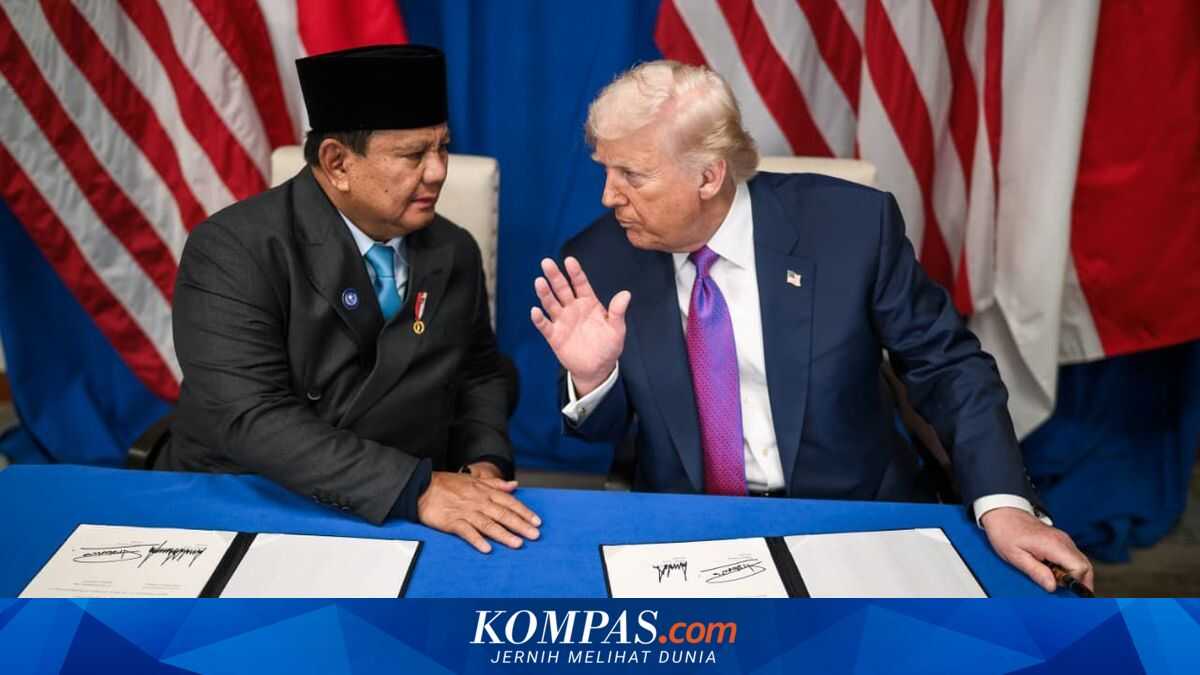
Jakarta – The reciprocal tariff agreement, or Agreements on Reciprocal Trade (ART), between Indonesia and the United States has drawn criticism from economists and international trade observers.
Several analysts argue that the direct economic benefits of the agreement are limited, as zero-tariff product coverage encompasses only a small portion of Indonesia’s total trade.
Riandy Laksono, researcher at the Economics Department of the Centre for Strategic and International Studies (CSIS), stated that the agreement secures only approximately 2 per cent of Indonesia’s total trade.
“So from all our exports to America, only 24 per cent are covered and get zero per cent [tariff]. Bear in mind, our exports to America represent only 10 per cent [of our total trade]. So the total market access we have secured from our total trade is only 2 per cent,” he said during a media discussion titled “Reciprocal Trade Agreement: Red Carpet or Trade Trap?” in central Jakarta on Friday (27 February 2026).
According to Laksono, the agreement cannot be viewed purely from an economic perspective, but must also be understood as part of a broader geopolitical strategy.
He noted that the agreement does not guarantee Indonesia will be protected from future protectionist policies by the United States. Even close US partners remain vulnerable to American trade pressures.
Criticism also emerged from Ahmad Heri Firdaus, researcher at INDEF’s Centre for Industry, Trade, and Investment. He contended that the ART does not merely regulate tariffs but contains provisions that could influence domestic industrial policy and regulation.
“Our policies are restricted—we are being steered; even our policy-making is constrained. That is quite burdensome. Later, the space for making policy will potentially become even narrower,” Ahmad Heri said during INDEF’s online discussion on Friday (27 February 2026).
Andry Satrio Nugroho, head of INDEF’s Centre for Industry, Trade, and Investment, went further, characterising the agreement as reflecting unequal bargaining positions.
“This is a practice I can say and underline is colonialism carried out by the United States,” Andry stated.
According to Andry, decisions by US domestic courts could potentially affect the legal basis of tariff policy that underpins the agreement.
“This I see not only as a negotiation failure, but also as a failure of communication between relevant ministries,” he said.