
Economist warns to maintain purchasing power to support Q2 economy
Jakarta (ANTARA) - Economist from the Center of Reform on Economics (CORE) Indonesia, Dipo Satria Ramli, assesses that the public’s purchasing power, which is closely linked to household consumption, needs to be maintained to support economic growth in the second quarter of 2026.
“In Q1, our growth was healthy, supported by government spending which led to an increase in consumption,” Dipo said when contacted by ANTARA in Jakarta on Wednesday.
The Central Statistics Agency (BPS) previously reported that Indonesia’s economy grew by 5.61% year-on-year in Q1 2026.
Based on the exposition from the Coordinating Ministry for Economic Affairs, this growth was supported by household consumption growth of 5.52% and government consumption of 21.81%, in line with increased state spending and various early-year stimuli.
Dipo explained that Q1 economic growth was also supported by the momentum of Ramadan and Eid al-Fitr, which boosted public consumption activities.
According to him, conditions in Q2 will differ as they will no longer be supported by seasonal factors like those at the beginning of the year.
Therefore, he reminds the government to continue maintaining household consumption so that the economic growth momentum persists.
“Although Q1 was healthy for us, there is indeed concern that in this second quarter we will face more reality,” he stated.
He said the domestic economic conditions still face several challenges because public purchasing power is deemed not yet fully optimal.
In addition, he mentioned that the number of the middle class, which has been one of the main supports for household consumption and national economic activity over the past five years, has experienced a downward trend.
“The middle class has declined by around 11 million people over the past five years,” he revealed.
According to him, this condition needs to be anticipated as it can affect industrial production costs and public consumption.
He then warned that the impact of global uncertainties on the business sector also needs to be anticipated, including the potential slowdown in industrial activity and the risk of layoffs (PHK).
“There is concern from several surveys, such as from Apindo or KSPI, that layoffs could possibly occur this year due to uncertainties in the business sector,” he said.
Meanwhile, the government states it will optimise state spending to maintain the economic growth momentum in Q2 2026.
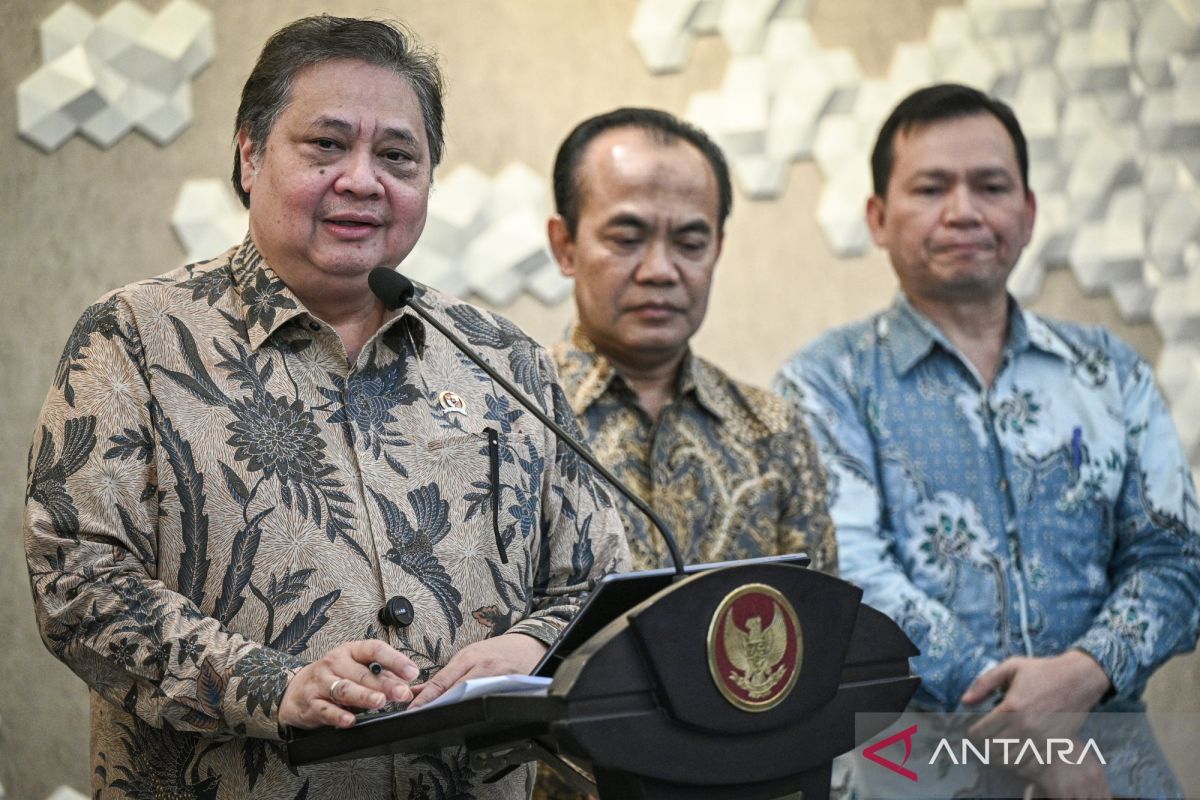
Coordinating Minister for Economic Affairs Airlangga Hartarto said the government is preparing several stimuli, including the disbursement of the 13th-month salary for civil servants (ASN) around Rp55 trillion, acceleration of food assistance to 33.2 million beneficiary families, and energy subsidies and compensation in the 2026 state budget amounting to Rp356.8 trillion.
Furthermore, Dipo assesses that the room for increasing government spending in Q2 is likely not as large as in the first quarter, so household consumption needs to be continuously maintained as a support for economic growth.