
Economist warns rupiah risks remaining weak if Iran-Israel conflict persists
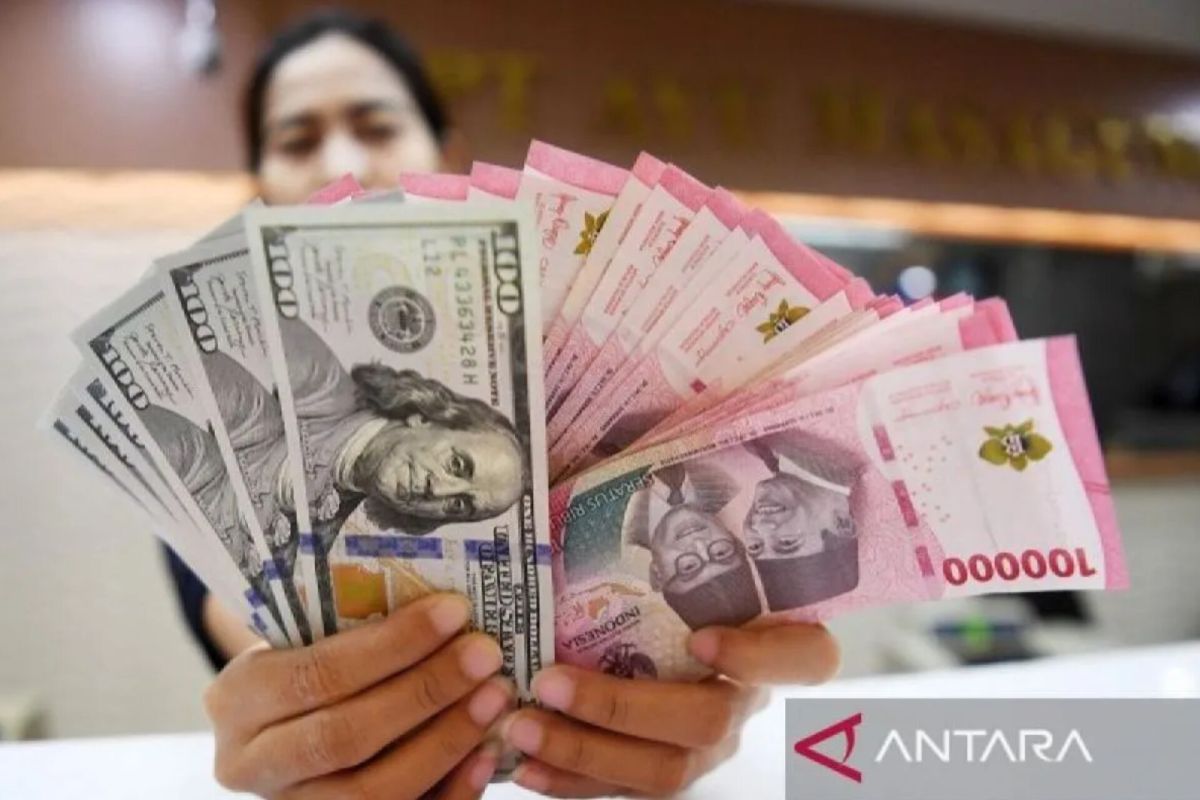
Jakarta (ANTARA) – Permata Bank’s chief economist Josua Pardede believes the rupiah risks remaining around its current weakest levels and could deteriorate further should the conflict between Iran and the United States-Israel persist unresolved.
He explained that leadership succession in Iran has added uncertainty as the transition occurs amid war, with Iranian elites divided and Mojtaba Khamenei, perceived as more hardline and close to the Revolutionary Guards, emerging as an influential figure.
“In such circumstances, markets tend to maintain demand for US dollars and reduce fund placements in developing countries, making it difficult for the rupiah to recover quickly,” Josua said when contacted in Jakarta on Monday.
On Monday, the rupiah touched 16,990 per US dollar when crude oil prices breached USD 100 per barrel.
Bank Indonesia previously held its benchmark interest rate at 4.75 per cent in February with a primary focus on strengthening rupiah stabilisation. The central bank also intensified interventions in domestic and foreign markets.
“This means Indonesia’s central bank policy should more appropriately be read as an effort to dampen panic and smooth currency movements, rather than guaranteeing the rupiah will quickly strengthen,” he said.
Regarding foreign exchange reserves, Josua assessed that remaining buffers are still adequate for use as a cushion.
“However, foreign exchange reserve usage must remain measured, as its function is to dampen volatility and ensure smooth foreign currency needs, not to maintain a specific exchange rate continuously when external pressures remain significant,” Josua stated.
In other words, he added, foreign exchange reserves remain robust, but their effectiveness would be considerably greater once geopolitical pressures begin to ease.
On crude oil prices, as long as disruptions at the Strait of Hormuz and attacks on energy facilities persist unabated, Josua expects oil prices to likely remain elevated above USD 100 per barrel and remain highly volatile. Markets have already tested ranges around USD 120.
For Indonesia, the inflation impact in the immediate term remains somewhat contained as the government has stated it will increase energy subsidies and does not plan to raise subsidised fuel prices at least until Lebaran.
“However, should the conflict extend, pressures will eventually spread to transportation, logistics, food, and import costs, weakening household purchasing power and increasing domestic price pressures. This risk warrants vigilance as February 2026 inflation has already been recorded at 4.76 per cent,” Josua said.