
Economist Warns of Monopoly Risk Behind Export Agency Plan
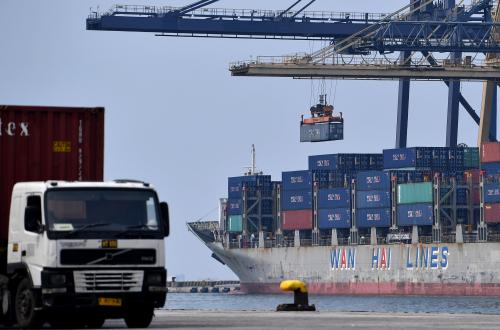
JAKARTA — Nailul Huda, Director of the Centre for Economic and Legal Studies’ Economics Centre (Celios), has highlighted plans to establish an Export Agency, expressing concern over practices that could benefit certain groups, particularly those who would head the agency. ‘This practice is not very different from the practices of the Clove Stabilisation and Marketing Board (BPPC), which monopolised clove trading,’ Huda told Republika in Jakarta on Wednesday, 20 May 2026. Consequently, Huda said, businesspeople have little bargaining power when selling products to the BPPC. He predicted that the export agency could later become a sole buyer of strategic commodities before export. ‘Prices could be set and producers would have no bargaining power with the export agency. This is monopsony that will distort markets and harm producers,’ he said. Furthermore, he added, commodities such as Crude Palm Oil (CPO) also involve producers from farmers who could be most affected by price pressures. If those commodities were large-scale and Indonesia became a major exporter, this practice could evolve into a state monopoly, becoming both a single buyer and a dominant seller in the global market. Huda also noted that there is potential to increase national revenue by curbing underinvoicing, though he doubted that all entrepreneurs engaged in such practices. ‘What happens to entrepreneurs who have already complied with the rules? Are they to be sanctioned by similar policies? This is something the government should examine comprehensively,’ he said.