
Economist says inflation arising from rupiah weakness is starting to show in May
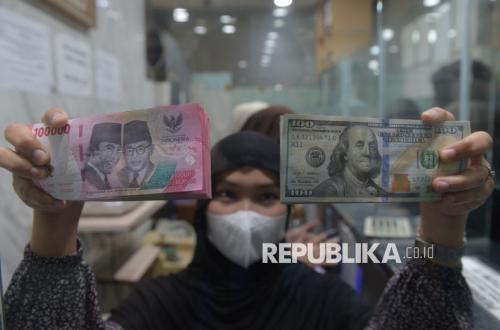
JAKARTA — The depreciation of the rupiah is expected to begin affecting national inflation in May 2026, with the final figures to be announced in early June. The pressure mainly stems from imported inflation that has started to spill over into various expenditure groups. Telisa Aulia Falianty, Professor at the Faculty of Economics and Business, Universitas Indonesia (FEB UI), projects that the impact of imported inflation will begin to appear in May’s inflation data, particularly in groups with high import content. ‘Imported inflation due to rupiah weakness can start to be felt in May. The expenditure groups most affected are those related to high import components,’ Telisa Aulia Falianty said on Monday (18 May 2026). Telisa cited several commodities that could be affected, including medicines, electronics, automotive, petrochemicals, wheat, heavy equipment, and telecommunications. According to her, the exchange-rate pressure on prices of imported goods has already begun to be reflected in wholesale price indicators. She added that signs of inflationary pressure from rupiah depreciation have actually been visible through increases in the Wholesale Price Index (IHPB) in recent months. Statistics Indonesia (BPS) records the IHPB rising from 106.00 in January 2026 to 109.07 in April 2026. Year-on-year, the IHPB in April grew 3.81%. ‘Usually, the Wholesale Price Index will influence the Consumer Price Index (IHK),’ Telisa said. The rupiah itself has continued to weaken since the start of the year, depreciating 5.99 per cent year-to-date. On Monday, the rupiah closed at Rp17.668 per US$1, weaker than the previous level of Rp17.597 per US$1. Meanwhile, Bank Indonesia’s Jakarta Interbank Spot Dollar Rate (JISDOR) also weakened to Rp17.666 per US$1 from Rp17.496 per US$1. Telisa urged the government to take mitigation steps so that the rupiah’s depreciation does not weigh more heavily on national inflation. Measures include improving logistics efficiency to curb rising production costs due to imported inflation. She also called on businesses to keep price adjustments fair to avoid burdening consumers. In addition, diversifying the use of currencies in international transactions is deemed important to reduce pressure on the US dollar. ‘Because if the rupiah is stable, imported inflation can be controlled,’ she said.