
Economist Says Increase in Non-Subsidised Fuel Prices Remains Within Reasonable Bounds
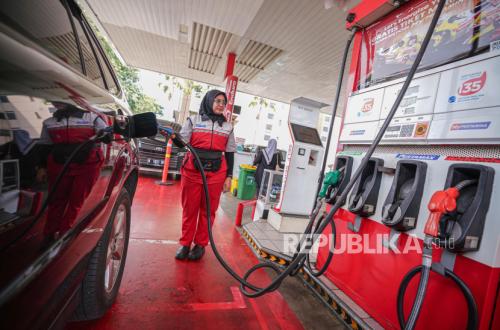
REPUBLIKA.CO.ID, JAKARTA — Wisnu Wibowo, an economist from Airlangga University (Unair), considers the increase in non-subsidised fuel oil (BBM) prices in Indonesia to still be within reasonable bounds. This adjustment comes amid escalating geopolitical conflicts in the Middle East, particularly tensions between Iran and the United States and Israel, which are affecting global oil prices.
“The rise in non-subsidised BBM prices is seen as a logical consequence because the pricing scheme follows international market prices,” Wisnu said when contacted on Sunday (29/3/2026).
He explained that the escalation of conflicts in the region, including potential disruptions in the strategic Strait of Hormuz, has driven a surge in world oil prices. This situation has then impacted the adjustment of non-subsidised BBM prices domestically.
From February to March 2026, several non-subsidised BBM products experienced increases. Pertamax rose from Rp11,800 to Rp12,300 per litre. Pertamax Green (RON 95) increased from Rp12,450 to Rp12,900 per litre, while Pertamax Turbo rose from Rp12,700 to Rp13,100 per litre.
For non-subsidised diesel types, Dexlite increased from Rp13,250 to Rp14,200 per litre and Pertamina Dex from Rp13,500 to Rp14,500 per litre. Meanwhile, subsidised BBM such as Pertalite and Solar remain held at Rp10,000 and Rp6,800 per litre respectively.
Wisnu predicts that the non-subsidised BBM increase remains in the moderate range, around 5 to 10 percent. “I predict the non-subsidised BBM increase will still be below 10 percent, around 5 to 10 percent,” he stated.
He added that the mechanism for determining non-subsidised BBM prices is indeed adjusted periodically following trends in world oil prices. The references used include the Mean of Platts Singapore (MOPS) and Argus as global commodity price benchmarks.
In addition, price adjustments also refer to the formula in Ministerial Decree of Energy and Mineral Resources Number 245.K/MG.01/MEM.M/2022, which considers reference prices, the rupiah exchange rate, and tax components. “The reference price and exchange rate variables are currently very dynamic, so it is reasonable for retail price adjustments to occur,” he explained.
Wisnu said that business entities have the authority to set retail selling prices for non-subsidised BBM while still reporting them to the government. This mechanism is considered to make prices more reflective of market conditions while encouraging more rational energy consumption, especially among affluent groups.
On the other hand, the surge in world oil prices that has broken above $100 US per barrel is also putting pressure on the state’s fiscal position. Every $1 US increase in oil prices has the potential to add a burden to the state budget of up to Rp6.7 trillion.
Nevertheless, the government is expected not to rush into raising BBM prices broadly, especially for subsidised types. Price adjustments remain the last option if fiscal pressures intensify further.
Several countries in Southeast Asia have also begun raising BBM prices since late February 2026. Countries with full market mechanisms like Thailand and Vietnam have experienced sharper increases, particularly for diesel types directly linked to logistics and industry sectors.
Meanwhile, Malaysia, which still provides relatively large subsidies, has managed to hold back price increases. Singapore, on the other hand, records the highest BBM prices in the region due to not applying subsidies and imposing high energy taxes.
This comparison shows Indonesia’s relatively stable position amid global pressures. The non-subsidised BBM price increases remain moderate, while subsidised BBM, especially diesel, continues to serve as the main buffer in maintaining public purchasing power and domestic economic stability.