
Economist Reveals Cause of Weak UMKM Credit amid Bank Credit and Consumption Recovery
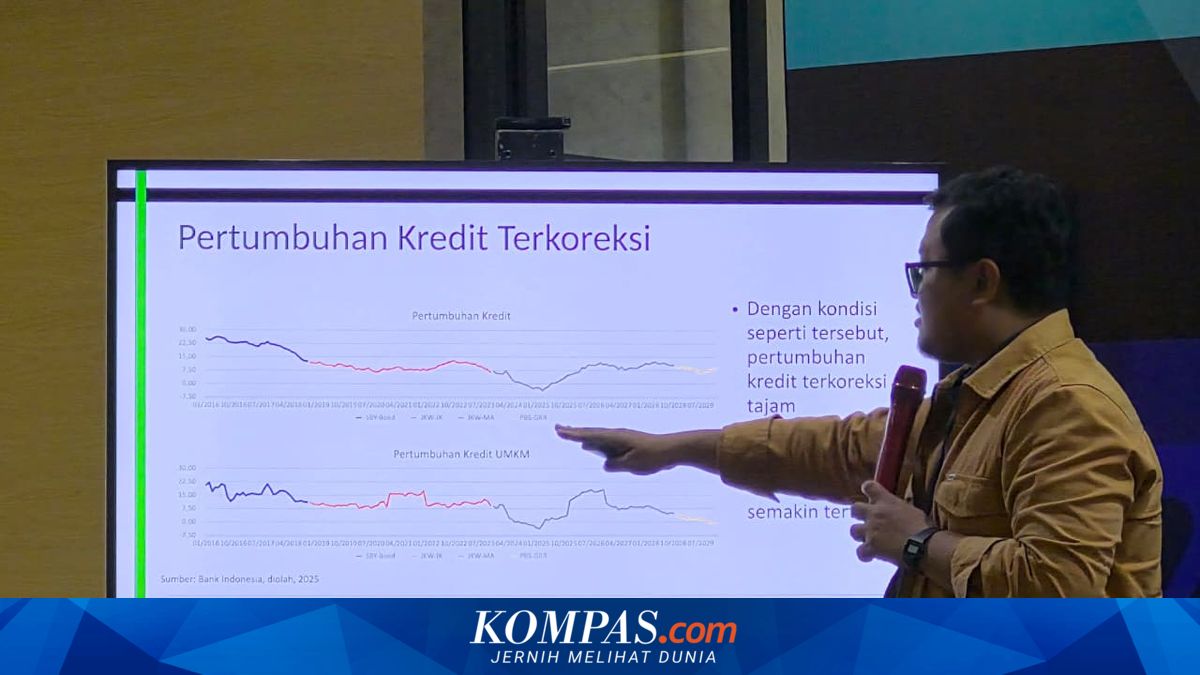
JAKARTA — Credit disbursement to the micro, small and medium-sized enterprise (UMKM) sector continues to show weak performance, whilst overall banking credit growth is beginning to recover.
Nailul Huda, Director of Digital Economy at the Center of Economic and Law Studies (Celios), highlighted the concerning performance of UMKM credit, which has contracted even as overall banking credit shows signs of recovery and consumer spending improves.
In January 2026, banking credit recorded growth of 9.96 per cent year-on-year (yoy). Although still lower compared to January 2025, which reached 10.27 per cent (yoy), this represents the highest growth rate in nearly a year.
The Composite Index of Economic Activity (IKK) for this period was only slightly lower than the same period the previous year at 127.2.
By contrast, credit to the UMKM sector continued to experience contraction of 0.53 per cent (yoy) compared to the same period the previous year. This was substantially lower than January 2025, which still saw growth of 2.89 per cent (yoy).
“This is problematic,” Huda said during a media briefing at RDTX Square, Jakarta, on Tuesday (11 March 2026). “On one hand, consumer spending has started improving, but on the other hand, UMKM credit growth has failed to materialise. Given that UMKM is the backbone of our economy, this raises important questions.”
The UMKM sector plays a vital role in the national economy, particularly in absorbing labour and sustaining economic activity. Consequently, the weakness in credit disbursement to this sector warrants serious attention.
Huda attributed one major cause to banks’ preference for channelling credit towards the corporate sector. This is evident from the declining share of UMKM credit relative to both gross domestic product (GDP) and total banking credit.
As of January 2026, UMKM credit disbursement stood at Rp1,482.9 trillion, accounting for only approximately 17.33 per cent of total national banking credit disbursement. Meanwhile, the target share for UMKM credit is 30 per cent.