
Economist: Public Need Not Worry About Indonesia's Fuel Reserves
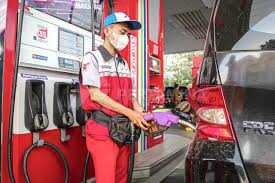
Senior economist Tauhid Ahmad of the Institute for Development of Economics and Finance (Indef) says the public need not worry about Indonesia’s fuel stockpiles, which are currently around 20 days. He is confident the state-owned energy company Pertamina will undertake various measures to ensure its fuel stock remains sustainable. He explains that a 20-day reserve means stock would run out if no action is taken over a period; however, as a regular practice, Pertamina is implementing steps to stabilise supply and maintain the level of stock.
As context, the level of fuel reserves complies with applicable rules. In the December 2025 report, for example, the Minister of Energy and Mineral Resources noted that most types of fuel in Indonesia were above the minimum reserve standard; for certain products, around 19–31 days. The Regulation No 9 of 2020 of BPH Migas on the Provision of Operational Fuel Reserves states that holders of business licences must provide operational fuel reserves with a minimum cover of 23 days.
Tauhid continued that stockpiling capacity depends on how far the government and Pertamina are willing to invest. Not only the materials, but also warehouses, distribution channels, shipments and so on. “That means, on average, our financial capacity to stock is around that level. It does not mean the number of days will automatically drop; it will be relatively volatile at that figure,” he said. “Why not monthly? Because our financial capacity is limited. In addition, we are a net importer,” he added.
Therefore, Tauhid views positively Pertamina’s supply planning, from refinery production to energy imports. He argued that these plans are important to keep the reserves stable.
Tauhid cited Pertamina and government steps to promptly divert crude imports away from the Arab region. In the face of an increasingly tense Gulf, such diversification is positive, including plans to import from Brazil or the United States. “In my view that’s a good option, because that region is currently free from conflict,” Tauhid said.
At present, according to Tauhid, Indonesia’s crude imports from Saudi Arabia account for around 20% of total imports. Indonesia also imports from Nigeria and Angola.
Tauhid also urged that contracts for crude imports be signed promptly, given crude prices are rising amid the US–Israel–Iran tensions. He warned that price volatility for global supplies is a concern, and suggested signing contracts sooner rather than later.
He also warned against importing when crude prices reach US$100 per barrel, as doing so would strain the state budget with a deficit exceeding 3%. “Right now it’s around US$78 per barrel,” he noted.
On the other hand, Tauhid cautioned that Indonesia’s fuel reserve quota amid the conflict should ideally be expanded, to around 1–2 months if possible, to anticipate potential disruption of global distribution routes, including the current Hormuz Strait closure. “The more reserves we have, the better for us. Reserves underpin availability, distribution, and the country’s finances,” he said.
Additionally, Pertamina should prepare contingency plans if the situation worsens so that the public’s fuel needs are not interrupted. With these plans, Tauhid believes the public should not worry that Indonesia’s fuel reserves will run out in about 20 days, as the government already has plans to redirect imports to safer regions.
Earlier, while attending a meeting at Istana Negara in Jakarta on Monday (2 March 2026) regarding current geopolitical conditions, Energy and Mineral Resources Minister Bahlil Lahadalia said national fuel reserves are currently sufficient for 20 days (H-2).
Pertamina has emphasised that subsidised fuel for fishermen is divided into JBT, JBKP, and JBU. Fishermen need to understand the differences to access fuel correctly.
RDMP Balikpapan remains a key milestone in strengthening national energy resilience.
In December 2025, KPI plans to increase gasoil production series to around 11.5 million barrels.
The Government should further study an alternative fuel called Bobibos (Bahan Bakar Original Buatan Indonesia), developed from agricultural waste.
PT Pertamina Patra Niaga reiterated that ethanol blending in fuel is not new; it is a global standard.