
Economist: Prabowo's Visit to Japan Strengthens Trade
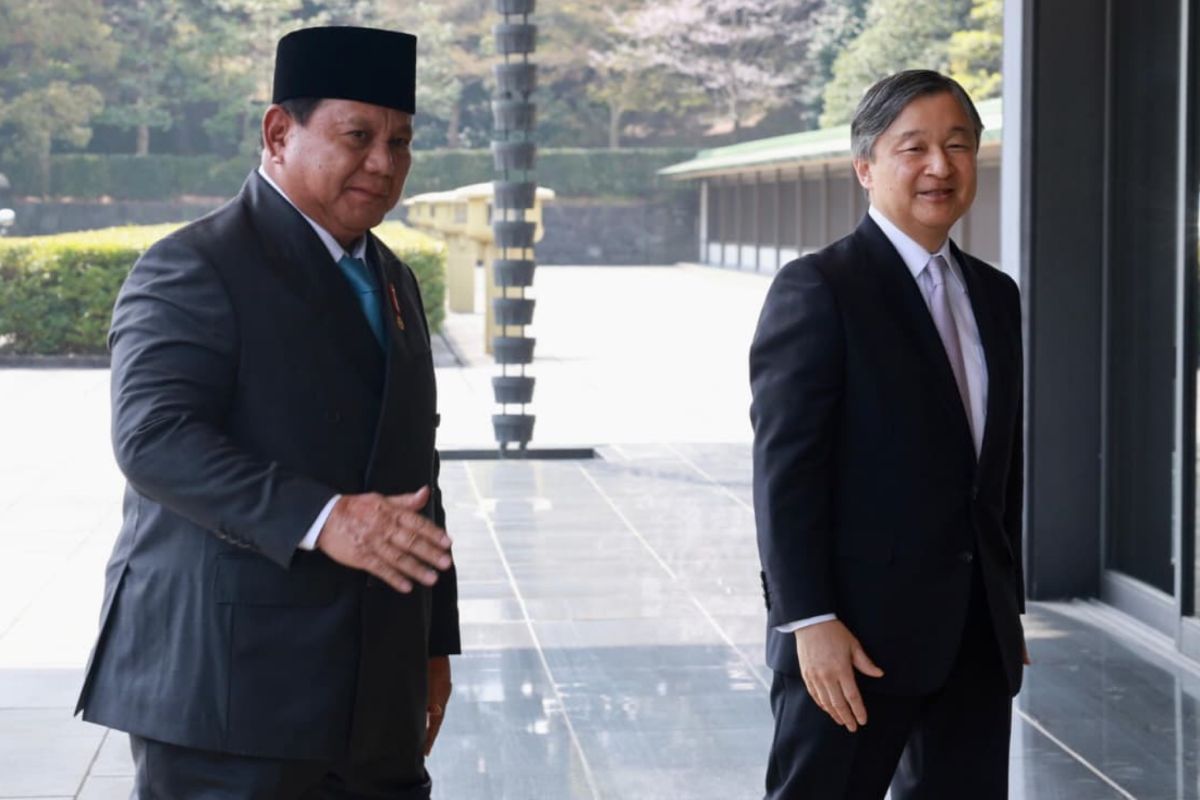
Jakarta (ANTARA) - Economist from Indef and Rector of Paramadina University Didik J. Rachbini views President Prabowo Subianto’s working visit to Japan as an important momentum to strengthen Indonesia’s trade and economic cooperation.
In a written statement received in Jakarta on Monday, Didik stated that the President’s foreign diplomacy is expected to yield tangible benefits, particularly in increasing trade, investment, and Indonesia’s integration into the global supply chain.
According to him, Japan has a significant influence on Indonesia’s economic development, so the economic relations between the two countries need not only to be maintained but also enhanced more strategically.
“Japan as a major trading partner is highly potential for advancing Indonesia’s foreign trade,” Didik said.
Didik explained that the trade relations between Indonesia and Japan are complementary or mutually supportive, thus providing benefits for both countries.
Indonesia supplies energy, coal, LNG, as well as agricultural and fishery products, while Japan exports industrial machinery, high technology, and manufacturing investments.
This trade pattern is seen as creating mutually beneficial relations because it strengthens the industrial value chain, encourages technology transfer, opens up job opportunities, and bolsters the national manufacturing sector such as automotive and electronics.
According to him, Indonesia’s partnership with Japan differs from other countries. For example, with China, Didik said, the relationship is substitutional or mutually replacing and negating, thus tending to compete.
“The nature of trade relations with China is mutually substitutive competition on similar products. Indonesia and China have the same agricultural, food, and plantation export products. Like Indonesia, China also exports manufactured industrial goods such as textiles, electronics, and others,” he explained.
Didik added that this condition has the potential to cause direct competition that harms Indonesia’s domestic industry, especially due to pressure from cheaper imported product prices.
The impact could trigger premature deindustrialisation and weaken the position of small and medium industries that shift to becoming distributors of imported goods.
Although Japan’s economic growth is relatively low, Didik emphasised that the country’s economic scale is still among the world’s giants along with the United States, China, India, and Germany.
Therefore, the President’s visit to Japan should not merely be symbolic diplomacy.
He encouraged the government’s economic team to immediately follow up on the visit through concrete investment and trade promotion strategies so that the complementary Indonesia-Japan cooperation can provide long-term economic impacts for strengthening the national industry.
“Complementary trade like this is more beneficial and economically meaningful because it strengthens both value chains, where Indonesia enters the global supply chain. The impact includes technology transfer, creation of industrial jobs, and strengthening of manufacturing (automotive, electronics),” he added.