
Economist outlines sectors to drive Indonesia's economy beyond 5 percent
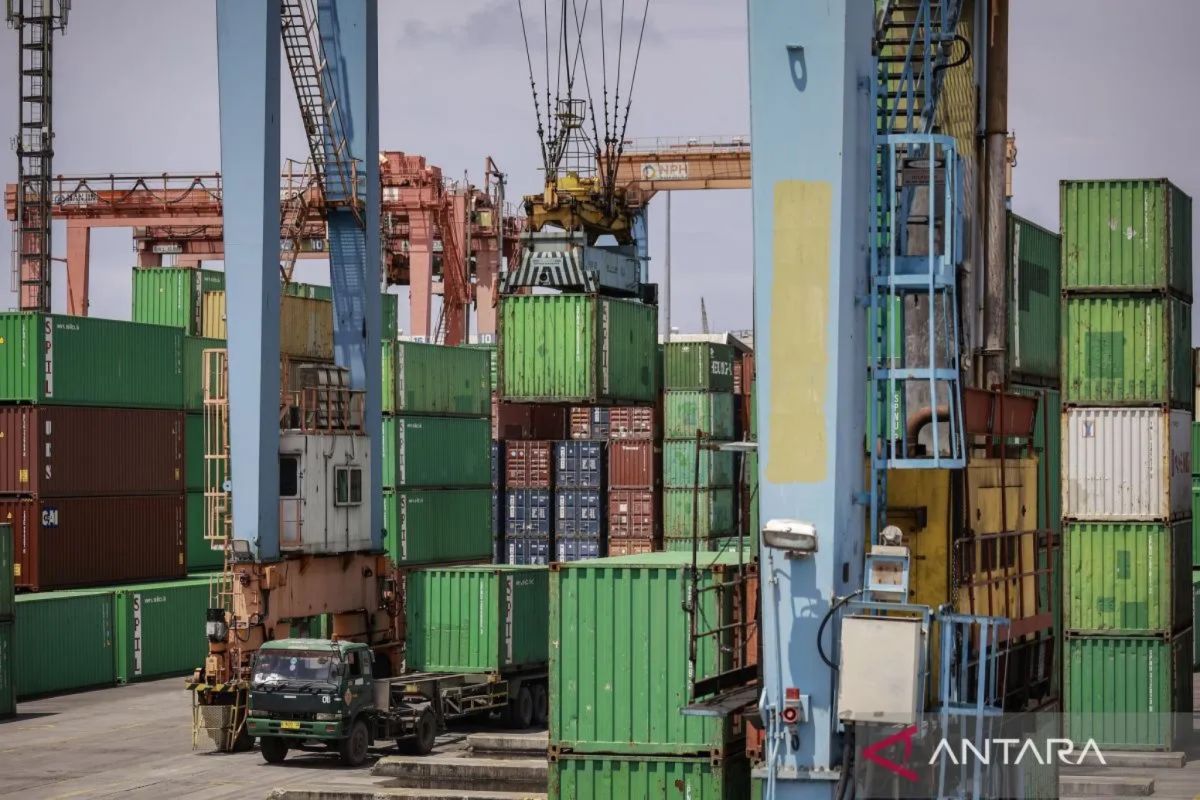
The government must activate all engines of growth through a combination of traditional and high value-added modern sectors. Jakarta (ANTARA) - Professor Rahma Gafmi from the University of Airlangga outlined several sectors that need to be promoted so that Indonesia’s economic growth can exceed 5 percent in 2026 amid global geopolitical uncertainties. “To achieve the target of economic growth above 5 percent, Indonesia cannot rely on just one sector. The government must activate all engines of growth through a combination of traditional and high value-added modern sectors,” she told ANTARA in Jakarta on Monday. Rahma detailed first the processing industry or manufacturing sector, which remains the backbone of the national economy as it contributes around 19-20 percent to gross domestic product (GDP). Therefore, this sector needs to be encouraged to grow higher than the national economic growth. The focus for strengthening manufacturing is through downstreaming natural resources such as nickel, copper, and bauxite into semi-finished or finished products for export. In addition, building the battery industry supply chain to vehicle assembly domestically is also considered crucial. The second sector is agriculture and food security, which is beginning to show its role as a new growth engine. In 2025, this sector recorded growth above 5 percent, reversing the previous trend which was below 2 percent. “Don’t forget the simplification of fertiliser and agricultural machinery distribution. Because that is capital for increasing productivity. Implementation of programmes like food barns so that food prices remain stable to increase domestic demand for agricultural products,” she said. The third sector is household consumption, which contributes around 54 percent to GDP. She stated that people’s purchasing power must be maintained through food price stability and job creation. According to her, accelerating government spending realisation from the beginning of the year is also an important factor in driving the economy. Infrastructure projects such as the construction of irrigation, reservoirs, small dams, as well as road and bridge repairs are considered capable of increasing money circulation while expanding employment opportunities through labour-intensive programmes. “High growth targets require large capital flows (FDI) to us. There is a multiplier effect of creating new formal jobs,” Rahma said. Then, the fourth sector, Rahma highlighted the role of the green energy sector, particularly the development of renewable energy. The B50 biodiesel programme scheduled to start in July 2026, according to her, has the potential to save up to Rp48 trillion if implemented optimally and on target. In addition, investment in the technology and digital economy sector needs to continue to be encouraged because it has exponential growth potential and can become a new source of growth in the future. Following the Government Working Meeting at the Presidential Palace Complex in Jakarta on Wednesday (8/4), Coordinating Minister for Economic Affairs Airlangga Hartarto stated that optimism for economic growth is supported by strong domestic fundamentals, particularly household consumption which contributes around 54 percent to gross domestic product (GDP). From the fiscal side, the state budget performance up to the first quarter of 2026 also shows a positive trend. Tax receipts up to March were recorded to increase by 14.3 percent to around Rp462.7 trillion, while the manufacturing sector is still in the expansion phase. In addition, national food security is considered to remain maintained. Rice production in 2025 reached 34.7 million tonnes, with Perum Bulog’s rice stock currently around 4.6 million tonnes. The government is also continuing to prepare strategic policies to maintain the momentum of growth and economic stability, one of which is through the implementation of the B50 Biodiesel Programme which will take effect on 1 July 2026. “The B50 policy is estimated to provide budget savings of up to Rp48 trillion,” Airlangga said. On the other hand, the government is committed to maintaining fiscal discipline, including keeping the debt ratio at 40 percent of GDP, below the maximum legal limit of 60 percent. In addition, the budget deficit is also targeted to remain controlled around 3 percent until the end of the year.