
Economist: Labour-Intensive Incentives Should Not Hinder Technological Investment
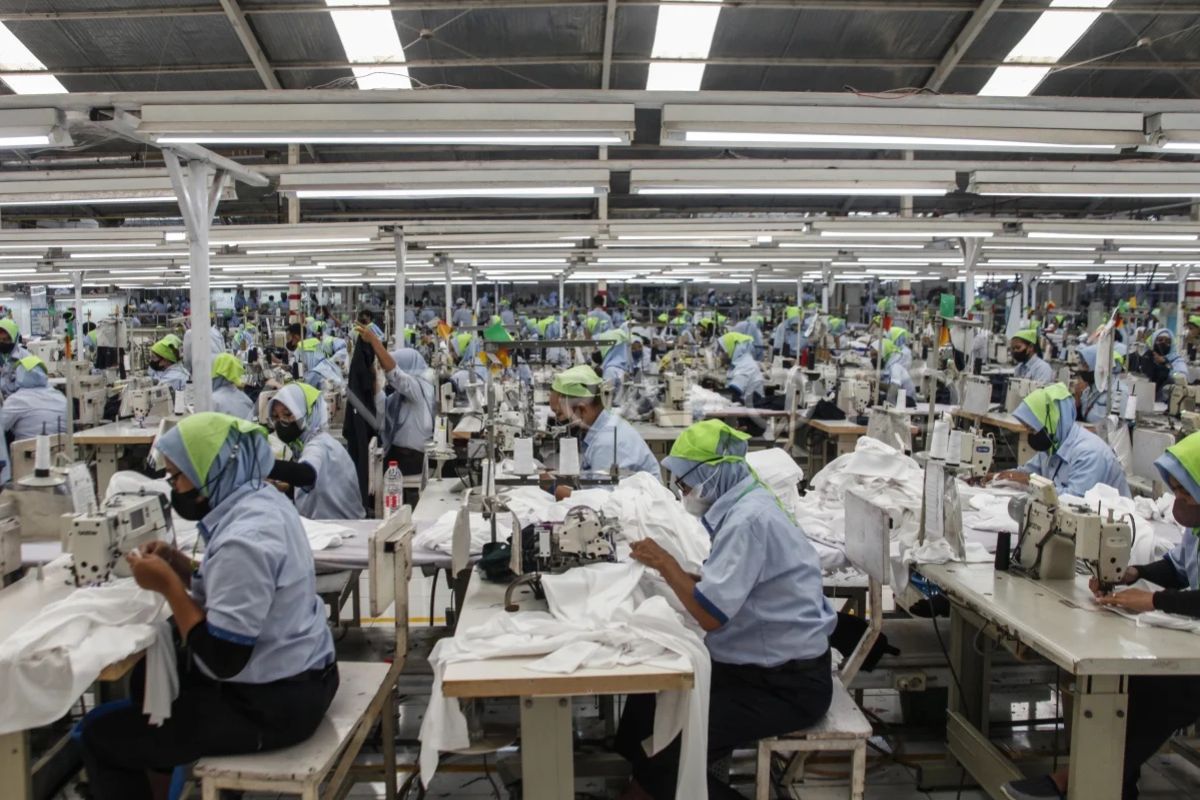
Jakarta (ANTARA) - Economist from the Center of Reform on Economics (CORE), Yusuf Rendy Manilet, encourages the government not to focus solely on labour-intensive investments in the reformulation of fiscal incentives, but to also maintain attractiveness for technology-based investments.
According to Yusuf, technological investment is important for long-term growth.
“If we focus too much on labour-intensive approaches, we could fall behind in attracting high-tech investments that will actually become the engine of future growth,” he said when contacted from Jakarta on Friday.
This statement was made in response to the government’s policy to shift the priority of fiscal incentives from being based on large investment values to being based on workforce absorption.
Yusuf considers this shift in incentives to a workforce absorption basis as appropriate amid the phenomenon of jobless growth—when economic growth is not accompanied by workforce absorption—and the continuously increasing labour force.
However, he said that this policy is not sufficient if not accompanied by strategies to increase productivity.
“If we only shift to labour-intensive without a productivity enhancement strategy, we risk locking the economy at a low level,” he stated.
He assessed that investment policies so far have too much emphasised large project values, but not proportionally with job creation.
In many cases, he continued, capital-intensive projects require very large investments to create one job, while agro-based sectors can absorb far more workers with smaller investments.
He added that many labour-intensive sectors are currently facing global pressures, so policy approaches must be more selective and not just chase workforce numbers.
For this reason, he emphasised the importance of incentive designs that address business costs and risks, such as interest subsidies, relief on workforce burdens, and support to maintain purchasing power.
However, he underlined that non-fiscal incentives such as accelerated permitting, land certainty, and infrastructure are often more determining for investors than tax incentives.
Above that, incentives for transformation are key, including workforce training, technology adoption, and productivity enhancement.
“Without that, incentives are just short-term cushions,” he said.
Yusuf also warned of several risks from this policy, from the potential slowdown in capital-intensive investments, moral hazard in companies that only chase workforce numbers, to fiscal burdens if incentives are not strictly evaluated.