
Economist: Indonesia's Oil Dependency Lower Than Peer Countries
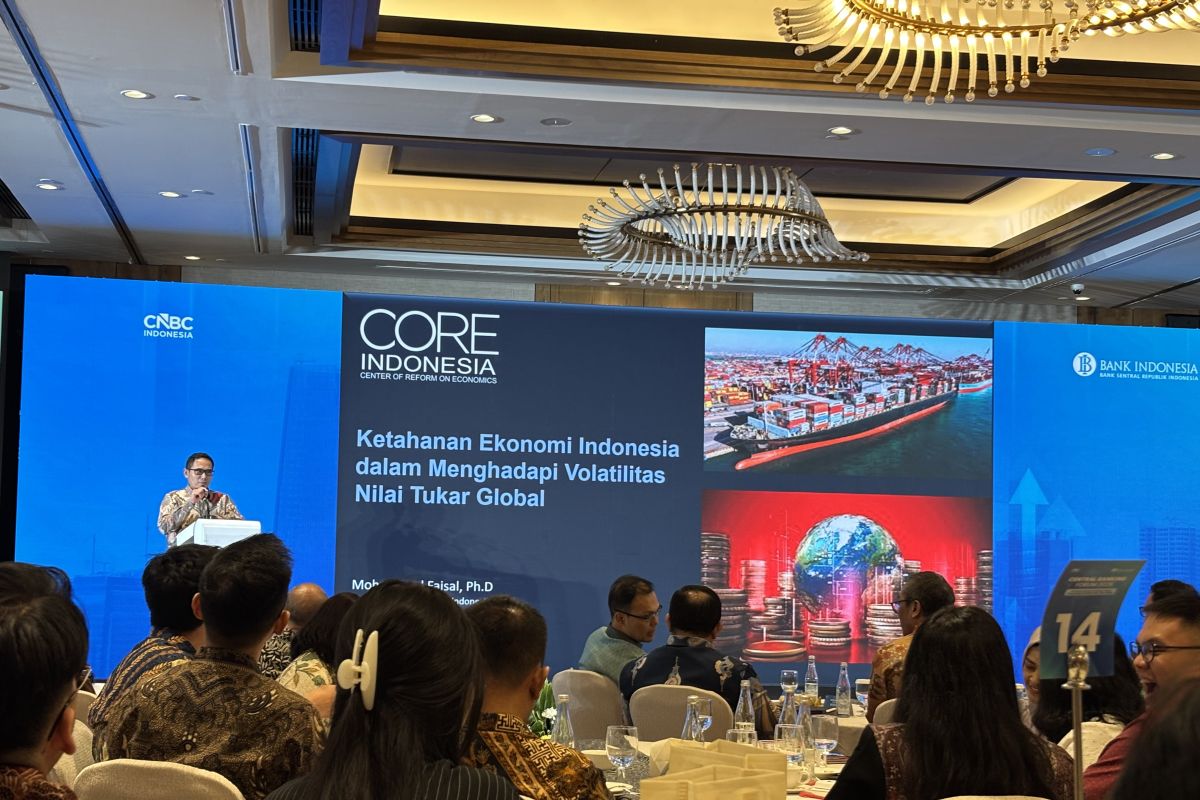
Jakarta (ANTARA) - Executive Director of the Center of Reform on Economics (CORE), Mohammad Faisal, stated that Indonesia has a lower dependency on Middle Eastern oil supplies compared to peer countries. “We need to prepare to face conditions where the pressure will still be felt ahead. But, looking at our dependency on oil, we are actually much better off compared to other peers,” Faisal said at the Central Banking Forum 2026 in Jakarta on Monday. He exemplified that the Philippines’ dependency on Middle Eastern oil reaches 95 per cent, while Malaysia’s is nearly 70 per cent. In contrast, Indonesia’s dependency is only around 20 per cent. According to Faisal, this is due to Indonesia having diversified its import sources, for example from countries in Africa. Therefore, in the context of oil, Faisal opines that Indonesia still has better resilience compared to other countries. “The Philippines, with such conditions, understandably announced work from home (WFH) on a larger scale than us. Because their dependency is very high,” he said. He also appreciated the government’s decision to maintain subsidised fuel prices (BBM). This policy, he said, plays a role in maintaining domestic inflation levels. “Because based on history, if subsidised BBM prices rise, the impact is quite significant, both directly and indirectly, on food prices,” he added. As a note, the government has implemented a work from home policy or WFH for civil servants (ASN) every Friday starting from 1 April 2026, which will be evaluated after two months of implementation. Besides ASN, the government also encourages WFH for the private sector. The regulation will be stipulated through a Circular from the Minister of Manpower, while still considering the characteristics and needs of each business sector. The WFH policy aims to save the State Revenue and Expenditure Budget (APBN) with potential savings of up to Rp6.2 trillion from fuel compensation. Meanwhile, the total potential savings from public fuel consumption is estimated to reach Rp59 trillion.