
Economist: Impact of LPG Price Hike on Inflation Needs to be Anticipated
Jakarta (ANTARA) -
Head of Economics at Trimegah Sekuritas Indonesia, Fakhrul Fulvian, assesses that the impact of LPG and non-subsidised fuel price increases on inflation requires anticipation through several policies.
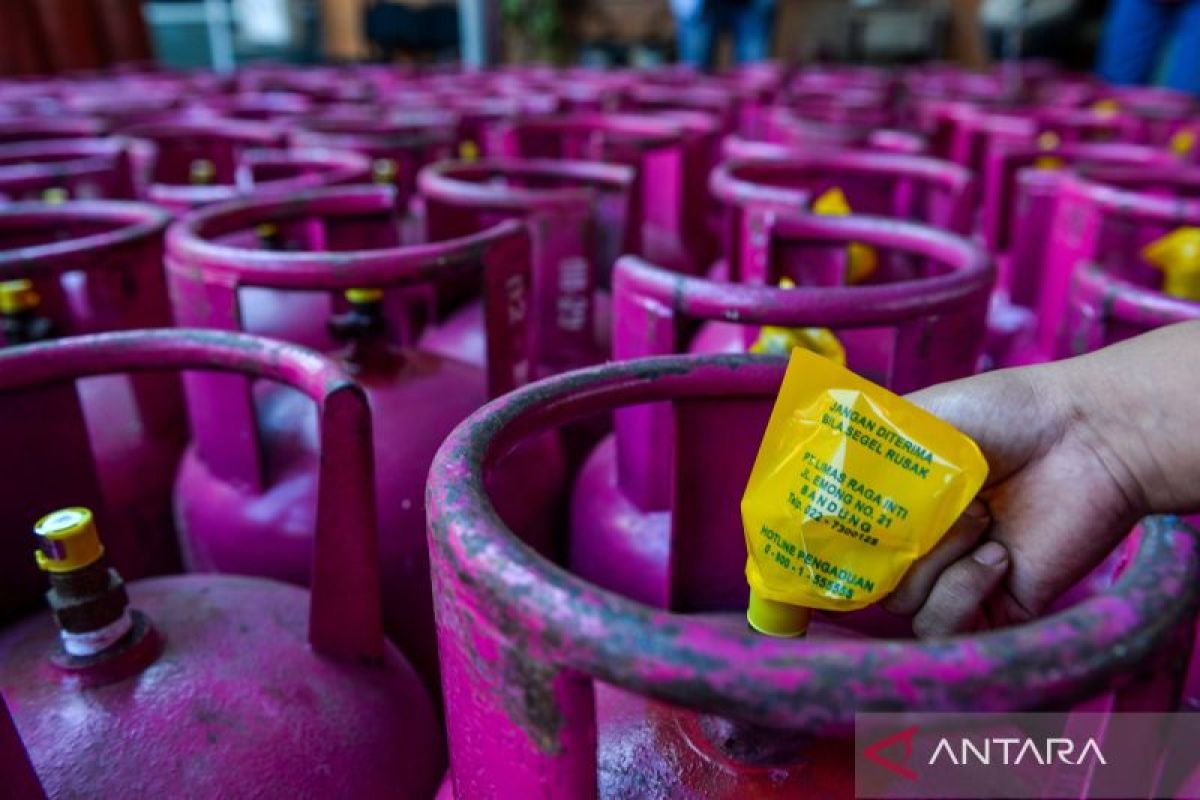
He calculates that in the short term, the price hikes for 12 kg LPG and non-subsidised fuels are estimated to contribute a relatively moderate additional inflation of 0.1-0.3%.
This depends on the magnitude of the increases and the speed of their influence on other prices, particularly in the transportation and logistics sectors.
“However, the pressure does not stop at inflation figures alone. This would be different if the subsidised ones also rise; hopefully, the subsidised ones are kept from increasing,” Fakhrul told ANTARA in Jakarta on Monday.
Fakhrul explains that the group most affected by these non-subsidised energy price increases is the middle class.
“They do not receive social assistance but are very sensitive to rises in living costs, especially transportation and household energy,” he said.
According to him, the middle class is often overlooked in policy design, yet in the structure of a modern economy, they serve as a shock absorber for domestic consumption.
Derivative impacts, such as the depreciation in car values which are assets for Indonesia’s middle class, will indirectly jolt household balances.
From a policy perspective, the government needs to prioritise a more targeted and communicative approach.
“First, policy communication must be explicit, that this increase is part of structural adjustment, not just a short-term response. Second, targeted cushioning is needed, not broad stimulus. For example, strengthening public transportation assistance or incentives for the logistics sector to contain price transmission,” he added.
Regarding the effectiveness of social assistance, Fakhrul views that the instrument remains relevant but needs continuous improvement in terms of accuracy and distribution speed.
“Social assistance remains important, but it is not enough. We need policy design that also preserves the middle class’s purchasing power, because that is where aggregate consumption is supported,” he stressed.
Furthermore, he reminds of the risk of additional impacts (second-round effects), especially in the context of unstable global geopolitics.
“With the current global dynamics, particularly regarding energy prices and geopolitical conflicts, the risk of second-round effects remains. Energy price increases could spread to food prices, logistics, and inflation expectations. Therefore, fiscal and monetary coordination becomes crucial to ensure inflation expectations remain anchored,” Fakhrul explained.