
Economist: Fiscal risks anticipated with more targeted APBN efficiency
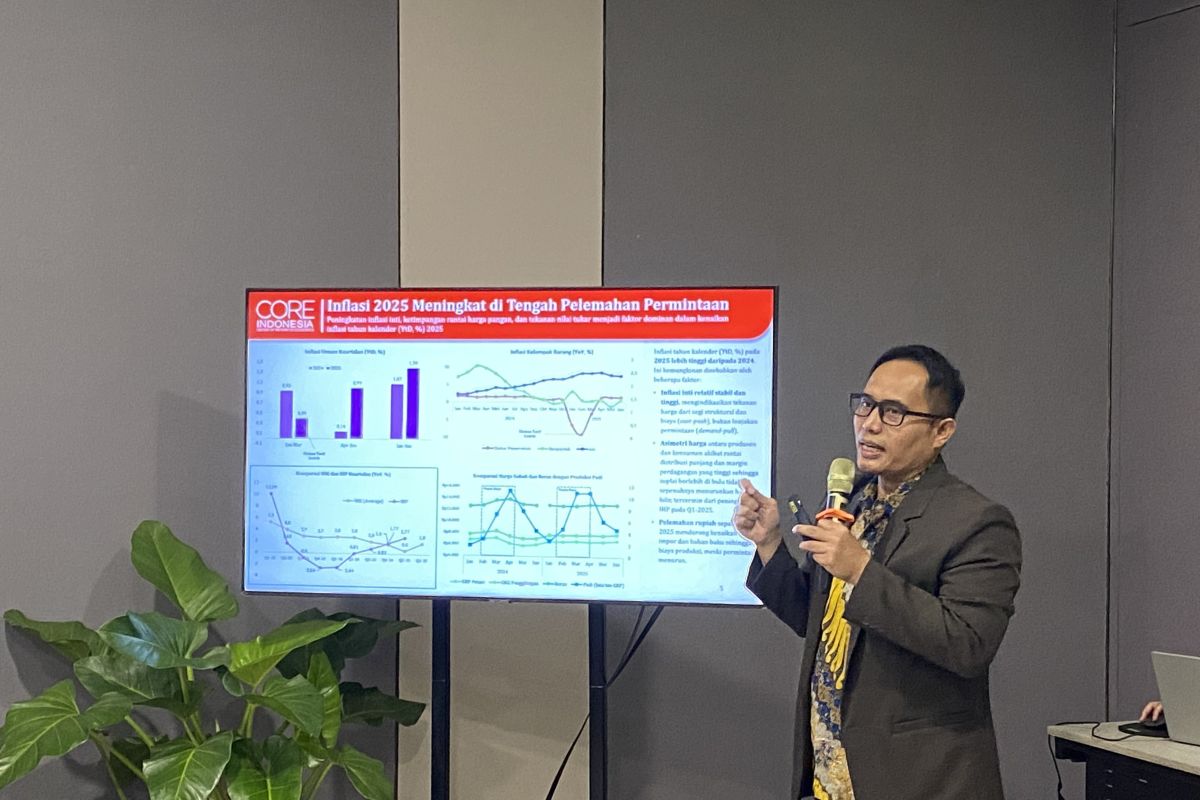
Jakarta (ANTARA) - Executive Director of the Center of Reform on Economics (CORE) Mohammad Faisal has reminded that pressures on fiscal policy need to be anticipated more carefully with more targeted efficiency in the State Revenue and Expenditure Budget (APBN). Speaking at the Central Banking Forum 2026 in Jakarta on Monday, Faisal stated that the biggest challenge currently is not only maintaining macroeconomic stability but also ensuring that fiscal governance remains credible in the eyes of the market. Based on his simulation, if oil prices exceed US$84 per barrel and the rupiah exchange rate moves in the range of Rp16,800 to Rp17,000 per US dollar, the additional energy subsidies needed to keep subsidised fuel prices from rising could reach around Rp100 trillion. That figure is seen as placing significant pressure on the APBN and making fiscal management increasingly challenging. He commended the government’s steps to maintain the APBN deficit below 3 per cent. According to him, that limit is important to uphold because widening the deficit above 3 per cent could trigger sharper scrutiny of fiscal governance. “President Prabowo Subianto has confirmed that it will indeed not exceed 3 per cent, with efforts made to keep it as low as possible below that. But of course, there is a cost to it, and strategic steps that must be taken,” he said. The government has decided to implement budget efficiency to respond to global volatility while maintaining fiscal health. However, Faisal highlighted that the budget efficiency strategy pursued by the government needs to be designed more carefully. He gave the example that APBN efficiency carried out at the beginning of last year once caused quite a significant impact on the real sector and regions, including the tourism industry which faced pressure in the first semester. On that basis, efficiency is deemed insufficient if it stands alone. The government needs to combine it with budget reallocation from less productive posts to sectors that require more support. Such an approach, according to him, would be more effective for maintaining fiscal stability without excessively pressuring economic activity. The government previously decided to reallocate ministry/institution (K/L) spending by Rp121.2 trillion to Rp130.2 trillion as one effort to mitigate global economic dynamics. That policy is part of the 8 Pillars of National Work Culture Transformation aimed at addressing global dynamics challenges while maintaining domestic economic stability. Another policy mentioned is the optimisation of the Free Nutritious Meals (MBG) programme to five days, which has the potential to save up to Rp20 trillion in the budget. “I think this is a good response to maintain stability and fiscal health. At the same time, it also increases confidence among the public and business actors,” he said.