
Economist: Exchange Rate Maintained, Fiscal Challenges Must Still Be Watched
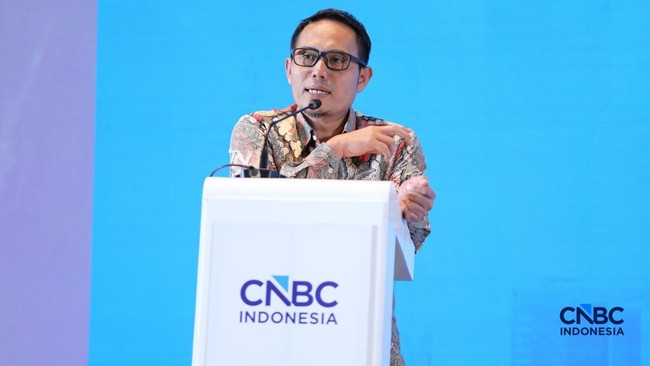
Jakarta, CNBC Indonesia - Director of CORE Indonesia, Mohammad Faisal, stated that maintaining exchange rate stability is an important step, especially to mitigate the effects of rising commodity prices due to the US-Israel war with Iran. Exchange rate volatility and pressure are evident in several countries, including Indonesia. Nevertheless, the volatility in the rupiah exchange rate, according to him, remains relatively low and can be contained with appropriate policies. “It can still be contained; foreign exchange reserves are still sufficient. Stabilisation efforts deplete foreign exchange reserves, but in terms of value, interventions are still possible,” Faisal explained at the Central Banking Forum themed “Indonesia’s Economic Resilience in Facing Global Exchange Rate Volatility” in Jakarta on Monday (13/4/2026). He emphasised that the central bank’s steps should be appreciated, with efforts to maintain the exchange rate without raising the BI Rate. Faisal views this as a positive factor for future exchange rate stability. On the inflation front, Indonesia’s rate is still lower compared to other countries. The monthly inflation rate was lower in March than in February, while the annual rate is below 3.5%. “In addition to the stable exchange rate, the government’s role in maintaining domestic fuel prices is very important for controlling inflation,” said Faisal. Looking back, if fuel prices rise, the direct and indirect impacts affect food prices. “We once conducted a simulation; when discussing stability, the focus was on fiscal governance. If oil prices reach US$84 per barrel or higher with an exchange rate of Rp16,800-17,000, the energy subsidies needed would exceed Rp100 trillion. Thus, fiscal governance becomes a very significant challenge and must be avoided to keep the deficit below 3%,” he clarified. Faisal appreciates the government’s policy of keeping the budget deficit no more than 3.5%. For this, costs and strategic steps are required. The most important is efficiency, so a review and refocusing on flagship programmes are needed. “This is good for maintaining stability and fiscal health, and for increasing business confidence,” he stated. He also noted that the downstreaming programme is starting to show impacts since the early pandemic and is driving trade surpluses, not just in CPO and coal, but also in nickel and iron and steel. “If this is continuously strengthened, the deficit will narrow and could return to surplus; the current account is viewed by investors and influences the strength of rupiah stability,” Faisal asserted firmly.