
Economic Lessons from the Hajj
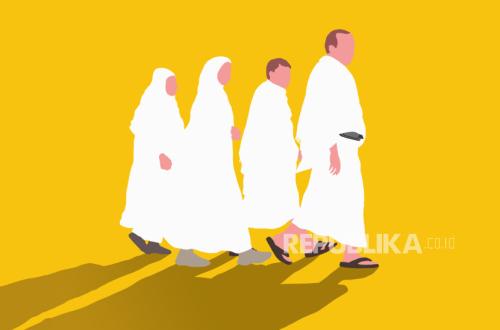
Beneath the majestic dome of Makkah’s sky, thousands move in unison. They shed all worldly attributes—prestigious titles, glittering thrones, and honourifics replaced by simple, seamless white garments.
Many view this sacred ritual as purely a spiritual journey. However, a deeper examination reveals Hajj as a profound manifestation of how life’s structures—including material and economic affairs—should be conducted on Earth.
Thawaf Ifadhah and Continuous Circulation
After enduring the vigil at Arafah, the chill of Muzdalifah’s night, and the trials of patience in Mina, pilgrims proceed to the Black Stone. Thawaf Ifadhah sees crowds moving counterclockwise, aligning humanity’s microcosmic motion with the universe’s macrocosmic rhythm.
Millions flow like water—no stopping abruptly, no forced lane-cutting. All move, rotate, and circulate around a single axis: the Kaaba.
Within this reverent whirl, lies a fundamental economic law of circulation and distribution.
Wealth in Islam flows like pilgrims in Tawaf—it must keep moving, passing from the affluent to the needy. When assets are channeled via zakat, sadaqah, and fair investments, they circulate, nurturing life’s foundations.
Conversely, hoarded or monopolised wealth stagnates like a pilgrim halting mid-Tawaf, causing blockages, chaos, and ecosystem damage.
Thawaf Ifadhah teaches that a nation’s economic strength lies not in accumulated wealth, but in the fluidity and equity of its distribution, fostering resilient economic foundations.