
Ecological Innovation at SMPN 13 Denpasar: Transforming Waste into Eco Enzyme and Soap
Since early morning, residents of SMPN 13 Denpasar have been occupied with a purification ceremony for a new building at their school. Gamelan music accompanied celebrations coinciding with Tumpek Krulut. After completing the prayer ceremony, they quickly gathered organic waste from the ceremony.
Teachers and student council members worked together to transport it to a modern compost pit behind the school’s prayer pavilion. Three students opened the underground compost pit and placed the used prayer offerings into it. Each student at SMPN 13 Denpasar is accustomed to taking responsibility for the waste they generate.
“If we throw it in the landfill, there would be so much piling up. So we made a modern compost pit to process organic waste. We wait 9–12 months for it to become fertiliser and use it on plants around here. I believe in the saying that whatever we give to nature comes back to us,” said student Diah Cahyani in an interview.
To make it work effectively, plastic bottles, paper, cardboard, and organic waste are separated immediately after consumption. Students can place them at collection points scattered throughout the school. Environmental awareness has been built from year 7 through daily education and extracurricular activities.
“The first week was difficult. But after a month it became routine. We do waste separation at home too. Inorganic waste can be sold to collectors,” Diah added.
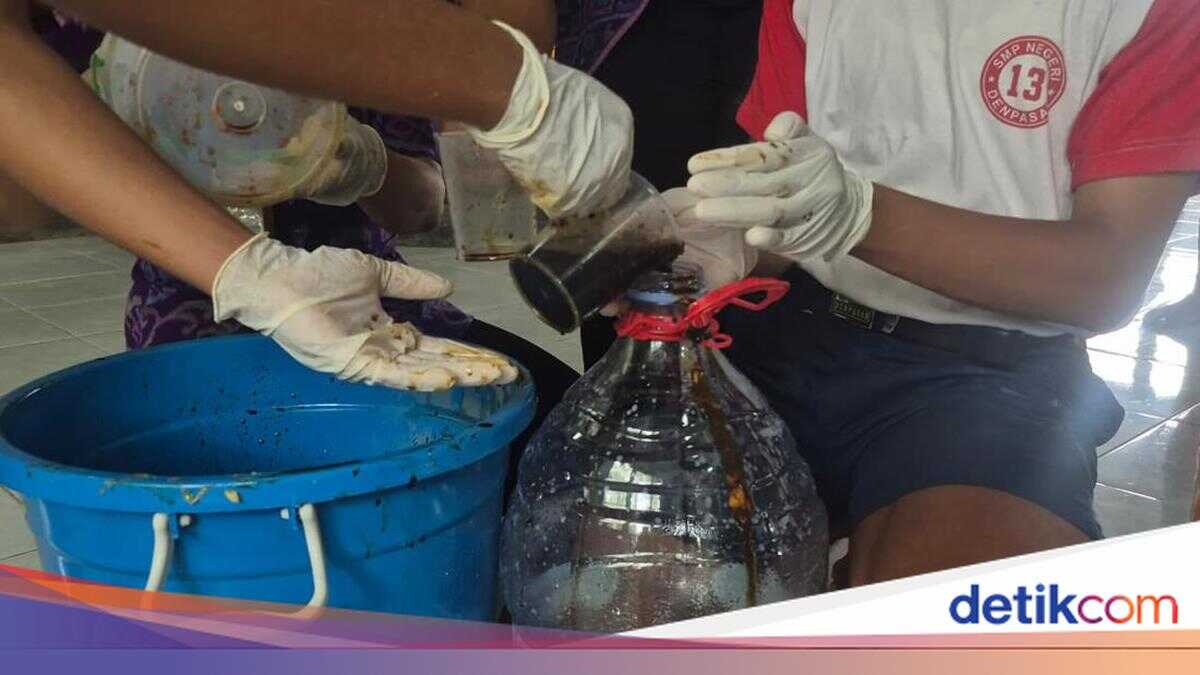
Beyond waste separation and composting, SMPN 13 Denpasar has innovated by creating eco-enzyme products in liquid and bar soap form. On another occasion, the school demonstrated the process of making eco-enzyme and soap.
Some students demonstrated the production of eco-enzyme made from fruit peel, molasses, and water. Students skillfully cut fruit peel and mixed all ingredients according to instructions from their mathematics teacher, Nurul Ekawati.
Approximately 10 kilogrammes of eco-enzyme can be produced in one batch and harvested in 3 months. According to SMPN 13 Denpasar headmaster Ni Made Sukarini, environmental education begins in year 7 with learning to segregate waste and make eco-enzyme. It continues in years 8 and 9 with learning to make liquid and bar soap.
“This eco-enzyme can be used to clean drains or water plants. You just pour it. It does not harm animals. When I first made it at home, people were confused, thinking it was a drink, until I explained its benefits. Now my mother regularly uses it at home,” said a student working with the ingredients.
Others demonstrated the production of liquid and bar soap whose main ingredient is eco-enzyme. This activity typically occurs at the beginning of each semester. The finished products are purchased by parents at school exhibitions.
“Our goal is to accustom children to dispose of waste properly. Then, to utilise waste to create something useful. Our plan is also to process scrap fabric as a children’s skill development activity,” explained Sukarini.
Sukarini explained that this ecological education initiative began from awareness of their school’s environmental conditions—extensive yet barren. Fallen leaves from wild trees around the school were collected and placed in composting holes.
“Previously, every plant planted here dried up and died. We made holes and directed waste to them. When waste decomposes, it becomes humus. Then we could plant trees there,” Sukarini recalled.
The experimental efforts by teachers and staff during each cleaning session produced compost that enriched the school environment. The school’s eco-friendly activities have continued to this day. All school members continue to improve their knowledge and capacity in environmental conservation. Even alumni are given opportunities to collaborate on environmental innovations with the school.