
Ecological Governance Transformation Deemed Necessary to Address Ecological Crisis
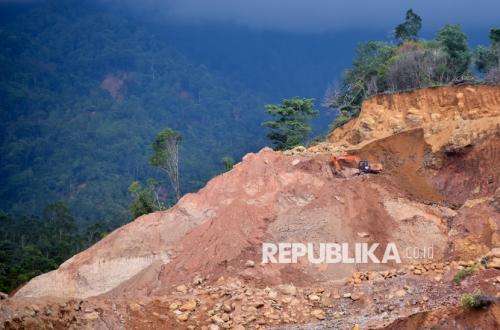
Indonesia faces a serious threat from the impacts of environmental damage, with various development sectors cannibalising one another and deepening the environmental crisis. Deforestation exacerbates water crises, water scarcity weakens food security, whilst land-based energy and agricultural expansion increases pressure on forests and ecosystems.
These findings form a key message in the Indonesia Environmental Outlook (IEO) 2026 report, compiled by the KEHATI Foundation and presented at a public discussion on Friday, 13 March 2026 in Jakarta. The event brought together stakeholders from government, legislature, academia, civil society, and international institutions to discuss the direction of environmental governance transformation in Indonesia.
The IEO 2026 report demonstrates that environmental damage in Indonesia is not merely a sectoral problem, but rather the result of development policies operating in isolation. Deforestation weakens the hydrological function of river basins, food systems depend on large-scale land expansion, the energy sector remains dominated by fossil fuels and forest-based energy transition projects, whilst water crises intensify due to upstream ecosystem damage. This combination creates a series of ecological crises that magnify disaster risks and economic losses.
Forests, as a nexus of natural resource exploitation, face extremely high pressure for energy, food, and water projects. Large-scale projects threaten forest areas by opening access to primary forests, triggering habitat fragmentation, and damaging landscape hydrological functions. The impacts extend beyond forest cover loss to increased risks of flooding, landslides, droughts, peatland fires, and reduced forest capacity to absorb carbon. When forests lose their ecological functions, water, food, and energy crises deepen, creating a vicious cycle of ecological crisis where development policy in one sector worsens problems in another.
Riki Frindos, Executive Director of the KEHATI Foundation, stressed that development patterns still rooted in natural resource exploitation increase national vulnerability to ecological disasters. “Indonesia possesses extraordinary natural resource wealth. Yet without sustainable and equitable governance, that wealth can become a source of ecological and social crisis. We cannot continue development approaches that separate forest, food, energy, and water sectors. All must be managed integrally, making ecosystem support capacity the foundation of development,” he said.
Muhamad Burhanudin, Environmental Advocacy Manager at the KEHATI Foundation, explained that Indonesia’s failures in natural resource management are fundamentally rooted in an unintegrated sectoral approach. “Each sector operates by its own logic. Energy targets damage forests, agricultural expansion damages water systems, whilst industrialisation creates new pollution. This creates ‘sectoral cannibalism’ that ultimately produces a vicious cycle of ecological crisis,” he said.
According to KEHATI, if business-as-usual continues, Indonesia risks permanent environmental crisis affecting national food, energy, and water security. Through the IEO 2026, KEHATI proposes three policy change scenarios to break this vicious cycle. First, systemic transformation of natural resource governance, emphasising the need for fundamental correction of national development direction by placing ecosystem sustainability, social justice, and governance transparency as the primary foundation of development policy.
Second, cross-sectoral policy integration through a nexus approach. KEHATI urges establishing cross-sectoral safeguard mechanisms ensuring every development policy—whether in energy, food, or infrastructure sectors—undergoes impact assessment against other sectors and environmental support capacity.
Third, ecosystem restoration and strengthening community roles at grassroots level. This includes protecting forests as strategic ecological infrastructure, accelerating recognition of indigenous and local community management areas, and just energy transition that does not increase ecosystem pressure.
Burhanudin added that this policy shift can only occur if government, business, and civil society work together in building transparent and accountable governance systems. “Indonesia has a great opportunity to escape the vicious cycle of ecological crisis. Yet that can only happen if development is no longer based on short-term exploitation, but rather on ecosystem support capacity and social justice,” he concluded.