
Ecological Emergency: The Invasion of Sailfin Catfish
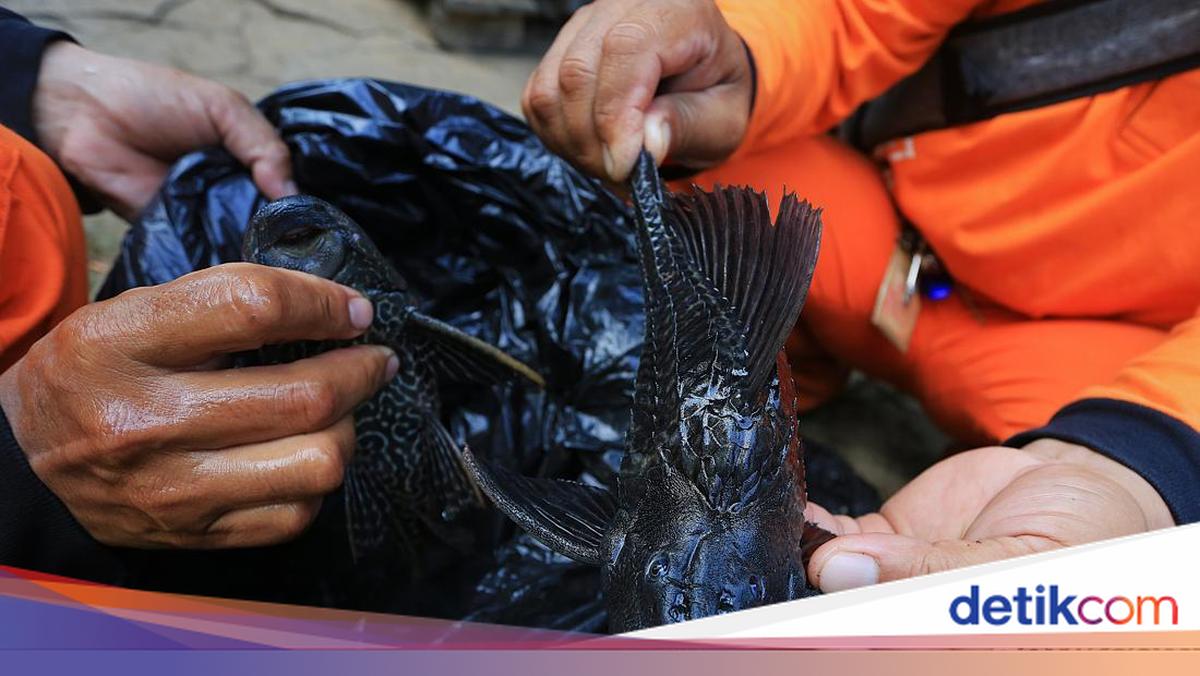
The mass capture operation of sailfin catfish (Hypostomus plecostomus) in the waters of DKI Jakarta in April 2026 must serve as a harsh wake-up call for policymakers. The success in harvesting nearly 7 tonnes of this invasive species in one day is indeed worthy of appreciation as a tactical step. However, this momentary euphoria must not obscure the fundamental facts.
This phenomenon is the tip of the iceberg of systemic failures in maintaining water quality and freshwater biodiversity. Sweeping the fish clean from the downstream river is merely a palliative measure, not a cure for the root disease.
This species, originating from South American freshwater, entered Indonesia in the 1970s to 1980s purely through the ornamental fish trade route. Starting from its commercial role as an aquarium wall cleaner, the fate of this species changed drastically due to human negligence.
Many irresponsible owners released the grown fish into open waters. Major floods in urban areas also accelerated the invasion process from residents’ ponds to river flows.
Without the presence of natural predators like the spectacled caiman (Caiman crocodilus), their population exploded uncontrollably. The National Research and Innovation Agency (BRIN) records this fish as a real threat because it eats native fish eggs and damages riverbank structures through its habit of making nesting holes.
The absolute dominance of this species proves the critically high level of water pollution. Experts from Airlangga University emphasise that the explosion in the sailfin catfish population is an alarm for ecosystem damage. Endemic species have died off due to their inability to survive in water polluted by domestic and industrial waste, as well as low oxygen levels.
This ecological vacuum was then taken over by the sailfin catfish, which has extreme resilience. The population surge of up to 24 times in the Ciliwung River over the last 15 years is irrefutable empirical evidence.
This crisis is no longer local to the capital. Biological invasion has spread massively to various regions on Java Island. Upstream buffer flows like Depok and Bogor are now dominated by the same species. Similar reports have emerged from Semarang and the waters around Surabaya. This species quickly displaces local fish in various reservoirs and canals due to equally polluted water conditions as in Jakarta.
This situation gives rise to deadly derivative threats to food security and public health. Cross-institutional studies, including from IPB University and Al-Azhar Indonesia University, prove that this species is a strong bioaccumulator or toxin absorber. Sailfin catfish in urban waters have been found to contain heavy metals far exceeding safe limits. Lead (Pb) content reaches 3.45 mg/kg and cadmium (Cd) 0.5 mg/kg. Not to mention findings of mercury, arsenic, chromium, tin, and dangerous bacteria like Salmonella.
The narrative to consume this fish under the pretext of cheap protein fulfilment is highly misleading. Exposure to heavy metals risks acute poisoning, kidney dysfunction, neurological nerve damage, and a multiple increase in cancer risk.
The government’s response in executing the catch results also needs ethical evaluation. The practice of mass burial of live fish, which once drew public criticism, must be stopped immediately. The Indonesian Ulema Council (MUI) aptly reminds of the importance of the principle of ihsan or doing good in the animal destruction process.
Allowing living creatures to die slowly from oxygen deprivation on dry land is very torturous. Sailfin catfish have a special anatomy that allows them to survive up to 13 hours on land. Therefore, execution must use instant death methods. Direct decapitation or euthanasia through drastic temperature reduction using ice has proven far more scientific and humane.
Resolving this ecological emergency demands integrated structural policies. First, central and regional governments must stop purely reactive approaches and begin adopting mitigation based on spatial modelling to precisely map invasion distribution across regions. Second, environmental law enforcement must be carried out without compromise.
Industries dumping hazardous waste must be given heavy sanctions to break the pollution cycle. Third, the trade governance of exotic ornamental fish must be tightened, accompanied by massive public education so that illegal release practices stop completely. Without commitment to restoring river water quality, our freshwater bodies will only continue to become graves for local biodiversity.