
East Nusa Tenggara Governor Drives Village Processing of Flagship Products
Kupang—East Nusa Tenggara Governor Emanuel Melkiades Laka Lena has stressed that every village in his province possesses distinctive economic potential that must be developed and packaged to increase value addition and drive community economic self-reliance.
“All villages have potential that must be optimised. Stop selling raw materials; instead process and package them for higher selling value,” said Melki in Kupang on Friday, 27 February.
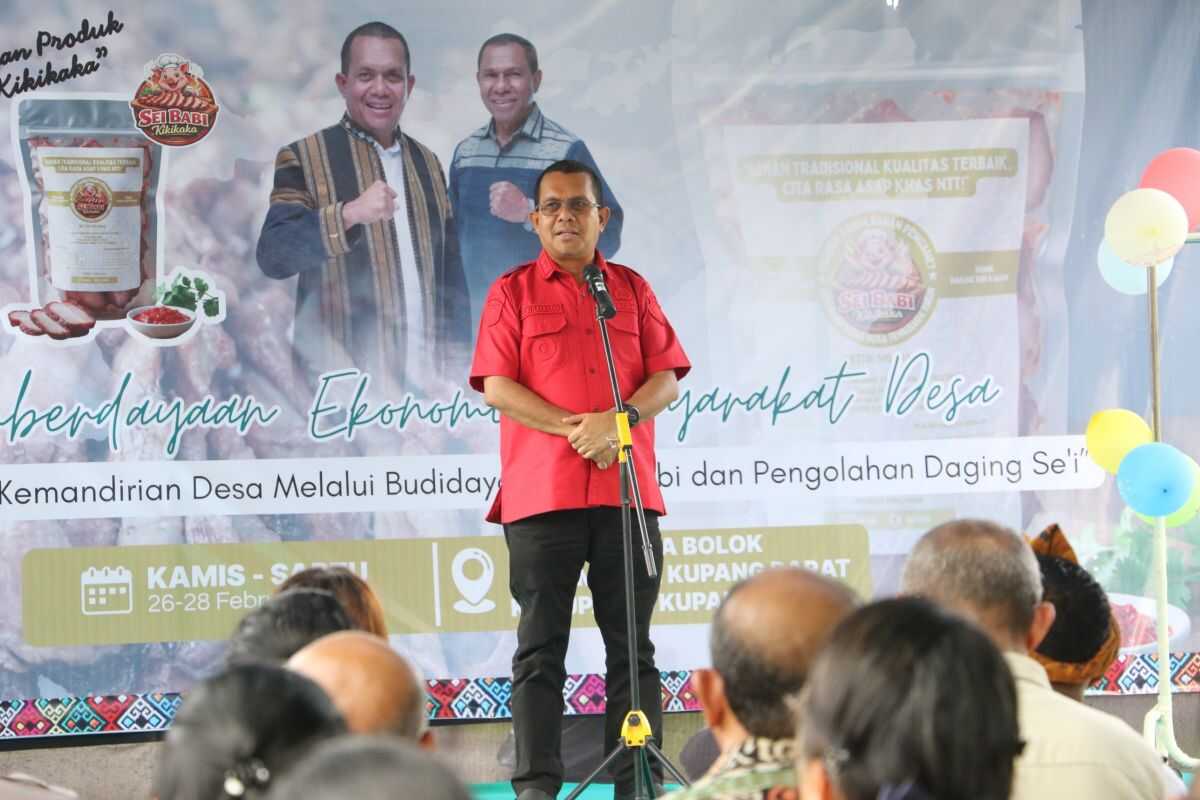
He made the statement while attending village economic empowerment activities and the launch of the One Village One Product (OVOP) programme in Bolok Village, West Kupang District, Kupang Regency, East Nusa Tenggara Province.
According to Melki, the provincial government’s village assistance programme aims to ensure that local potential does not remain at raw material production but develops into value-added products. He views changing production patterns as key to strengthening village economies, shifting from a simple cycle of planting, harvesting, and selling to planting, harvesting, processing, packaging, then selling.
Through the OVOP approach, each village is encouraged to develop one distinctive flagship product capable of competing in regional and national markets.
“Villages are the foundation of regional economy. If villages are strong, then East Nusa Tenggara’s economy is also strong,” said Melki.
The OVOP programme, he explained, targets 160 villages across East Nusa Tenggara, with each provincial agency assigned to mentor designated villages. For Bolok Village, the provincial livestock service provides mentoring with a focus on pig farming and processing of se’i babi (smoked pork).
The province launched Bolok Village’s OVOP product—Se’i Babi Kikikaka—packaged in various sizes for wider market distribution. This differs from conventional se’i sales, which typically use basic packaging.
Melki noted that many regional products remain sold in raw form, preventing optimal value addition. The provincial government is driving transformation from primary production towards value-added processing to strengthen village economic structures and sustainably improve community welfare.