
East Kalimantan builds community capacity for green turtle conservation
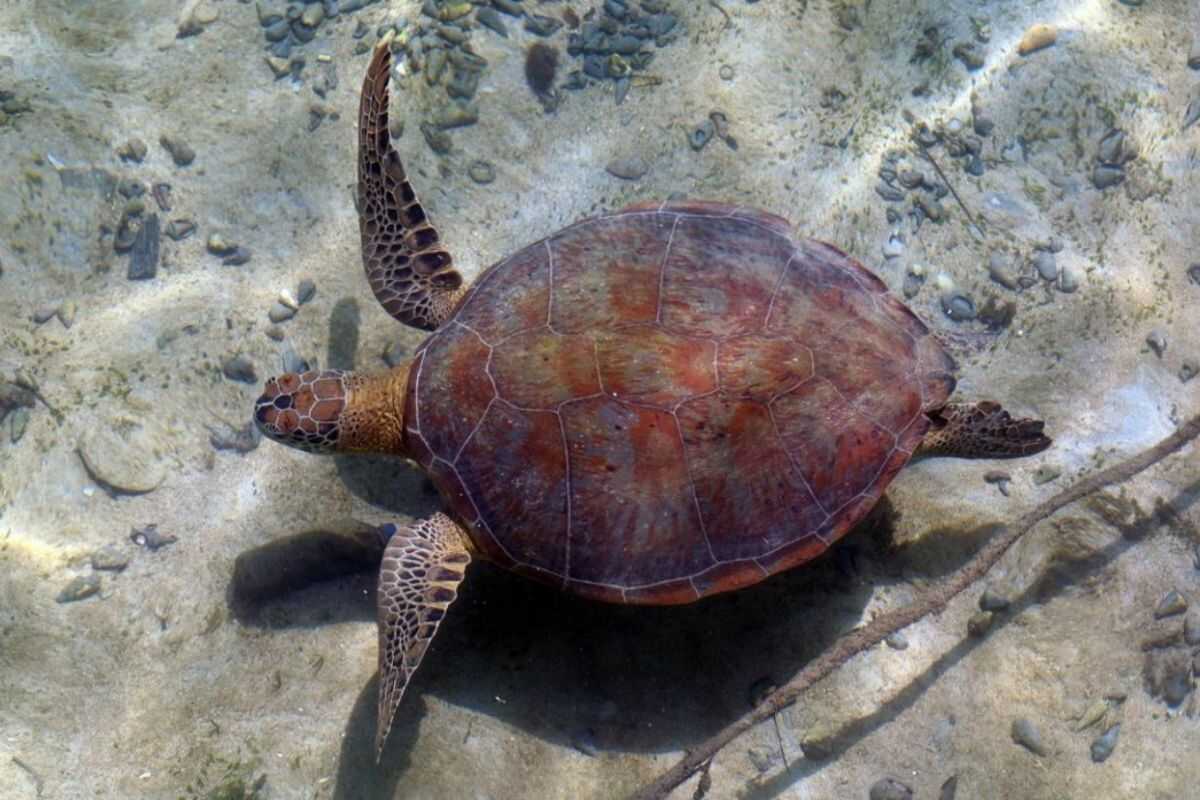
“Residents need to be involved in green turtle conservation, as community participation is key to long-term conservation success,” said Irhan Hukmaidy, Head of the East Kalimantan Maritime Affairs and Fisheries Office, in Samarinda on Saturday.
He emphasized that conservation efforts cannot rely solely on regulations. When communities are directly involved and have both the capacity and a sense of ownership, efforts to protect coastal and marine resources are more likely to succeed.
As the largest green turtle nesting habitat in Southeast Asia, Berau District plays a strategic role in global conservation, he added.
To strengthen community engagement, the Nusantara Nature Conservation Foundation (YKAN), in collaboration with the East Kalimantan Maritime Affairs and Fisheries Office and the Pontianak Marine Management Agency, organized technical training on turtle monitoring under the Somacore program.
Somacore stands for Solutions for Marine and Coastal Resilience in the Coral Triangle.
Rizya Ardiwijaya, Coral Reef Specialist at YKAN, said the training was designed for communities in the Coastal and Small Islands Conservation Area of the Derawan Islands and Surrounding Waters. The program was held from February 3 to 7, 2026.
The Somacore program is supported by the German Federal Ministry for the Environment, Climate Action, Nature Conservation, and Nuclear Safety (BMUKN) through the International Climate Initiative (IKI). It is implemented by a consortium of 10 national, regional, and international organizations across six Coral Triangle countries.
Survey results show that several beaches in the coastal and small islands area of Derawan serve as active turtle landing and nesting sites throughout the year, with peak activity occurring from June to August.
However, human activity in coastal areas often makes these sites less suitable for turtles to land and lay eggs safely.
“Turtles are very sensitive to human activity. Even minor disturbances can prevent them from laying eggs, so protecting nesting beaches must involve the communities who live and work directly in the area,” Ardiwijaya said.
He added that the training aimed to build community capacity through a citizen science approach. Around 60 participants, including fishers and coastal residents, received intensive instruction on turtle biology, species identification, life cycles, conservation threats, nesting beach monitoring, and data management.
In addition to classroom sessions, participants took part in hands-on field practice, including identifying turtle tracks, recording nests, and simulating data collection and organization using an Android-based application.
Related news: A glimpse into turtle conservation at Cenderawasih Bay by local group
Related news: Natural factors, humans threaten sea turtle ecosystem: Ministry
Translator: M Ghofar, Cindy Frishanti Octavia