
East Java's Ratoon Removal Strategy: Key to Sugar Self-Sufficiency by 2026
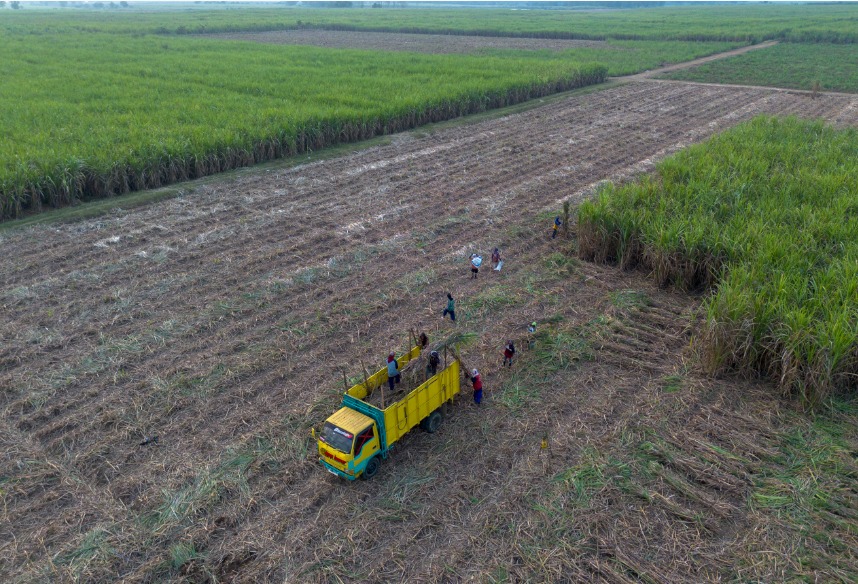
PT DSI Persero will fully assume export functions from January 2027.
East Java continues to solidify its position as the backbone of national sugar production. As 2026 approaches, the East Java provincial government, along with key stakeholders in the sugar industry, is aggressively implementing ratoon removal strategies to meet the central government’s national sugar self-sufficiency target.
This follows an assessment of declining productivity in several sugarcane farming areas. Many farmers’ sugarcane plants have surpassed their optimal productive period due to repeated ratooning over years without complete seedling replacement.
Technically, ratoon removal involves uprooting old sugarcane roots and replacing them with new seedlings (plant cane). The strategy is deemed crucial for several key reasons:
East Java’s Plantation Directorate Chief stated that the government has allocated specific funds for premium seedling assistance and technical guidance for farmer groups committed to simultaneous ratoon removal.
The programme’s success hinges on sugar mills (PGs) ensuring crop procurement. Partnerships between PGs and farmers are strengthened through working capital loans and provision of agricultural machinery (alsintan) to ease land clearing.
Despite promising higher yields, the main challenge lies in the waiting period for farmers. Ratoon removal means losing a short harvest cycle or delayed income. To mitigate this, the government is promoting intercropping or temporary cash assistance to maintain farmers’ welfare during replanting.
With consistent implementation of the ratoon removal strategy, East Java is optimistic about leading Indonesia towards food sovereignty, particularly in the sweetener sector, while boosting local sugarcane farmers’ economic welfare.
What is the difference between ratoon and plant cane?
Ratoon refers to regrowth from previous harvest stubble, while plant cane is new growth from seedlings (after ratoon removal).
How long should sugarcane undergo ratoon removal?
Ideally, after 3-4 ratoon cycles, sugarcane must be fully cleared to maintain yield quality and soil health.
The Ministry of Agriculture (Kementan) continues to accelerate national sugar self-sufficiency efforts by strengthening rural sugarcane development.
The government has allocated Rp30-40 trillion for sugarcane land expansion to support the self-sufficiency project.
Cooperative managers seeking loans from LPDB no longer need to visit Jakarta; they can apply online via www.lpdb.go.id.
PT Riset Perkebunan Nusantara (RPN), a subsidiary of PTPN Group, has developed and released four superior sugarcane varieties.
Kementan is also pushing to accelerate production and productivity improvements to achieve national sugar self-sufficiency by 2028.