
East Java's DPKP Prepares Three Strategic Steps to Face Prolonged Dry Season
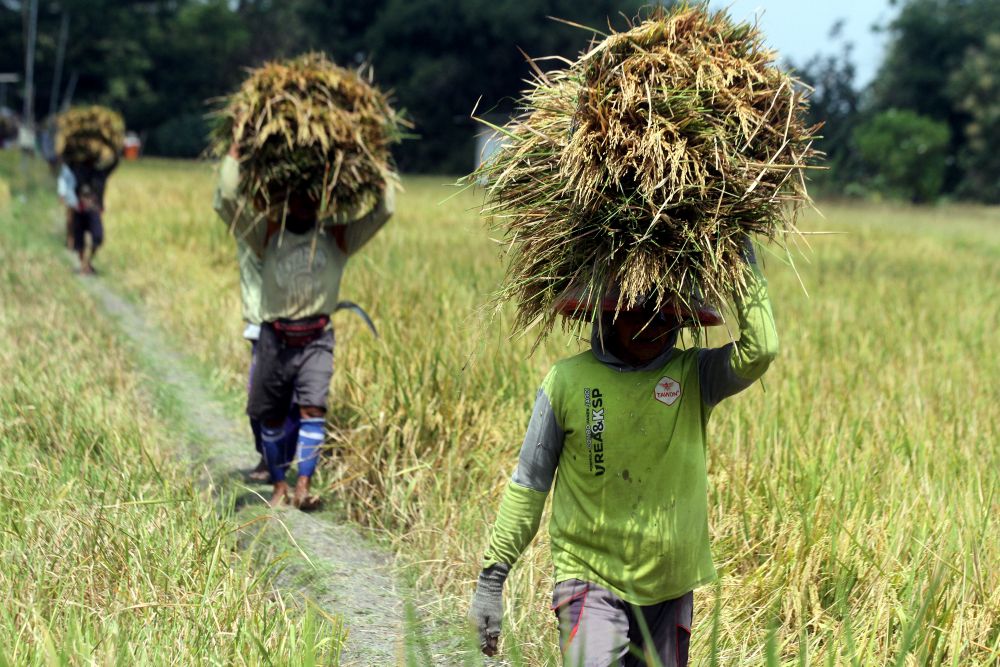
The Agriculture and Food Security Service (DPKP) of East Java Province is preparing three strategic steps to address the prolonged dry season anticipated in East Java and to safeguard rice production yields.
Head of the East Java DPKP, Heru Suseno, stated that his agency has prepared three strategic steps to tackle this phenomenon. The first involves planting drought-resistant seeds, namely distributing high-quality seeds with strong resilience to extreme weather.
Next is reactivating pumps built by the East Java Provincial Government last year and adding new pump points in critical areas. The third step is irrigation improvements. Heru emphasised that accelerating the renovation of damaged irrigation networks is crucial to ensure more efficient and targeted water distribution.
“The pumps must be ready at all times. Rain-fed areas are indeed challenging, but if there is a nearby water source, we install pumps to prevent disruptions to food production,” he said in Surabaya on Monday (30/4).
Heru also mentioned that several agricultural areas in East Java require special attention, particularly regions reliant on field irrigation such as Bojonegoro, Jember, and Lamongan.
“Areas with high dependence on rainwater like Bojonegoro, Jember, and Lamongan. These three districts are under serious monitoring because they have extensive rain-fed land with minimal water sources,” he stated.
Although the agriculture sector is a major concern during the dry season, Heru claimed that rice production trends in East Java show a positive graph in the early part of the year.
Currently, several areas are entering the harvest period, though not yet at its peak. The daily planted area is also continuously increasing. Heru said that in February, the harvest reached 5,000 hectares, then in March it reached 9,000 hectares.
He stated that the average harvest productivity is 6 tonnes per hectare. If calculated, the potential daily harvest yield is projected to reach 54,000 tonnes. “This figure is predicted to continue surging through April and May. The peak could reach 120,000 tonnes during the main harvest,” said Heru.
It is known that Indonesia will be hit by the Godzilla El Niño phenomenon from April to October 2026. This phenomenon is expected to trigger a prolonged dry season and potentially impact the agriculture sector and food security.