
East Java Urban Mobility Continues to Grow, Surabaya Commuter Line Strengthens Daily Movements and Access to Basic Services
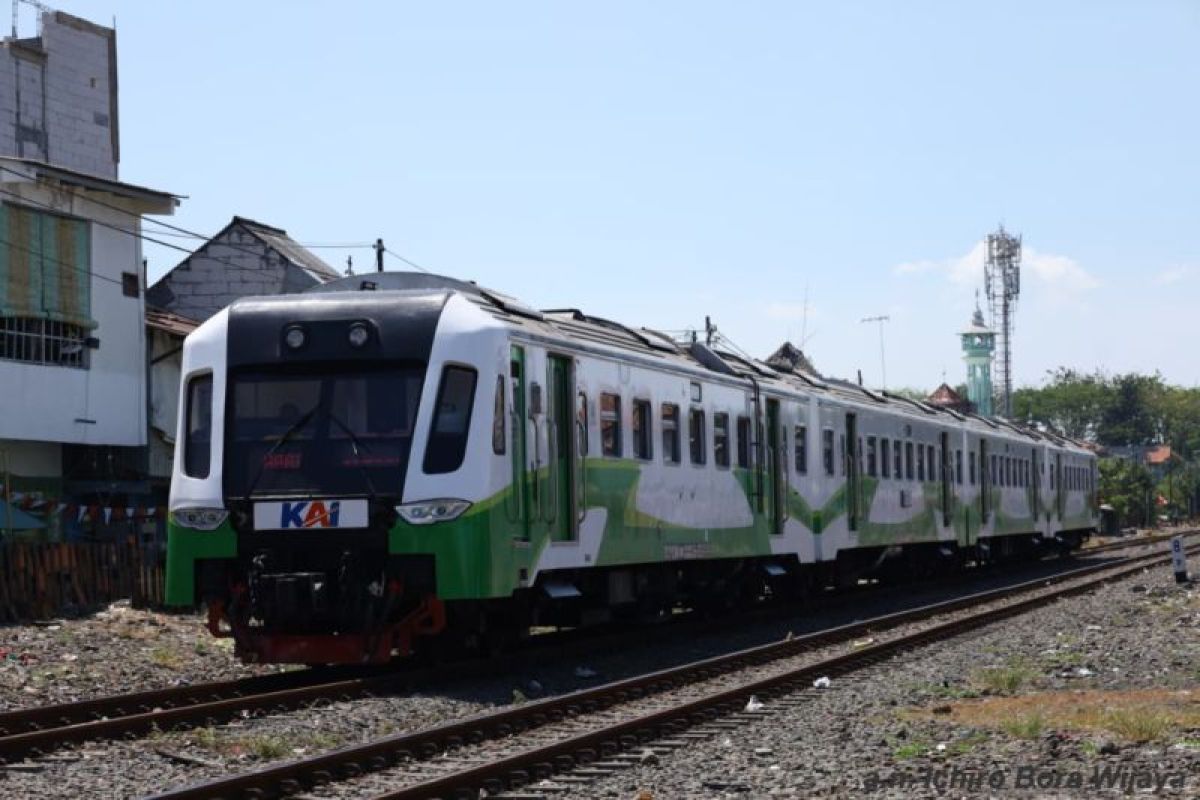
Surabaya (ANTARA) - Surabaya and its surrounding areas are developing as a unified space of activity that is increasingly interconnected. People’s movements between Surabaya, Sidoarjo, Gresik, Mojokerto, and up to Malang show continuously increasing intensity, in line with the growth of residential areas, economic centres, as well as educational and public service activities.
In the period from January to March 2026, the Commuter Line service in Area VIII Surabaya served 4,067,386 passengers. This figure increased compared to the same period in 2025, which served 3,689,565 passengers, and continues the growth trend from 3,432,759 passengers in 2024 and 3,118,491 passengers in 2023. This increase portrays the changing patterns of public mobility that increasingly rely on rail-based public transport for daily activities.
Passenger movements are predominantly seen during peak morning and evening hours, especially on routes connecting residential areas with activity centres. This pattern shows the formation of a stronger cross-city commuter network in East Java.
The Surabaya Commuter Line service connects various strategic regions through lines such as Surabaya–Blitar, Surabaya–Malang, Surabaya–Pasuruan, up to Surabaya–Cepu and Bojonegoro. This connectivity provides convenience for the public to reach economic centres, educational areas, and referral healthcare facilities within an integrated travel system.
Access to education and healthcare becomes an important part of this movement. Scheduled and affordable journeys help students reach cross-city educational centres, as well as facilitate the public in obtaining more comprehensive healthcare services in major cities.
Data from the Central Statistics Agency of East Java Province in 2025 shows that the population structure of East Java is still dominated by the productive age group (15–64 years), with the largest proportion of the total population. On the other hand, the number of elderly people (60 years and above) is also continuously increasing. This condition drives the need for a transportation system capable of serving active mobility while remaining inclusive for all age groups.
Vice President of Corporate Communication at KAI, Anne Purba, stated that the growth in the number of passengers reflects the increasing mobility needs in urban areas.
“People’s movements in Surabaya and its surroundings show a continuously increasing trend. The Commuter Line service supports daily activities with more measured journeys, both for work, education, or other service needs,” said Anne.
With large carrying capacity in a single trip, trains can serve public mobility efficiently while helping to reduce traffic density on roads. The scheduled travel system also provides travel time certainty for passengers.
KAI continues to make service adjustments through capacity improvements, strengthening trip frequencies, and developing integration with onward modes around stations. These efforts are aimed at maintaining smooth mobility and improving the quality of passenger journeys.
“East Java’s public mobility continues to grow and become more connected. With increasing needs, the development of more modern transportation, including electrification that supports greater carrying capacity and is more environmentally friendly, needs to be accelerated so that public access to education, health, and economic activities becomes easier,” Anne concluded.