
East Java on Alert for 2026 Dry Season: Governor Instructs All Regional Heads to Strengthen Agricultural Mitigation
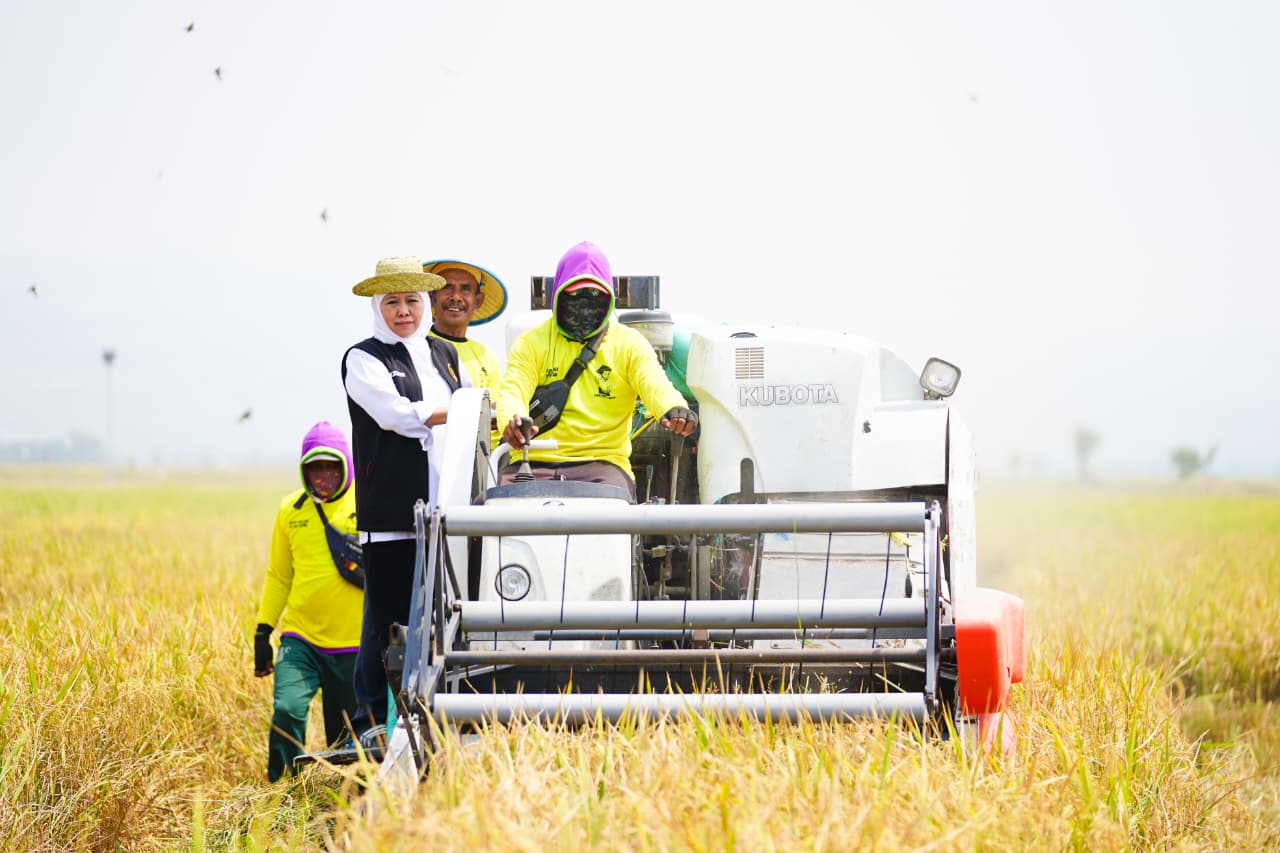
The Provincial Government of East Java has issued instructions to all regional heads in East Java to strengthen strategic measures in anticipating the impact of the 2026 dry season on agricultural production.
The instruction is contained in the Governor of East Java’s Letter Number 500.6.1/10499/110/2026 as a follow-up to the Minister of Agriculture of the Republic of Indonesia’s Letter Number B-73/TI.050/M/03/2026 dated 9 March 2026 regarding early anticipation of the dry season that has the potential to cause drought in several regions.
“Anticipatory steps need to be taken early to maintain the sustainability of agricultural production while supporting the national food self-sufficiency target. We will enhance coordination and synergy between local governments, both Regents and Mayors throughout East Java, so that everyone can anticipate the dry season early this year,” said the Governor of East Java, Khofifah Indar Parawansa, in Surabaya on Friday (2/4).
Mitigation efforts must not wait until the drought impacts occur. According to her, agricultural production must be maintained to ensure the continuity of meeting basic needs at both regional and national levels.
“Of course, we must not wait for the impacts to occur before taking action. Agricultural production must remain stable so that East Java’s food security remains strong,” she stressed.
Based on projections from the Meteorology, Climatology, and Geophysics Agency (BMKG), the dry season in East Java is estimated to last from April to August 2026, with the potential for increased drought risks in several regions.
In response, Khofifah has asked local governments to take several concrete steps. This includes mapping drought-prone areas while building an early warning system and activating drought brigades.
Then, optimising the management of water resources through the rehabilitation of irrigation networks, reservoirs, the utilisation of shallow wells, as well as the use of pump technology, piping, and pumped irrigation.
Furthermore, accelerating planting periods in potential areas using drought-resistant and short-duration crop varieties. Next, adjusting planting patterns to the climate conditions and water availability in each region.
Finally, Khofifah conveyed the importance of strengthening coordination and synergy between local governments and all stakeholders to increase agricultural production sustainably.
“Once again, synergy is the key. Local governments must work together with farmers, extension workers, the regional communication forum, and all stakeholders so that agricultural production, especially food crops, remains optimal,” she said.