
East Java Accelerates Waste-to-Energy Facilities, Seven Regions Agree to Process Waste into Energy
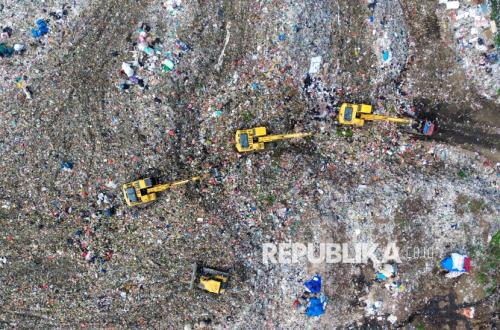
The East Java provincial government is accelerating the construction of waste-to-energy electricity facilities (PSEL) through cross-regional cooperation. The project is supported by a supply of more than 2,200 tonnes of waste per day from the Surabaya Raya and Malang Raya areas.
East Java Governor Khofifah Indar Parawansa stated that inter-regional collaboration is key to meeting the minimum raw material requirements for PSEL, which is 1,000 tonnes of waste per day. “This cooperation is not just about waste management, but part of our broader solution to provide renewable energy from the waste sector,” said Khofifah in her statement on Sunday (29/3/2026).
The signing of the cooperation agreement was carried out with seven regional heads at the Negara Grahadi Building and witnessed by the Minister of Environment Hanif Faisol Nurofiq. This scheme targets integrated waste management as well as waste-based energy production.
For the Surabaya Raya area, the total waste supply reaches around 1,100 tonnes per day from Surabaya City, Gresik Regency, Sidoarjo, and Lamongan. The construction site is planned in Sumberejo Ward, Pakal Subdistrict, Surabaya City.
Meanwhile, the Malang Raya area supplies around 1,138.9 tonnes of waste per day from Malang Regency, Malang City, and Batu City. The PSEL facility will be built in Bunut Wetan Village, Pakis Subdistrict, Malang Regency.
Khofifah said the provincial government will ensure the project runs smoothly through cross-regional coordination, monitoring, and evaluation. Supervision will be carried out to maintain transparency and ensure waste management and energy targets are achieved.
Minister of Environment Hanif Faisol Nurofiq stated that East Java’s waste management achievement has reached 52.7 per cent, the highest nationally and exceeding the national average of 24.95 per cent. “This is an extraordinary achievement,” said Hanif.
Hanif also assessed that waste management practices in East Java can serve as a reference for other regions, including reducing open dumping methods and promoting energy-based waste processing technology.