
East Jakarta Government Intensifies Household-Based Waste Segregation Programme
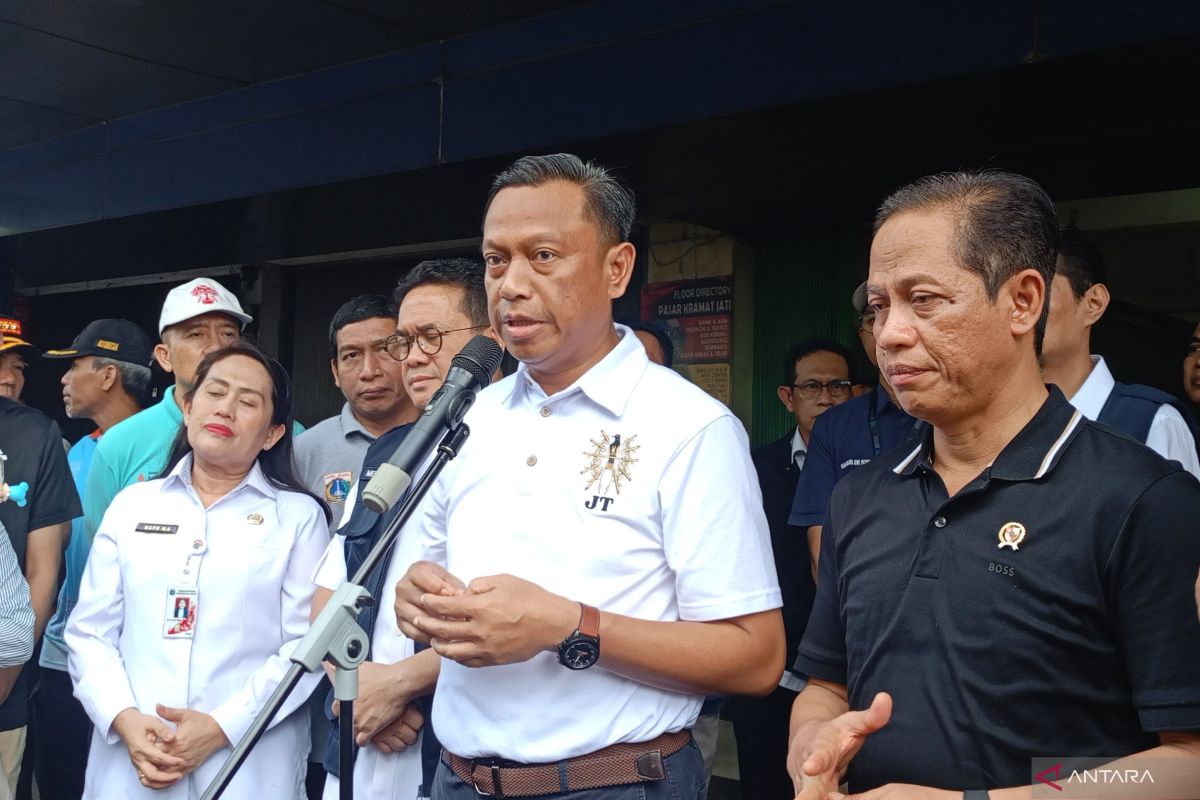
Jakarta — The East Jakarta City Government (Pemkot) is intensifying a household-based waste segregation programme as part of efforts to improve waste management from its source.
“Regarding waste segregation based on households and neighbourhood associations (RW), we are currently conducting extensive door-to-door socialisation,” said East Jakarta Mayor Munjirin at Kramat Jati Market in East Jakarta on Wednesday.
The programme is being implemented as a follow-up to presidential instructions and directives from the Jakarta Governor concerning household and neighbourhood-based waste management.
Munjirin stated that his administration is implementing these instructions through extensive public outreach. Education is conducted directly on a house-to-house basis to help residents understand the importance of waste segregation from the source.
“We in East Jakarta are implementing what has been communicated by the Minister, Presidential Instructions, and the Governor regarding household and neighbourhood-based waste segregation,” Munjirin explained.
He noted that the measure forms part of implementing the policy issued by the Jakarta Governor on household-based waste segregation. The East Jakarta City Government is also mobilising all administrative levels to accelerate public outreach.
Therefore, the city government is intensifying socialisation by involving district officials, village administrators, and the Environment and Sanitation Sub-Service. “Although admittedly not all residents have been reached yet, we continue to work with district and village officials and the Environment and Sanitation Sub-Service to conduct extensive public outreach on waste segregation at source,” Munjirin explained.
He also urged residents to support the programme’s success by segregating waste from home, separating organic and inorganic waste. “This way, we can reduce the burden of waste that is difficult to decompose, particularly plastic,” Munjirin said.
Previously, the Jakarta Provincial Government announced it would tighten the waste segregation system to prevent all of Jakarta’s waste from being sent to the Bantargebang Integrated Waste Processing Centre (TPST) in Bekasi, West Java.
“Our daily waste volume is between 7,400 and 8,000 tonnes. Almost all of it undergoes no separation and is sent to Bantargebang,” said Jakarta Governor Pramono Anung Wibowo at Jakarta City Hall on Monday (9 March).
According to him, the waste segregation policy aligns with directives from the Ministry of Environment. With better segregation, not all waste needs to end up at final disposal sites.
“And for that reason, we are implementing a segregation process at the end point, and also ensuring that not everything is sent to Bantargebang. Because Bantargebang truly must begin implementing restrictions, as its capacity is already extremely limited,” Pramono stated.