
East Jakarta City Government Plans Incentives for Residents Helping Capture Plecostomus Fish
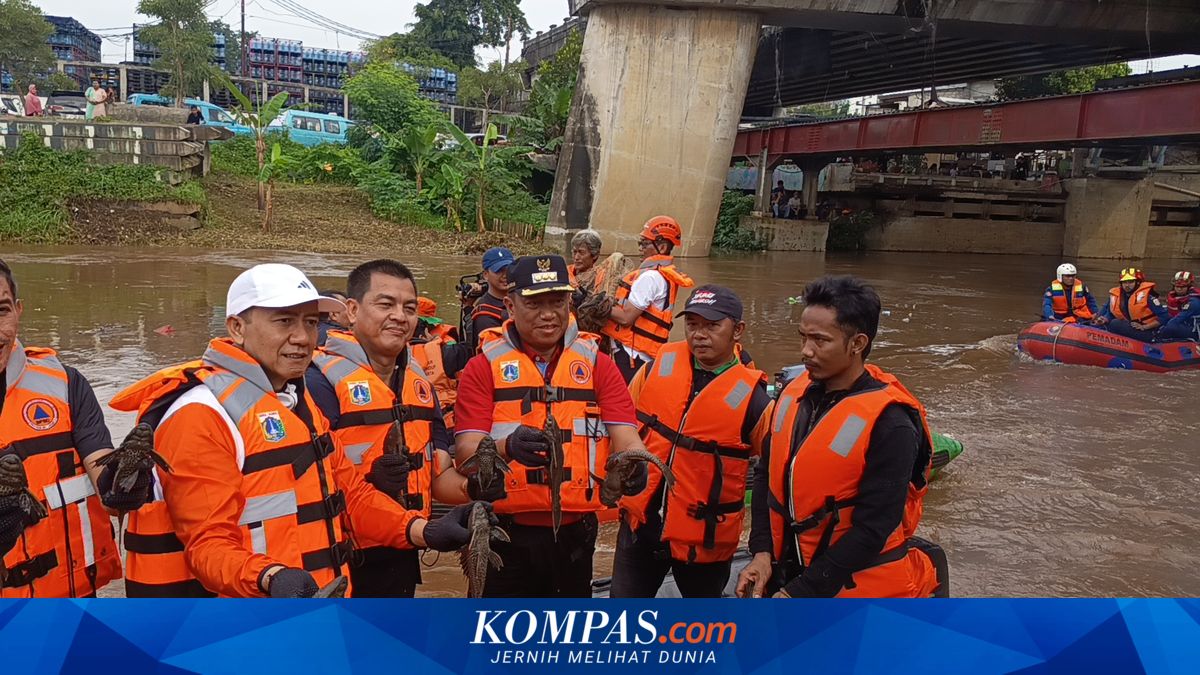
The East Jakarta City Government plans to provide incentives to residents who help with the operation to capture plecostomus fish. “For the public who carry out the capture (of plecostomus fish), perhaps we can or cannot replace it with a financial value,” explained East Jakarta Mayor Munjirin at the plecostomus fish capture site in Kramat Jati on Friday (17/4/2026). Munjirin stated that his side is coordinating with several parties regarding the incentive plan. In addition to cleaning plecostomus fish from canals in the East Jakarta area, they will also monitor the circulation of plecostomus fish to prevent it from being processed into food. He urged the public not to utilise or consume plecostomus fish. “Later from the Food Security, Maritime, and Agriculture Sub-Department (KPKP), there will be periodic monitoring to fish ball factories or wherever,” explained Munjirin. Meanwhile, the East Jakarta City Government carried out a simultaneous plecostomus fish cleaning operation in 10 districts today. “The simultaneous plecostomus fish capture operation in 10 districts, we recorded from 10 locations a total of 763 kilograms,” said Munjirin. From that total, one of the capture operation locations was in the Kramat Jati area. At this location, officers managed to capture around 200 kilograms of plecostomus fish. Previously, the East Jakarta City Government conducted a plecostomus fish capture operation in the Ciliwung River, Kramat Jati, East Jakarta. From Kompas.com’s observations, the operation was directly led by East Jakarta Mayor Munjirin. Before the capture began, the mayor gave directions to the ranks of the Food Security, Maritime, and Agriculture Sub-Department (KPKP) of East Jakarta, as well as the district heads and village heads. After that, Munjirin, accompanied by the Head of KPKP Sub-Department Taufik and Assistant for Government of East Jakarta Fauzi, boarded a rubber boat to scour the Ciliwung River. Subsequently, he netted plecostomus fish using a net from atop the rubber boat. The captured fish were first killed before being placed into a hole to be buried.