
Dutch Officials Label Indonesians' Lebaran Tradition a Wasteful Spending Spree
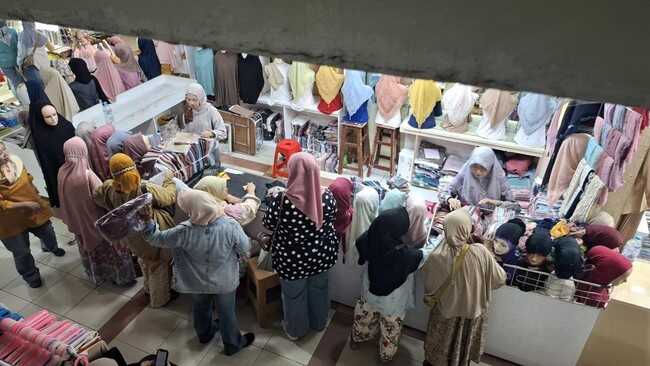
Lebaran, or Idulfitri, has long been a special day for many Indonesians. They celebrate it by buying new clothes, cooking large-scale meals, giving money as gifts, and undertaking mudik—traveling to their home towns.
According to the 1906 testimony of Snouck Hurgronje in Aceh, residents preferred buying new merchandise to meat during Lebaran. Indeed, the market selling clothes and related goods at the end of the fasting month was far busier than the sale of meat or livestock.
In Aceh in the Eyes of the Colonisers (1906), Snouck stated that this habit arose in Aceh because everyone wanted new clothes on the festive day. After all, in Acehnese culture affection or a husband’s appreciation for a child or wife is measured by items bought at the market, from meat to new clothes.
Elsewhere, Batavia experienced something similar. In 1904, Snouck also wrote that Lebaran featured numerous celebrations accompanied by special festive dishes, social visits to relatives, purchases of new clothes, and entertainment.
Indeed, Snouck noted that purchases of new clothes, fireworks, and food could cost more than on ordinary days. This occurred because residents regarded Lebaran as a special day.
At this point, the Lebaran tradition was viewed by the colonial authorities as wasteful expenditure.
Two colonial officials, Stienmetz and De Wolff, admitted to opposing Lebaran traditions by Indonesian Muslim residents. Many native employees held large Lebaran parties, but the funds came from borrowing money.
Additionally, Lebaran celebrations were sometimes held by the regent at government offices using state funds. The use of state funds, of course, made the budget balloon.
On this basis, they proposed a prohibition on Idulfitri celebrations, citing colonial rules that barred using state funds for non-essential activities.
Nevertheless, Snouck Hurgronje did not agree with the ban.
There is no precise reason to issue a warning to limit Lebaran celebrations. […] Even so, such a ban may not necessarily stimulate a thriftier spirit,” said the man who served as an Islamic affairs adviser, quoted from Nasihat-Nasihat Snouck Hurgronje, Volume IV (1991).
Moreover, Snouck noted that Idulfitri celebrations had already become a custom among Indonesia’s Muslims, so there was no need for a ban, as it could cause trouble.
In the end, Snouck’s statement proved correct: Lebaran and the various accompanying customs, including buying new clothes, have continued to this day.