
Dutch Couple in Jakarta Caught Stealing 219 Billion Rupiah from Bank
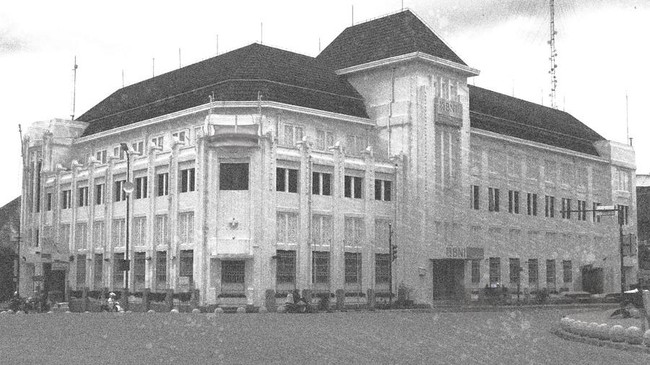
A.M Sonneveld’s life appeared remarkably comfortable for a Dutchman residing in Batavia during the 1910s. He never struggled financially and could dance at social gatherings whenever he pleased. Nearly every evening, he and his wife frequented the nightlife establishments in the city centre, including the prestigious Societeit Harmoni, where they hosted lavish parties without concern for expenditure.
Nobody suspected Sonneveld during his lavish outings, as everyone knew him to be genuinely wealthy. Upon arriving in Batavia, Sonneveld had served as an officer in the Dutch East Indies Army (KNIL), receiving various assignments and eventually earning recognition from the Dutch Queen. Following early retirement, he continued working at the largest private bank, Nederlandsch Indie Escompto Maatschappi, as head of the department overseeing customer funds, which provided him with a substantial salary.
Given his professional background, nobody harboured the slightest suspicion regarding the origins of Sonneveld’s wealth—until early September 1913, when newspaper publications throughout the Dutch East Indies reported the matter.
The Deli Courant (5 September 1913) revealed that the 45-year-old man had stolen 122,000 guilders from customer accounts. The discovery occurred following an internal investigation by Bank Escompto into suspicious transactions, which uncovered Sonneveld’s fraudulent scheme.
In 1913, 122,000 guilders could purchase 73 kilograms of gold at the prevailing rate of 1.67 guilders per gram. Converted to contemporary values, this equates to approximately 219 billion rupiah (at 3 million rupiah per gram of gold).
Realising that his activities were being discovered by the bank, Sonneveld and his wife fled the city before formal charges could be filed. Police designated them as fugitives and distributed physical descriptions in numerous newspapers and public locations. De Sumata Post (6 September 1913) provided detailed physical descriptions of Sonneveld, noting his brown complexion, Dutch ancestry, scars on his right cheek and knee, and age of 45 years.
Fortunately, the distribution of information led to their discovery. They had travelled to Bandung by train from Meester Cornelis (now Jatinegara). “Police detected him renting a motor vehicle from Meester Cornelis and travelling to a hotel in Bandung,” reported the Deli Courant correspondent.
From Bandung, they continued their journey to Surabaya by train. The Bataviaasch Nieuswblad (7 September 1913) reported that during the train journey, Sonneveld encountered a former acquaintance who inquired about his travel plans. To his acquaintance, the fugitive claimed he intended to travel to Hong Kong upon arrival in Surabaya, stating the journey was for comparative study at the Bank Escompto Hong Kong branch. However, his acquaintance recognised this as a fabrication and reported the conversation to police.
Consequently, the Dutch East Indies police promptly contacted Hong Kong police. Shortly after arriving in Hong Kong, both were apprehended and extradited to the Dutch East Indies. Police seized a bag containing the remaining stolen funds.
Upon return to the Dutch East Indies, both faced trial. In court, Sonneveld confessed to stealing customer funds to satisfy his desire for a luxurious lifestyle. His wife admitted knowledge of his activities and her attempts to conceal them.
Sonneveld received a five-year prison sentence, whilst his wife spent three months in custody. The Sonneveld case subsequently entered history as the largest theft documented during the 1910s.