
Dutch Bacteriologist Assigned to Jeddah Falls for Mecca, Converts to Islam with European Flair
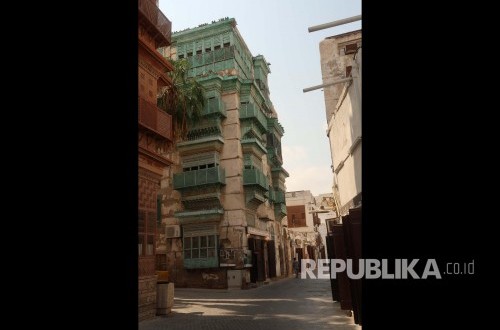
In one of Europe’s most unique stories intertwining colonialism, science, religion, and the Hajj as one of Islam’s pillars, the name of Dutch doctor Dr B H Van der Hoog (1888–1957) holds a special place. After converting to Islam, he was known as Muhammad Abdul Ali. His life journey became a layered narrative blending colonial politics towards Mecca and the Hajj, colonial medicine, bacteriological research, and profound spiritual experiences in the Sacred Land. This story is not merely about a European doctor in Hijaz, but the transformation of a man navigating between two worlds: Europe and Mecca al-Mukarramah, the spiritual heart of Islam that gathers Muslims from across the globe. Van der Hoog was part of a small wave of Europeans converting to Islam between the world wars. While not widespread in the Netherlands compared to other European nations like Britain, France, or Germany, this phenomenon resonated among certain intellectual circles seeking spiritual paths beyond conventional Christianity. Meanwhile, the Islamic world was viewed as a space where knowledge, colonialism, and culture intersected. Citing Aljazeera, Thursday (28 May 2026), Van der Hoog was born in 1888 into a Dutch military family. His father was a general in the armed forces. He studied medicine at Leiden University, one of the oldest centres for Orientalism and Islamic studies in the Netherlands since the late 16th century. Despite his strong interest in science, his father encouraged him to pursue a discipline combining medicine and military service. Thus, Van der Hoog chose colonial medicine over fully following his father’s military path.