
During inspection of kitchens in Medina, the Minister of Hajj and Umrah found that a number of food ingredients still came from other countries
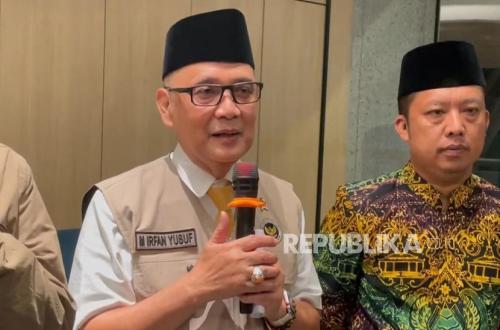
REPUBLIKA.CO.ID, MEDINA — To ensure the catering services for the second wave of Indonesian pilgrims in Medina, the Minister of Hajj and Umrah, Mochammad Irfan Yusuf, inspected two kitchens on Wednesday (June 3, 2026) afternoon.
Together with several members of the Amirul Hajj, the Minister visited the Meez Mery and Uhud Taiba catering companies. This visit was to ensure the quality of catering services for pilgrims, as well as part of the supervision of several catering companies serving Indonesian pilgrims.
At Meez Merry, the group inspected the cooking process, storage, raw materials, and cooking spices. The Minister was informed that the raw materials for the dishes, such as coconut milk, came from Indonesia. However, the packaging of the coconut milk stated that it was licensed in Malaysia.
Similarly, at Ubud Taiba, the Minister was informed that anchovies and catfish came from other countries. In fact, Indonesia is a major source of both types of fish. Gus Irfan emphasized that the inspection focused on hygiene, health, and food processing standards.
“First, we ensured that they cook and serve the pilgrims well, cleanly, and healthily,” said Gus Irfan.
In addition, the government highlighted the potential for optimizing the use of Indonesian food products in catering services for pilgrims. He found that some ingredients, such as coconut milk and catfish, could be supplied from within the country, but were still imported from other countries.
“I saw coconut milk, and I thought it was from Indonesia, but the brand is from a neighboring country. The same goes for catfish, even though we can produce it,” he said.
He acknowledged that the delivery of food ingredients, such as rice, from Indonesia to Saudi Arabia is still facing challenges, especially due to the geopolitical situation in the Middle East, which has impacted the high cost of logistics.