
Due to a Faulty Computer Button, Nuclear Explosion Kills 60,000 People
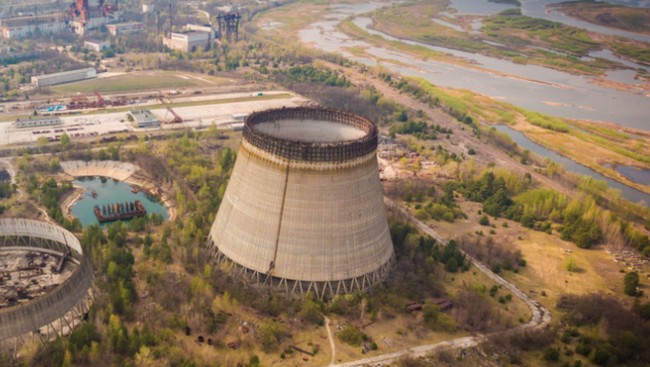
The sophistication of technology must be supported by human capability and reliability, particularly in nuclear development, which demands high safety standards. Precision begins with the reliability of equipment to the competence of personnel. Without both, the world risks facing tragedies like the Chernobyl Nuclear Explosion on 26 April 1986, which killed 60,000 people and forced hundreds of thousands to flee their birthplace for 20,000 years. For context, the Chernobyl nuclear site was the Soviet Union’s ambition to have the world’s largest nuclear facility. Since 1977, the government successfully built a 1,000-megawatt nuclear reactor, sufficient to power an entire country for years. From there, the Soviets continued developing nuclear power, and by 1986, there were four large-scale reactors at Chernobyl with similar capacities, though some were still in the testing phase. According to The Guardian, the test in question involved continuous cooling. The nuclear reactor must remain cold, so the water supply must be available 24 hours a day, seven days a week. If not, the reactor could overheat and trigger an explosion. In the Chernobyl case, the Soviet nuclear team attempted to test the activation of a generator that would continuously output water to cool the reactor core. The test took place on 26 April 1986. In theory, water would be output from the turbine to continuously cool the reactor core. From this, the team would determine how long the turbine could remain operational. Unfortunately, during the test, the involved personnel were incompetent and in denial, unwilling to accept input. This occurred with Deputy Chief Engineer Anatoly Stepanovich Dyatlov and Chief Engineer Nicholai Fomin. Citing Chernobyl: 01:23:40 (2014), Fomin was negligent and seemed to cover up the fact that the cooling power was sufficient, far from reality. Fomin knew the reactor’s power was only 200 megawatts, below the minimum threshold of 700 megawatts. Meanwhile, Dyatlov insisted the test must be conducted that day. On the test day, technicians had already given up, unable to proceed. However, due to Dyatlov’s persistence and threats of dismissal, the technicians eventually complied. This is where the disaster began. As night turned to morning, technicians activated the generator. The water turbine successfully entered, but midway, the generator’s power dropped dramatically, unable to sustain continuous operation. As a result, the reactor core temperature rose rapidly. When this happened, technicians rushed to press the SCRAM button on the computer. This button commands the computer system to activate the generator. Unfortunately, the button malfunctioned because it had never been checked. Thus, the catastrophe occurred. The nuclear reactor heated up to 3,000 degrees Celsius, and shortly after, it exploded violently. As nuclear radiation spread, many residents were still fast asleep, unable to escape and forced to endure extremely high radiation exposure. At the time, radiation detection equipment could not measure the levels due to their intensity. Only when the sun rose did people notice dust scattering about, which was not ordinary dust but nuclear fallout. Thus, the people there met their end. The BBC records that 90,000 people died from nuclear radiation in the long term, while 600,000 were exposed but survived. The WHO notes that the nuclear radiation reached 200,000 km to Europe. Meanwhile, Chernobyl itself remains uninhabitable for humans for 20,000 years due to the severe radiation effects.