
Drought on the Horizon: Cirebon Regency Builds Artesian Wells
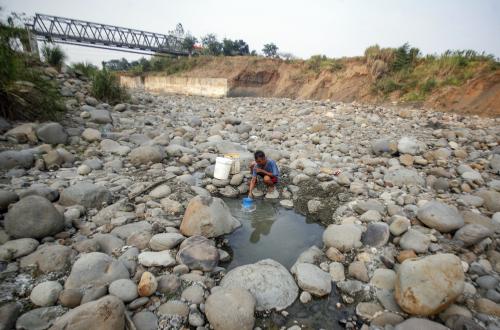
REPUBLIKA.CO.ID, CIREBON – The dry season poses a threat to residents’ access to clean water. The Cirebon Regency Government has prepared several anticipatory measures, one of which is building five artesian well sites or deep wells. “The five artesian well sites are now operational and being utilised by the community,” said the Acting Secretary of the Cirebon Regency BPBD, Samsul Huda, on Monday (11/5/2026). Huda explained that the five locations for the artesian wells are in Cupang Village and Walahar Village in Gempol Subdistrict, Greged Village and Kamarang Village in Greged Subdistrict, and Beber Village in Beber Subdistrict. These five locations are deemed to have good groundwater potential, making them suitable for artesian well construction. The presence of these wells is considered quite effective in reducing the impact of drought, particularly in the southern and western regions up to parts of the northern Cirebon Regency. Not only in those areas, the Cirebon Regency BPBD has also proposed the construction of five well sites for the northern region, namely in Jamblang, Pamengkang, Banjarwangunan, and surrounding areas. However, he acknowledged that the sandy soil structure in the northern region makes groundwater sources difficult to find. This geographical condition is the obstacle in building artesian wells in the northern region. Therefore, for areas where it is difficult to obtain groundwater sources, the local government will distribute clean water through tanker trucks. Collaboration with the PDAM will also be carried out. Huda said that based on the results of coordination meetings and forecasts from the Meteorology, Climatology, and Geophysics Agency (BMKG), the dry season in Cirebon Regency is predicted to start from June to September 2026. The dry season conditions are still in the safe category and not classified as extremely high. Currently, the local government continues to monitor weather developments. This is because changes in weather patterns in recent years have made the dry season more dynamic. “Now, rain sometimes still falls in some areas,” said Samsul.