
Drought, Dependency, and the Future of Food
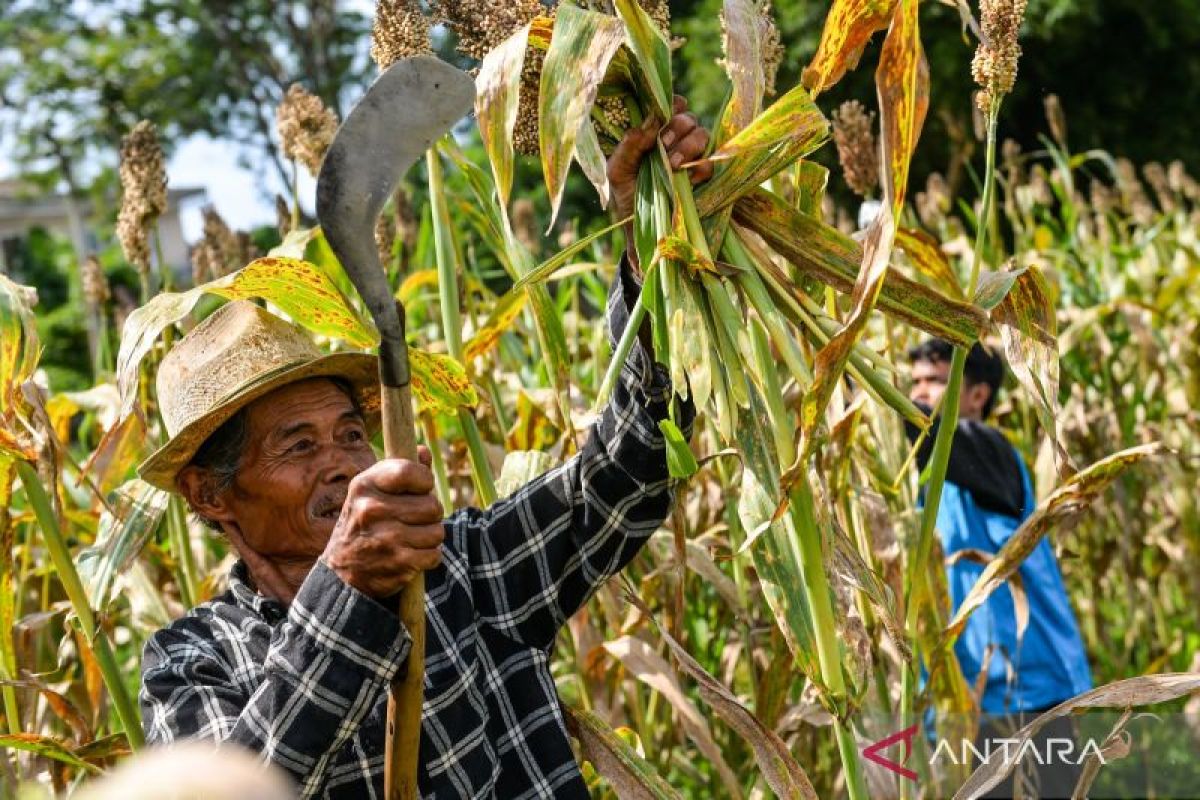
Jakarta (ANTARA) - Indonesia is entering a new phase in its food challenges, namely increasingly prolonged droughts.
A study by the National Research and Innovation Agency (BRIN) indicates that phenomena such as El Niño will make the dry season drier and longer, with direct impacts on agricultural production. In such conditions, food security can no longer be discussed solely in terms of production, but also in terms of the ability to adapt to water crises.
At the same time, the foundation of the national food system does not fully rely on what we produce ourselves. One of the most common food items on dining tables, wheat flour, actually comes from a crop that has never grown in our fields. Data from the Central Statistics Agency (BPS) shows that Indonesia still imports around 10-11 million tons of wheat every year, making it one of the world’s largest importers.
The combination of internal climate pressures and external dependence on global markets reveals one thing: Indonesia’s food system stands on a foundation that is not yet fully solid. In such situations, the long-standing agenda that is often repeated—food diversification—becomes relevant again, even urgent.
Among various alternatives often mentioned in policy discussions, sorghum is starting to receive attention once more. This cereal crop is actually not new to some regions of Indonesia, but over the past few decades, its presence has nearly been overshadowed by the dominance of rice and the increasing consumption of wheat-based products.
In the context of increasingly frequent droughts, the attention to sorghum is not without reason. This plant is known to be relatively resilient to less-than-ideal environmental conditions. It can grow on dry land, requires less water than many other cereals, and has good tolerance to high temperatures.
This characteristic becomes increasingly important when seasonal patterns are no longer stable. In various regions of Indonesia, droughts related to El Niño have affected agricultural productivity, especially for commodities that heavily depend on water availability, such as paddy rice.
In such situations, choosing more adaptive crops is no longer just an alternative, but part of a survival strategy.
In addition, sorghum also has good nutritional value. Sorghum grains contain carbohydrates, protein, fibre, and various minerals. Several studies show that sorghum has relatively high fibre content and a lower glycaemic index compared to some processed flour-based products.
Nevertheless, these advantages do not immediately lead to widespread development of sorghum in the national food system.
The issue is not solely with the crop itself, but with the structure of the food system that has been established over decades.
So far, Indonesia’s food policy has tended to focus on the stability of rice as the main commodity. These efforts have indeed succeeded in maintaining the availability of staple food, but at the same time, they have made the food system increasingly centred on one commodity.
At the same time, consumption of wheat-based foods has increased rapidly along with the development of the food processing industry. Products such as instant noodles, bread, and various other flour-based processed foods have become part of modern dietary patterns.
As a result, space for non-rice local foods has narrowed. Crops such as sorghum, millet, or various types of tubers have gradually been sidelined.
In normal conditions, this structure might not seem problematic, but when prolonged droughts occur, its vulnerabilities become increasingly clear. Rice production can be disrupted due to water limitations, while dependence on imported wheat keeps the food system reliant on external factors.