
Driving Himself from Kalikangkung to Brebes, Public Works Minister Praises Smooth Trans-Java Toll Road
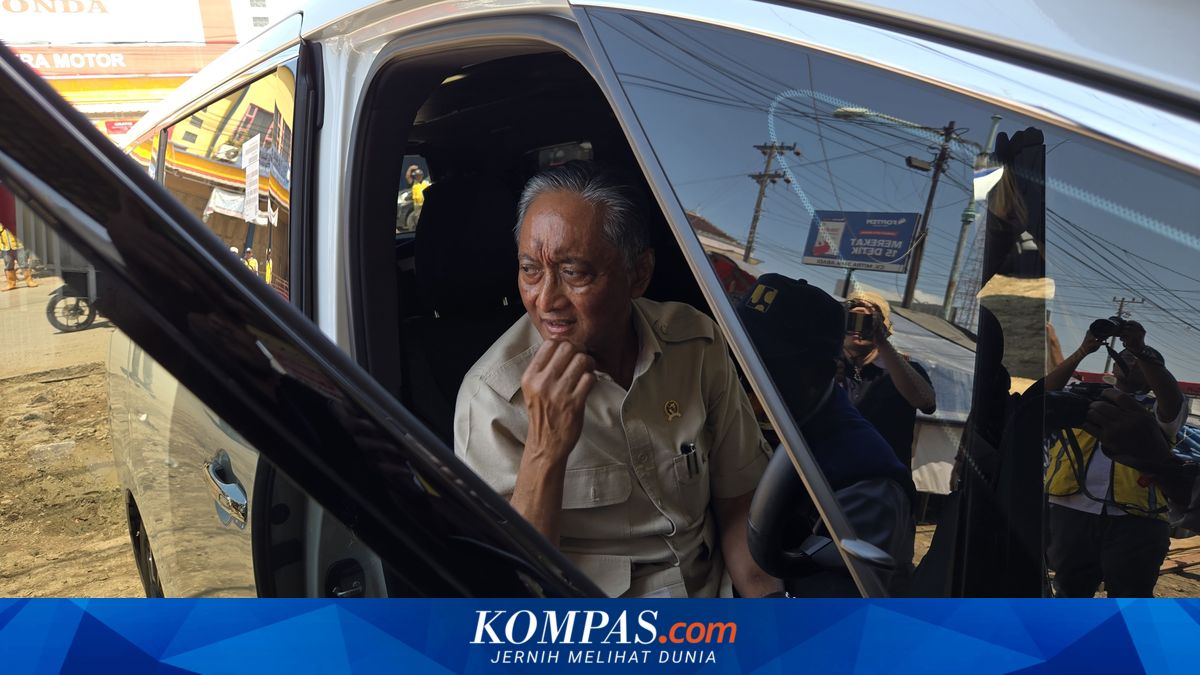
In the driving seat of an Alphard with the licence plate B 1975 UHT, Public Works Minister Dody Hanggodo directly tested the asphalt of the Trans-Java Toll Road from Kalikangkung to Brebes, spanning 26.4 kilometres. His mission was to ensure that the infrastructure for the Lebaran return flow was not only “visibly” ready but technically sound. Dody decided to drive himself for a reason. He wanted to directly experience the vehicle dynamics when crossing each bridge joint and the toll road shoulder. “Overall, it’s smooth, impressive. The shoulders are also fine. I just tested the shoulder quality by driving on it,” said Dody in response to Kompas.com on Saturday (28/3/2026). However, he did not overlook the shortcomings of this tolled motorway. Dody found several points that were still uneven and damaged, especially on the stretch approaching the Brebes exit and previously some points on the Cipali toll road. “There are a few points near Brebes that are somewhat damaged on the bridge sections, but not many. I’ve already instructed them to be fixed immediately,” Dody added. In addition to ensuring the readiness of connectivity infrastructure, Dody also directly reviewed flood management in Brebes. The Public Works Minister gave strong emphasis to the drainage and river sedimentation sector, which had previously paralysed the national route and disrupted the homecoming flow for up to six hours. According to him, the classic problem in the North Coast Java region is river overflow onto the national road during extreme rain. “Our experience in Aceh shows that the quickest solution is to fix the estuary first. If the estuary is addressed, the water can flow to the sea more quickly,” Dody stressed. Dody said that working from the back (upstream) actually risks creating new blockages at the downstream points that are already shallow. “Don’t underestimate the small sedimentations while cutting off the big ones first. My theory is, fix the estuary, the water flows smoothly. Then we can slowly move upstream,” he added. The Head of the Cimanuk Cisanggarung River Basin Organisation, Dwi Agus Kuncoro, said this normalisation project is funded through World Bank financing worth Rp 270 billion. Although the entire project package is targeted for completion by the end of 2028, Dody set a special deadline for the estuary sector. “If we’re just talking about the estuary, it must be finished by the end of 2026. We’re racing so that there will be no more water overflowing onto the national road in the rainy season at the end of this year,” he emphasised.