
Driftwood Utilised for Post-Disaster Rehabilitation
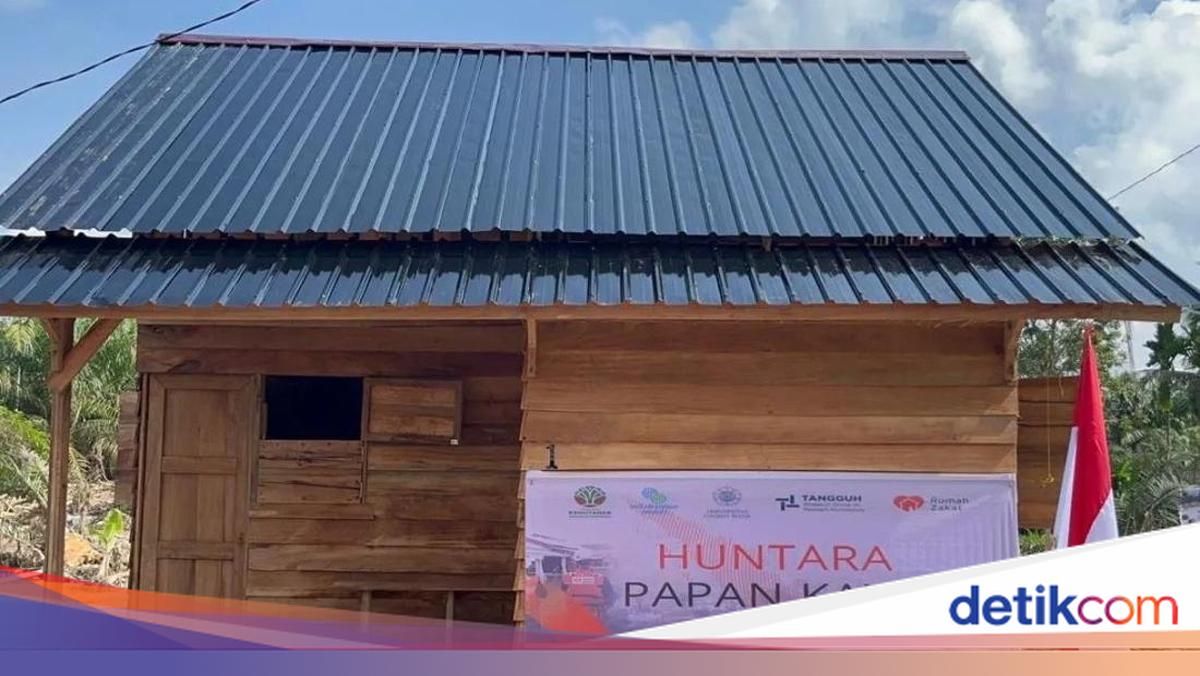
The Task Force (Satgas) for Accelerating Rehabilitation and Reconstruction (PRR) Post-Disaster in Sumatra is speeding up the utilisation of driftwood resulting from hydrometeorological disasters in Aceh, North Sumatra, and West Sumatra as part of the rehabilitation and reconstruction strategy in the affected areas.
The Head of Satgas PRR, Muhammad Tito Karnavian, stated that a scheme has been designed for its utilisation as building material for housing and for industrial needs.
“It can also be used by communities to build their own (homes), that’s fine,” Tito said in a written statement on Thursday (2/4/2026).
Data from Satgas PRR on 2 April 2026 records that the realisation of driftwood utilisation has been underway in several affected areas. The details in Aceh Province, covering North Aceh Regency, note a volume of 2,112.11 cubic metres of wood that has been utilised for the construction of temporary housing. Meanwhile, in Aceh Tamiang Regency, there is 572.4 cubic metres of wood currently awaiting local government policy for determining its allocation.
In North Sumatra Province, covering South Tapanuli Regency, there is 329.24 cubic metres of wood for the construction of temporary housing, social facilities, and public facilities. Meanwhile, in Central Tapanuli Regency, 93.39 cubic metres of wood has been used to support the recovery of affected residents’ homes.
Meanwhile, in West Sumatra, specifically in Padang City, a volume of 1,996.58 cubic metres of driftwood has been handed over to the local government to be utilised according to rehabilitation and reconstruction needs.
Tito stated that the utilisation of driftwood for post-disaster rehabilitation and reconstruction aligns with Ministerial Decision Number 191 of 2026, which regulates the utilisation of driftwood resulting from disasters as a material resource to support emergency response, rehabilitation, and reconstruction.
Tito also emphasised that parts of the driftwood that are small in size and less economical should, as much as possible, be utilised by local governments (pemda) to become original local revenue (PAD). For example, utilised as material for making bricks or fuel for power plants.
“The mechanism (through) cooperation and the income becomes PAD (Original Local Revenue),” said Tito.
Furthermore, Tito assured that the acceleration of driftwood utilisation will continue until all driftwood piles are cleared at all points. He revealed that the current condition shows that most driftwood piles in the three affected areas have significantly decreased.
“Driftwood in Aceh is about 70 percent handled, with 30 percent not yet handled, especially in the interior. Then in West Sumatra, 99 percent handled, and in North Sumatra, already 90 percent in Central Tapanuli and South Tapanuli,” Tito concluded.