
Dredging Water Hyacinth in Pluit Reservoir Only Addresses Symptoms, Not the Root Problem
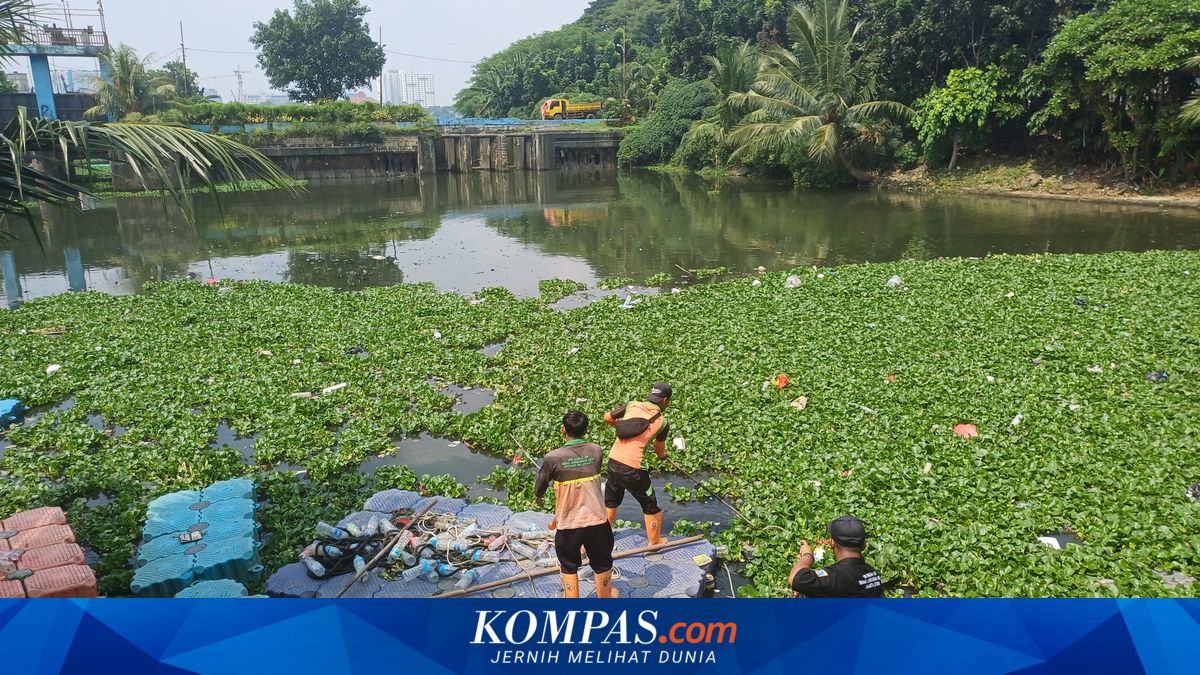
JAKARTA, KOMPAS.com – The dredging of water hyacinth in Pluit Reservoir, Penjaringan, North Jakarta, is considered to only address surface symptoms and has yet to touch the root issue of water pollution.
Lecturer at the University of Indonesia’s School of Environmental Science, Mahawan Karuniasa, stated that the use of heavy machinery such as excavators is temporary in nature.
“Excavators are necessary, but they represent a response to symptoms, not therapy for the causes,” he told Kompas.com on Thursday (2/4/2026).
This aquatic plant can disrupt water flow, clog pump systems, and reduce the reservoir’s storage capacity.
Nevertheless, he emphasised that water hyacinth will continue to regrow if the sources of nutrients entering the reservoir are not controlled.
“If after removal the nutrients from upstream and urban drainage continue to enter, then the water hyacinth will return,” he said.
He explained that the phenomenon of the reservoir appearing “green” within a few days is not entirely due to new growth, but a combination of rapid growth, fragments from existing colonies, and influences from wind, currents, and runoff from rainwater carrying additional nutrients.
According to him, monitoring should not only be done visually but also using technologies such as drones, satellite imagery, and regular water quality testing.
“If a new outbreak is only noticed when the surface is already covered, it indicates that the detection system is not yet strong enough,” he said.
Control should be carried out systematically, starting from monitoring, controlling pollutant sources, to managing the biomass from the removal.
“The problem is not the lack of policies, but partial implementation that is not yet coordinated,” he stated.
Mahawan revealed that the emergence of large amounts of water hyacinth not only affects aesthetics and odour but also has the potential to disrupt the function of flood control infrastructure.