
DPR Members Line Up to Criticise Jokowi's Claim He Rejected 2019 KPK Bill
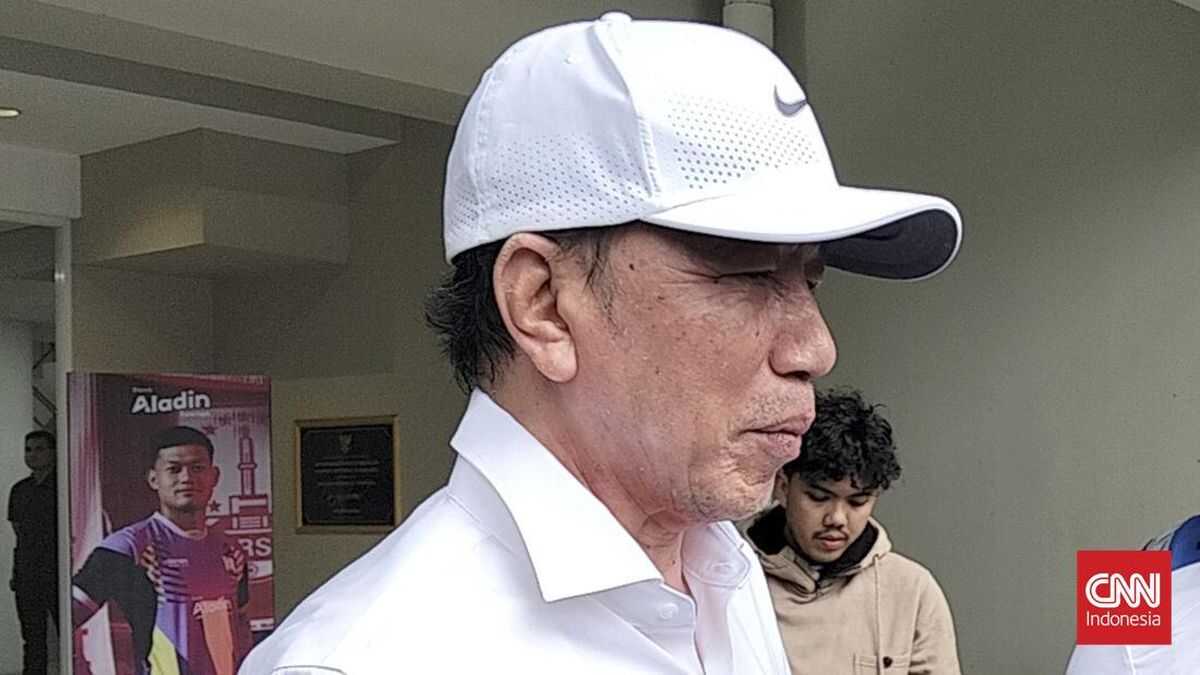
A string of House of Representatives (DPR) members have levelled criticism at seventh President of the Republic of Indonesia Joko Widodo over his claim that he rejected the 2019 revision of the Corruption Eradication Commission (KPK) Law by not signing it. Jokowi also voiced support for revising the KPK Law back to its original version.
The lawmakers assessed Jokowi’s statement as an attempt to “wash his hands” and shirk responsibility in order to preserve his image.
Jokowi’s remarks were made in response to a proposal by former KPK Chairman Abraham Samad to revise the KPK Law once more.
“At the time, the revision was initiated by the DPR. But I never signed it,” Jokowi said after watching Persis Solo play against Madura United at Manahan Stadium in Solo on Friday (13 February).
PKB Says Jokowi’s Statement Is Inaccurate
Commission III member from PKB, Abdullah, deemed Jokowi’s statement inaccurate. Although the former president did not sign the bill, he sent his representative to deliberate on the KPK Bill with the DPR.
Therefore, said Abduh — as he is known — despite not signing, Jokowi indirectly still supported the bill.
Referring to Article 20 Paragraph 5 of the 1945 Constitution, a law remains valid 30 days after being ratified by the DPR, with or without the President’s signature.
“The fact that he did not sign the latest KPK Law has no effect whatsoever,” Abduh said when contacted on Sunday (15 February).
DPR Deputy Speaker from PKB, Cucun Ahmad Syamsurijal, stated that lawmaking in the DPR cannot proceed without a Presidential Letter (Surpres), which contains the assignment of government representatives to deliberate on a bill.
“The public is astute enough to understand — he was the President,” Cucun said after attending a coordination meeting with the government on the Sumatra disaster at the parliamentary complex in Jakarta on Wednesday (18 February).
NasDem Says Jokowi Was Not Serious
DPR Deputy Speaker from NasDem, Saan Mustopa, assessed that Jokowi was not genuinely serious about rejecting the 2019 KPK Bill.
The fact is, Saan said, Jokowi did nothing to restore the KPK Law to its original version while still in office. He also disagreed with the notion that Jokowi opposed the bill, given that the government sent its representative to deliberate it with the DPR.
“If he wanted to restore the old version, why didn’t he do it while still in office?” Saan said at the parliamentary complex on Thursday (19 February).
PAN Says Jokowi Was the Initiator of the Revision
Commission III member from the PAN faction, Syarifuddin Sudding, revealed that the Presidential Palace under the seventh President was the initiator behind the proposed revision of the KPK Law in 2019.
However, according to Sudding, the Palace at the time requested that the KPK Bill be presented as a DPR initiative. Sudding said he knew the process from the outset as a member of Commission III during the 2014–2019 term.
He urged Jokowi to stop constantly protecting his image. Sudding went so far as to call Jokowi the “intellectual actor” behind the KPK Law revision.
“To be honest, if we trace it back — in legal terms, the intellectual dader of the KPK Law revision was actually Jokowi,” Sudding said when contacted on Thursday (19 February).
PDIP Says Jokowi Cannot Wash His Hands
Commission III member from PDIP, Aria Bima, said Jokowi cannot distance himself from the 2019 KPK Bill.
According to Bimo — as he is known — Jokowi remains a former president and therefore still bears responsibility. However, Bimo opposed revising the bill again.
“As the seventh, sixth, or fifth president — I think there is still responsibility. As a private individual, no, but as a president, a former president, yes,” Bima said at the parliamentary complex in Jakarta on Thursday (19 February).
Demokrat Says Jokowi Could Have Issued a Perppu
Former Commission III member Didik Mukrianto criticised Jokowi and deemed his claim of rejecting the KPK Bill at the time as not serious.
According to him, Jokowi could have issued a Government Regulation in Lieu of Law (Perppu) to annul the revision, but chose not to do so.
Didik was a Commission III member during the 2014–2019 term who was involved in the drafting of the KPK Bill.
“Mr Jokowi could have issued a Perppu if he disagreed, but that option was never exercised,” Didik said when contacted on Friday (20 February).
PKS Calls Jokowi’s Claim Far-Fetched
Commission III member from the PKS faction, Nasir Djamil, said Jokowi’s claim of rejecting the 2019 KPK Law revision by not signing it was far-fetched.
Nasir said legislative revisions, including the KPK Bill at the time, could not be carried out without the agreement of both the DPR and the government.
He said he could not comprehend the intent behind the former PDIP politician’s statement. According to him, a president should not regret his decisions after the fact. Such regret should only apply to ordinary citizens, not the government, let alone a President.
“So what Mr Jokowi has said really seems like something quite far-fetched,” Nasir said in the South Jakarta area on Friday (20 February).
Controversial Points of the KPK Bill
The KPK noted at least 26 controversial points in the revision of the KPK Law at the time, which were deemed to weaken anti-corruption efforts.
Among them was the undermining of KPK independence by placing the commission as a state institution within the executive branch and making KPK employees civil servants.
Additionally, the provision designating KPK leaders as the highest authority was removed. In its place, the Supervisory Board was given greater power than the KPK leadership, as stipulated in the third point.
Furthermore, wiretapping capabilities were curtailed. There are at least six stages of wiretapping approval — starting from the investigator, task force head, Director of Investigation, Deputy for Enforcement, the leadership, and the Supervisory Board — before a case review can even be conducted.
Wiretapping was considered to have become more difficult due to the added layers of bureaucracy.