
DPR Member Warns Against Implementing WFH Days Near Weekends
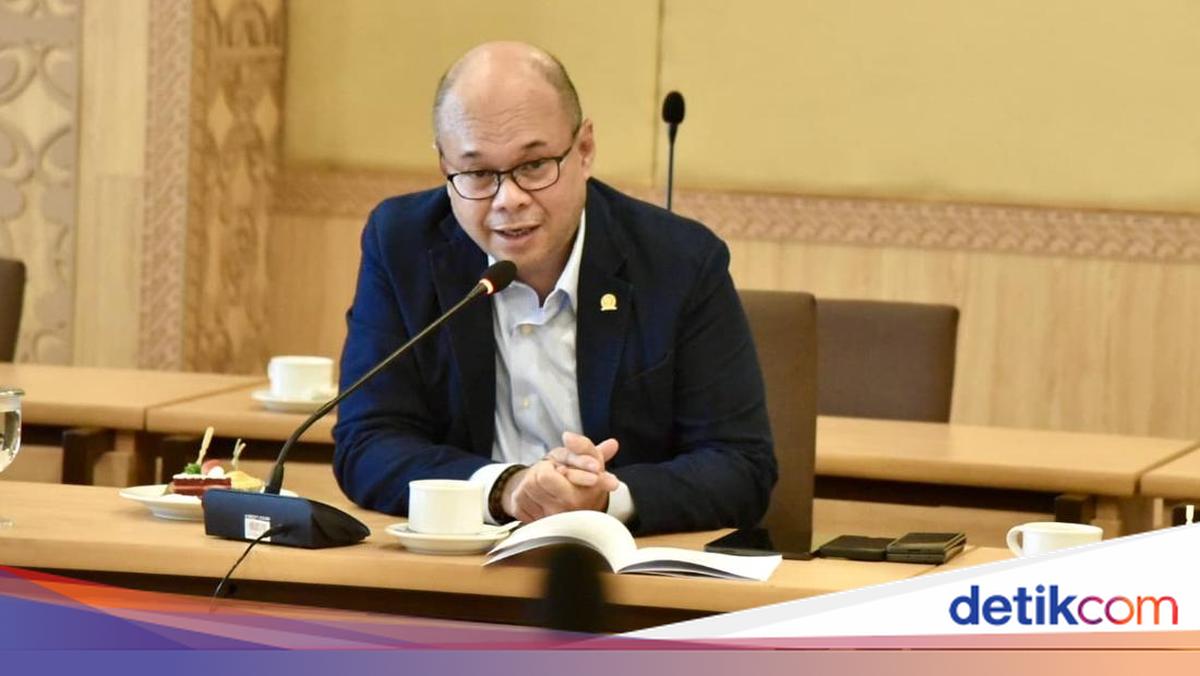
Member of DPR Commission II, Romy Soekarno, has warned that the implementation of work-from-home (WFH) days currently under consideration by the government should not be adjacent to weekend holidays. He proposes that WFH be carried out in the middle of the week.
“First, from the perspective of public behaviour, we must be realistic. If WFH is placed on a day close to the weekend, especially Friday, it will create a moral hazard in the form of a tendency to turn it into a long weekend,” said Romy to reporters on Thursday (26/3/2026).
Romy stated that implementing WFH on Friday could potentially increase weekend mobility. He assessed that designating that day would be ineffective in reducing fuel consumption.
“This has the potential to increase mobility, not decrease it. That means the goal of saving fuel could miss the mark,” he said.
He opined that WFH often makes work processes less effective. This PDIP legislator assessed that the lack of interaction in the workplace leads to reduced collaboration among teams.
“Second, we must not ignore the aspect of bureaucratic performance and the working world in general. In practice, WFH often makes work processes less direct. Decision-making becomes slower, coordination is not as effective as face-to-face, and there is often fragmentation in communication,” said Romy.
“Moreover, there is a humanising dimension that is lost. Direct interaction is not merely a formality, but the foundation of trust, leadership presence, and team solidity. When this interaction is reduced, what emerges is a mechanistic work pattern that lacks depth in collaboration,” he continued.
He reminded government employees not to provide half-hearted public services. Romy proposes that the WFH policy for civil servants up to the private sector should be in the middle of the week.
“Therefore, I believe that if this WFH policy is still to be implemented, several principles must be upheld, namely determining a neutral day, such as mid-week, to avoid distortion into a long weekend, strengthening output-based performance control systems, and standardising effective communication and coordination,” he said.
He stated that WFH should also be excluded for service sectors that require direct interaction. He does not want the good intentions of this policy to result in less than optimal outcomes and become a boomerang.
“Public policy must always consider the balance between efficiency and quality. Do not let efforts to save fuel be paid for with declining productivity and quality of service to the public,” said Romy.
“WFH can be a solution, but without a mature design, it can also become a source of new problems,” he added.
It is known that Interior Minister Tito Karnavian revealed that several coordinating ministers and technical ministers have agreed on the implementation of a weekly work-from-home (WFH) day as an effort to save fuel. Tito mentioned that the implementation of WFH is just awaiting a report to President Prabowo Subianto and an official announcement to the public.
“The meeting yesterday lasted almost 3 or 4 hours. Yes, but we agreed on one voice, meaning who will convey it, I don’t know, (the meeting) at the Palace. Whether by the Coordinating Minister for Human Development and Culture, the Coordinating Minister for the Economy, or perhaps by the Cabinet Secretary (who will announce it). So, we only provide inputs, but I am not authorised to convey it to the public,” said Tito after the PHTC update press conference at the Presidential Palace Complex, Jakarta, on Wednesday (25/3/2026).
Nevertheless, Tito refused to reveal the agreed day for the WFH. Because, according to him, the meeting results still need to be reported first to the President.