
DPR Member Urges Public to Socialise the New Penal Code
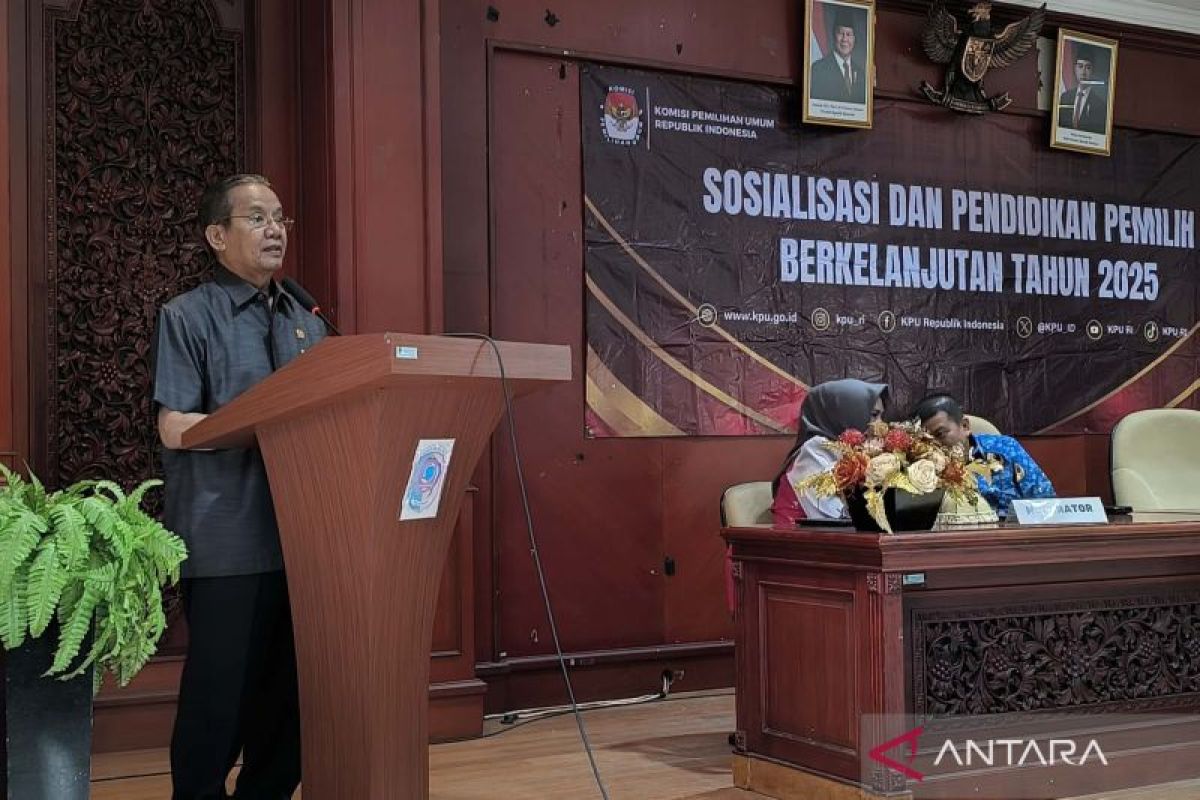
Palu (ANTARA) - A member of Commission II of the Indonesian House of Representatives, Longki Djanggola, has emphasised the importance of socialising Law Number 1 of 2023 on the Criminal Code (KUHP) with the public.
“We, when we go down for visits in our electoral districts, are usually also tasked by the DPR to convey the socialisation of the law. Therefore we chose Law Number 1 of 2023. I am sure that if it is frequently socialised among the public it will surely bring benefits,” he said in Palu on Saturday.
The law was enacted on 2 January 2023 and comes into effect on 2 January 2026. Because it has undergone many changes compared with the old KUHP, he said, the public needs to understand the rules to avoid misunderstandings.
He explained that the new KUHP comprises 624 articles divided into two books. The First Book (Articles 1–187) governs general provisions such as types of offences, criminal liability, reasons for extenuation and justifications, and the aims of punishment.
Meanwhile the Second Book (Articles 188–624) governs various types of criminal acts and their penalties.
According to the former governor of Central Sulawesi, the new KUHP is a manifestation of Indonesian criminal law founded on the values of Pancasila and reflecting the nation’s character.
“Now Indonesia is independent and has the Pancasila-based state. Therefore our criminal law must also reflect the values of justice, humanity, and the culture of the nation,” he explained.
He also added that the new KUHP is no longer solely oriented towards imprisonment. The rules include several other types of penalties, such as fines, supervision, community service, and conditional penalties.
One area of concern is community service. Under this penalty, offenders of certain offences may be required to perform work that benefits the community without necessarily serving prison time.
Additionally, for light cases a restorative justice approach can be prioritised, i.e., resolving cases amicably with consideration of the interests of both victims and perpetrators.
The aim is that the law not only punishes, but also rehabilitates and gives offenders the opportunity to improve themselves.
Longki noted that the new KUHP was drafted to adapt to evolving times, including addressing acts related to social dynamics and technological development.
He stressed that the public should not worry about the new KUHP, because clearer rules will provide legal certainty.