
DPR member urges government to urgently prepare drought mitigation measures
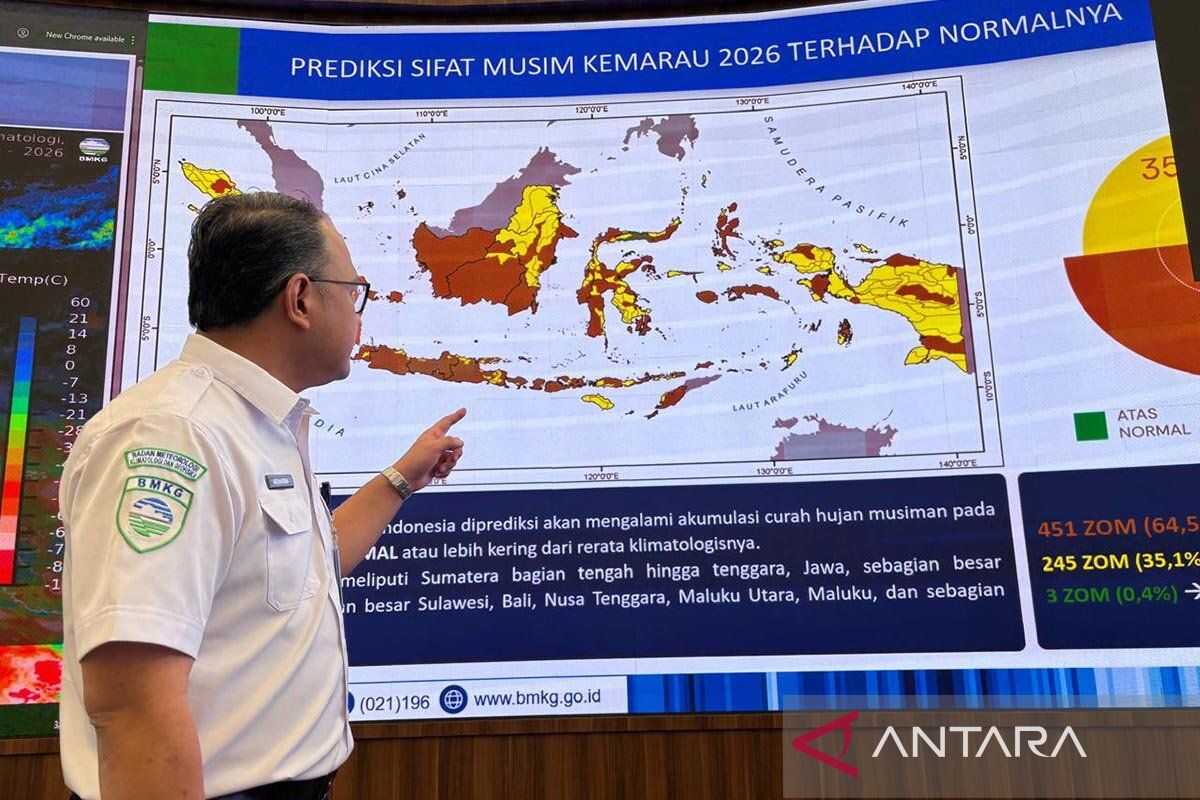
In Jakarta, a member of Commission V of the Indonesian House of Representatives (DPR RI), Sudjatmiko, has called on the government to immediately prepare anticipatory measures to prevent and address the impacts of the dry season this year, so as not to incur a fatal risk. “Risk management of the impacts of drought should be prepared well in advance, especially in areas that are sensitive to climate change. The government needs to prepare mitigation steps so that the impacts of the dry season this year do not pose a fatal risk,” Sudjatmiko said in Jakarta on Thursday.
He made the remarks in response to forecasts by the Meteorology, Climatology, and Geophysics Agency (BMKG) about the potential for the dry season to arrive earlier and last longer in 2026.
According to him, the government must not wait until drought impacts are felt on the ground. Mitigation planning, he said, must be undertaken early so that risks such as drought, shortages of clean water, and disruptions to the agricultural sector can be minimised.
He assessed that the warnings issued by BMKG should form the basis for ministries and local governments to strengthen cross-sector coordination, especially in water resource management, infrastructure readiness, and protection of communities in drought-prone areas.
Moreover, Sudjatmiko stressed two main steps that the government could take to maintain surface water flow. First, expand reforestation efforts and construct as many waduk and embung as possible to store rainwater so it is not wasted into the sea. Second, he continued, increase the construction of sumur resapan (infiltration wells) in various areas, including residential zones, agricultural land, and forested areas. This would enable water to seep into the soil and become groundwater reserves.
He also suggested that the government strengthen early warning systems and the dissemination of climate information to the public and local governments so that anticipatory measures can be implemented more quickly and measurably.
“Coordination between the central government, regional administrations, and relevant agencies must be strengthened. Climate information from BMKG must be translated into concrete policies on the ground so that communities, especially farmers and drought-prone areas, can adjust earlier,” Sudjatmiko said.
With planned mitigation steps and strong coordination, he hopes that the potential impacts of the prolonged drought this year can be well managed so as not to develop into a crisis that harms the public.
Earlier, BMKG predicted that a number of regions in Indonesia would enter the dry season starting in April 2026. The dry season would begin in Nusa Tenggara and gradually be experienced in other areas.