
DPR Member Urges Careful Review of Plan to Build 10 New Universities
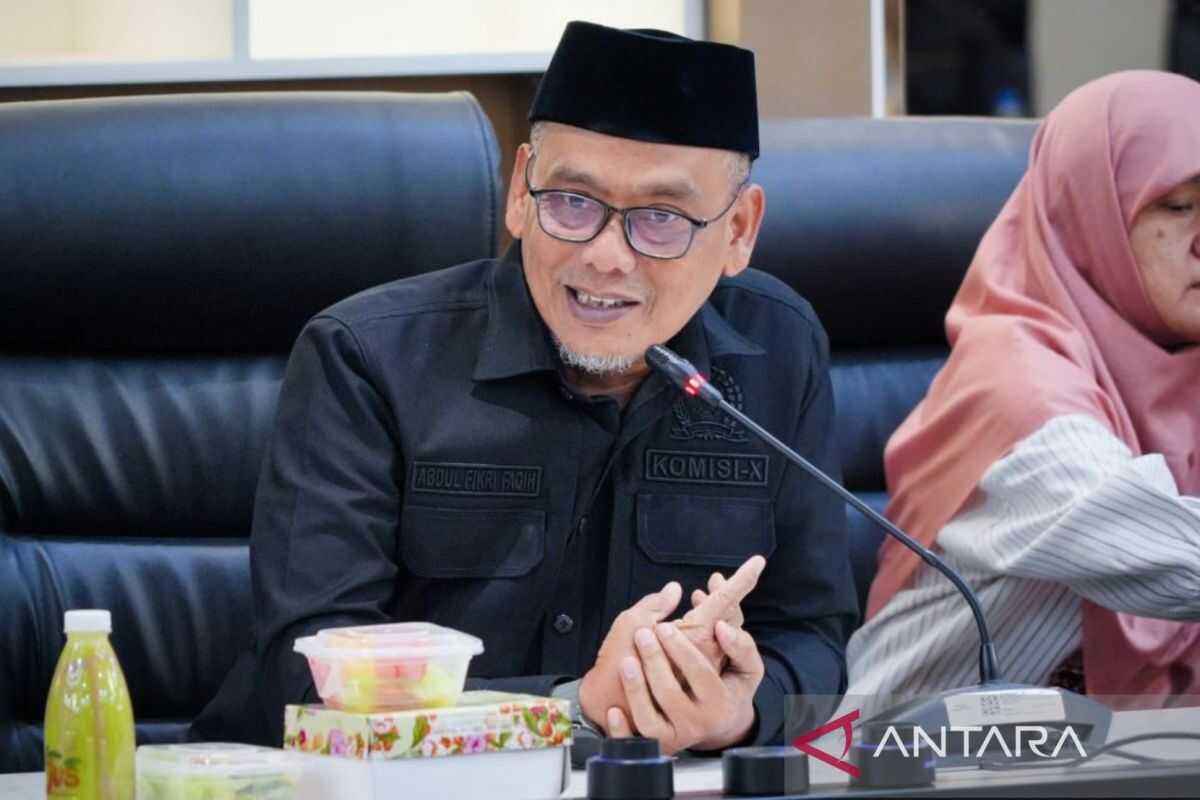
Jakarta (ANTARA) — Commission X member of the House of Representatives Abdul Fikri Faqih has expressed appreciation for President Prabowo Subianto’s commitment to uplifting disadvantaged communities through access to education, including the plan to build 10 new universities.
Nevertheless, the lawmaker commonly known as Fikri urged the government’s implementing team to carefully assess the planning and execution of the new university construction so as not to sacrifice the quality of higher education that the younger generation will receive.
“Of course we are pleased that the President is also paying attention to higher education. However, if the President has plans to open 10 specialised higher education institutions, it appears that his implementing team on the ground must be truly thorough and cautious in realising this,” he said in Jakarta on Friday.
According to him, as a more realistic solution, the government could first examine the option of acquiring or merging existing campuses and treat the establishment of new universities as a last resort.
This cautious stance, he said, is grounded in the concerning reality of national education. Fikri revealed that Indonesia currently has a surplus of higher education institutions, with the number of campuses reaching between 4,600 and 6,400.
That figure is three times greater than the number of universities in China, despite the latter having a population five times larger than Indonesia’s.
Furthermore, the legislator representing the Central Java IX electoral district — encompassing Tegal City, Tegal Regency, and Brebes Regency — highlighted the plight of students who frequently become victims of poor institutional quality.
Of the thousands of campuses spread across Indonesia, Fikri noted that only approximately 56 higher education institutions hold top-tier accreditation.
Previously, the government announced plans to build 10 new universities and one government administration education institution in 2026. The initiative is designed to produce resilient human resources in order to achieve clean and fair governance.
Under its plans, the government will also carry out a major bureaucratic overhaul, including replacing underperforming state officials to ensure legal certainty for the public.
According to Fikri, President Prabowo has a very strong concern for the future of the nation’s children, particularly those from low-income families. This is reflected in the government’s commitment to preparing the People’s School scheme for communities in the first to fourth income deciles, as well as facilitating high-achieving children through the Garuda School programme to help them gain entry to world-class universities.