
DPR Member Ilham Permana Urges State Spending to Deliver Sustainable Impact
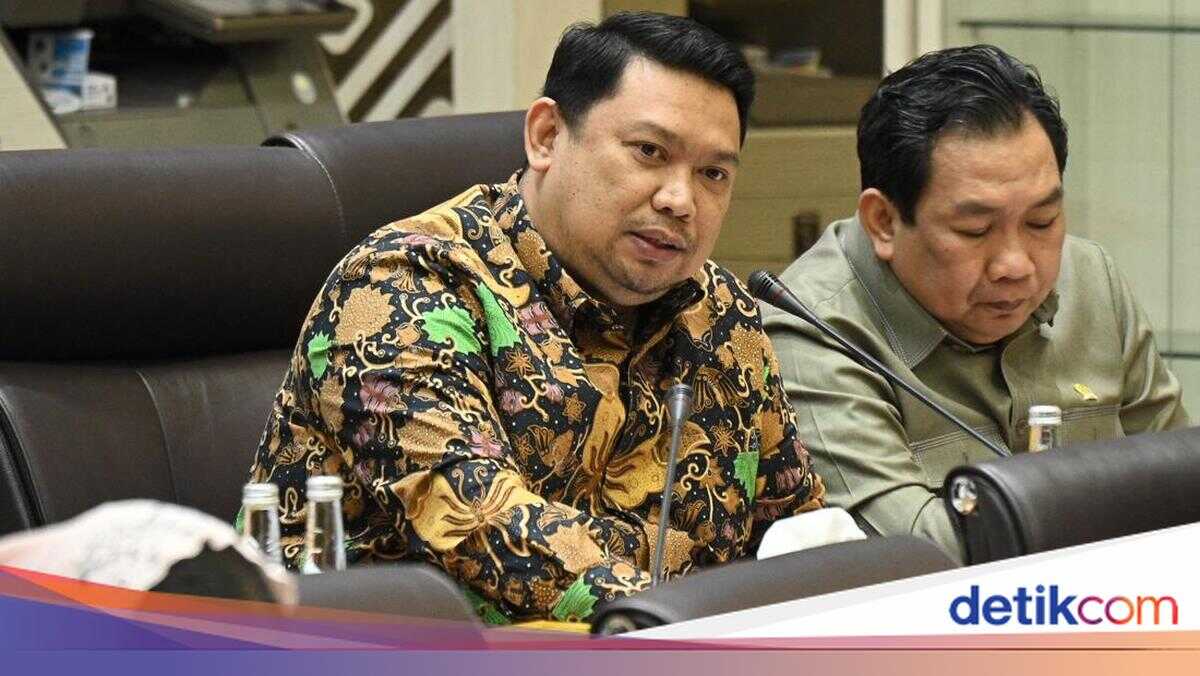
Member of Commission VII of the DPR RI from the Golkar Party faction, Ilham Permana, has argued that the procurement contract for 105,000 commercial vehicles worth Rp 24.66 trillion to support the operations of the Koperasi Desa/Kelurahan Merah Putih (KDKMP) should be viewed as a strategic policy decision with broad implications for the national economic structure.
The procurement, carried out by PT Agrinas Pangan Nusantara, involves two Indian automotive manufacturers — Mahindra & Mahindra for 35,000 units and Tata Motors for 70,000 units. With a contract value of Rp 24.66 trillion, the project represents one of the largest commercial vehicle procurements in recent years.
Ilham expressed his support for the government’s efforts to strengthen village food distribution through the Koperasi Merah Putih programme. He said accelerating logistics connectivity at the village level is a crucial step in shortening supply chains whilst improving the welfare of farmers and small business operators.
However, he stressed that on a budgetary scale of this magnitude, state spending must not be regarded merely as a goods procurement transaction. Public expenditure, particularly that sourced from large sums of state funds, should be designed to deliver sustainable structural impact on the national economy.
“Every rupiah of state spending must deliver long-term added value. This procurement must be seen as an opportunity to strengthen the foundations of our industry, not simply to meet short-term logistics needs,” said Ilham in a written statement on Friday (20 February 2026).
According to him, the automotive sector has extensive linkages with various manufacturing subsectors, from basic metals, engine components, tyres, glass and cabling through to small and medium industries that form part of the supply chain.
Consequently, decisions on large-scale vehicle procurement have the potential to influence factory utilisation rates, workforce continuity, and the strengthening of the industrial ecosystem as a whole.
He added that government procurement policy is in principle already governed by the framework for the use of Domestic Products as set out in Law No. 3 of 2014 on Industry and Presidential Regulation No. 46 of 2025.
These regulations, he said, do not merely address administrative aspects but also reflect the direction of national industrialisation policy, which positions government spending as an instrument for strengthening the competitiveness of domestic industry.
Ilham took the view that policy space remains open to ensure every strategic government project aligns with the long-term objectives of national industrial development. He argued that economic transformation will not be achieved if state spending is not designed to broaden domestic economic impact and strengthen industrial foundations on a sustainable basis.
“The Koperasi Merah Putih programme is part of strengthening the village economy. At the same time, we must ensure that this policy also strengthens the national industrial structure. Village strengthening and industrial strengthening should go hand in hand,” he said.
Ilham emphasised that this policy direction is consistent with President Prabowo’s commitment to promoting economic self-reliance and strengthening the national production base. In his view, the cooperative vehicle procurement could serve as an example of how sectoral policy at the village level can simultaneously form part of a broader industrialisation strategy.
As a member of Commission VII of the DPR RI, which oversees industry, Ilham assured that his side would continue to scrutinise the implementation of this policy to ensure it is carried out effectively, transparently, and delivers optimal benefit for the national economy.
“The success of this programme is not measured solely by the number of vehicles operating in villages, but also by the extent to which this policy contributes to the resilience and competitiveness of Indonesian industry,” he concluded.